Gas Purifiers
Carbon Dioxide Purifier
Product Overview
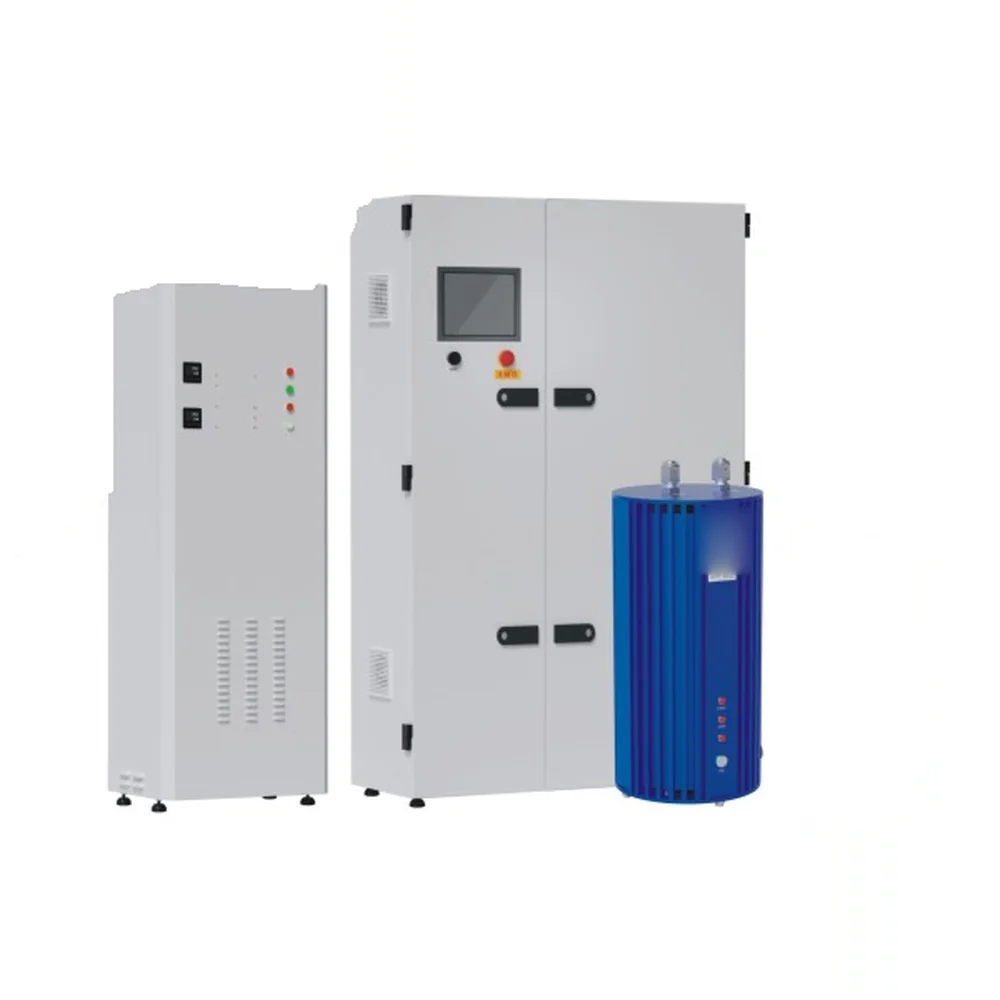
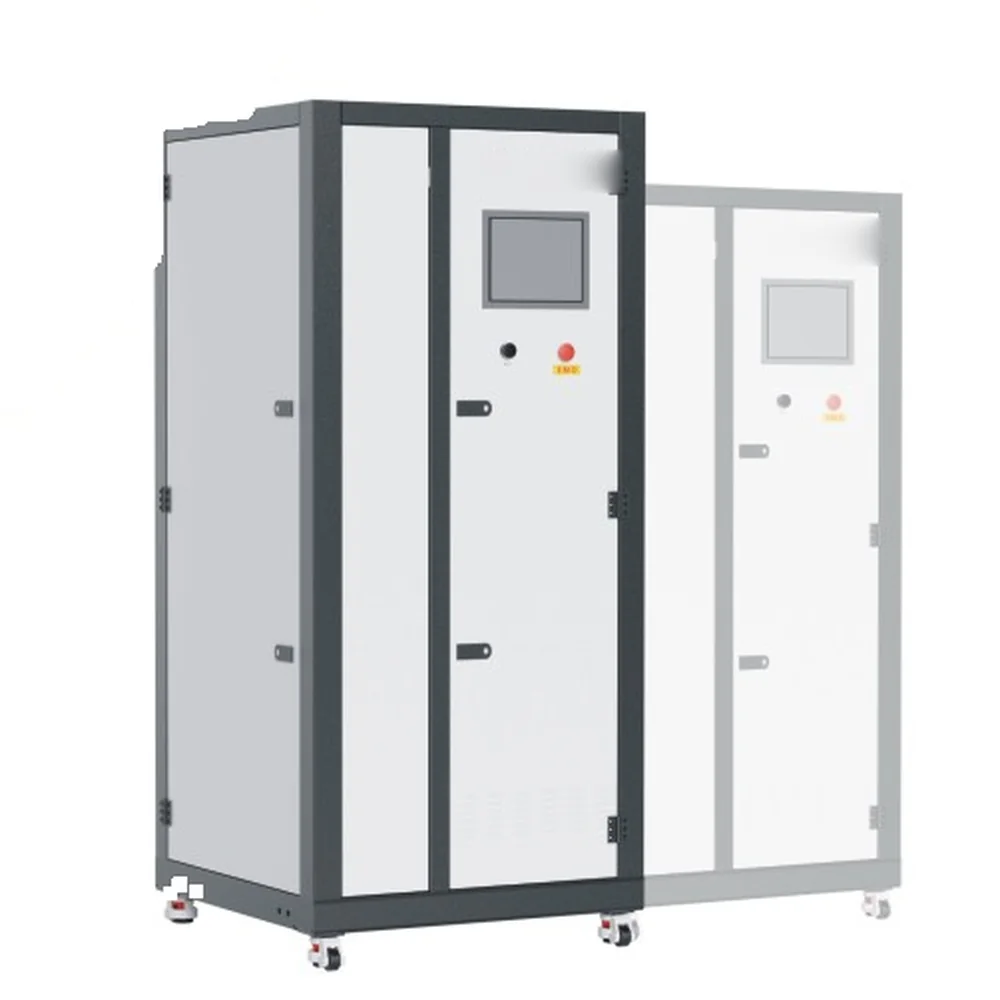
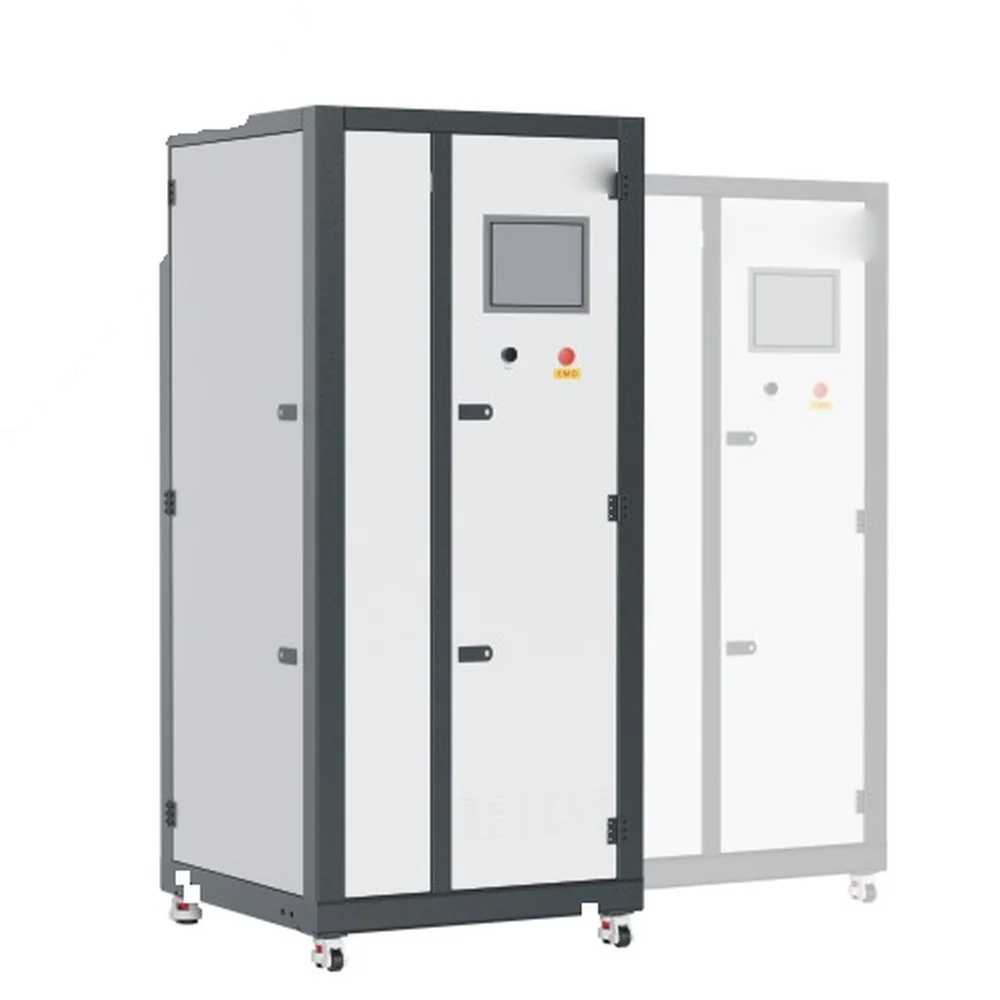
A large-flow carbon dioxide purifier with multiple adsorption beds in parallel, alternating between ambient purification and high-temperature regeneration. Total volatile acids and refractory compounds are held below 0.005 ppb, with a flow range of 10–700 Nm³/h. Choose BSS33 where the source contains CH₄ that must also be removed.
Features & Specifications
Performance table (applicable gas: CO₂)
| Impurity | BSS32 outlet (ppb) |
|---|---|
| Process | ADS |
| H₂O | < 1 |
| O₂ | < 1 |
| CO | < 1 |
| H₂ | < 1 |
| CH₄ | — (choose BSS33 if CH₄ removal is required) |
| Total volatile acids (as SO₂) | < 0.005 |
| Total volatile bases (as NH₃) | < 0.5 |
| Condensable organics (HCS>100 amu, as decane) | < 0.15 |
| Non-condensable organics (HCS>58 amu, as toluene) | < 1 |
| Refractory compounds (as HMDSO) | < 0.005 |
| Particles | ≤ 1 pcs/m³ (@0.003μm) |
| Flow range | 10–700 Nm³/h |
The table lists the specification and configuration of standard models only; please enquire for other special requirements.



Detailed Description
Process description
The BSS32 series runs multiple adsorption beds in parallel, alternating between ambient purification and high-temperature regeneration, with a service life of over 20 years. If the source gas contains CH₄ and the process cannot accept it, use BSS33 instead, which adds a high-temperature catalytic bed upstream.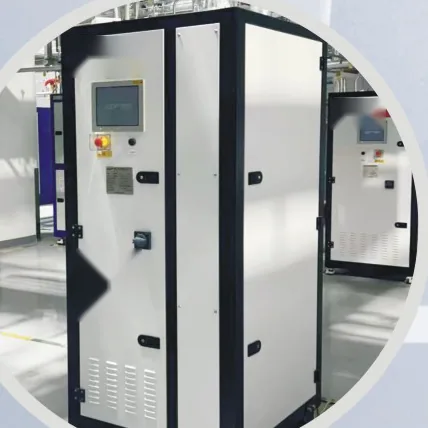
Where it applies
High-purity carbon dioxide is used in wafer cleaning, supercritical drying and some deposition processes. Volatile acids, bases and refractory compounds in the source gas can leave residue on the wafer or cause corrosion even at ppb level, so the process side generally demands outlet figures at ppb or below. The performance table shows where the emphasis lies: total volatile acids and refractory compounds are held to 0.005 ppb, two orders of magnitude tighter than moisture (< 1 ppb). That is because CO₂ is itself a strong solvent, carrying acidic impurities and siloxane-type compounds onto the wafer surface.Product features
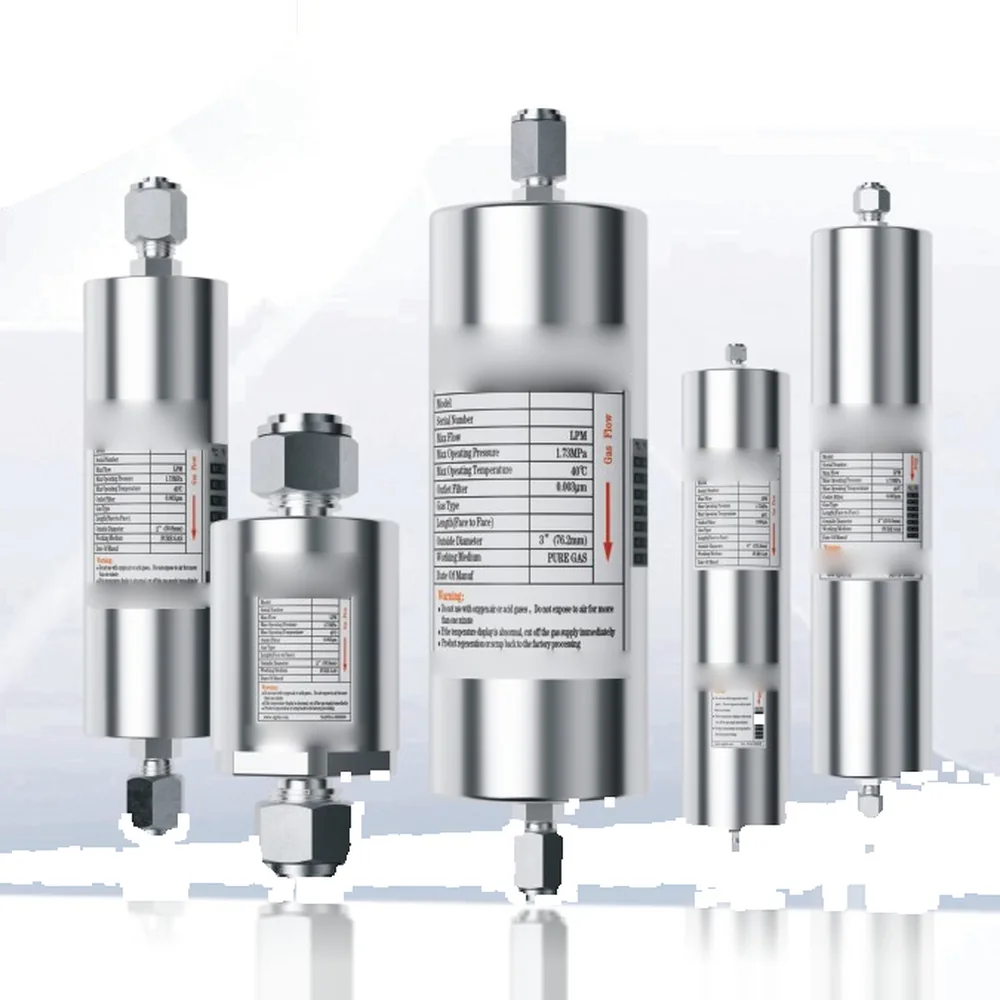
・Fully automatic operation with 24-hour uninterrupted supply ・Custom adsorbent material with dedicated removal design for acids, bases and refractory compounds ・Rupture discs and safety valves for relief, with high-temperature mechanical interlocks and alarms ・Outlet particles ≤ 1 pcs/m³ (@0.003 μm) ・Service life of over 20 yearsProcesses and industries served
・Wafer cleaning and drying: CO₂ snow cleaning (cryogenic aerosol) and subsequent drying ・Feed gas preparation for supercritical drying (the supercritical stage has its own model, BSS32-SC) ・Reaction or dilution gas in some CVD and ALD processes ・Repacking and filling of electronic-grade CO₂ ・Working gas for lasers and analytical instrumentsInstallation and layout notes
・Phase management is critical: CO₂ changes phase readily at common supply pressures, so the pipework must avoid local throttling that causes dry ice blockage ・Adequate vaporisation capacity: with liquid supply, an undersized upstream vaporiser causes flow and pressure swings ・Cold section protection: frost forms where throttling cools the gas, so labelling and personnel protection must be considered ・Asphyxiation risk: CO₂ is heavier than air and accumulates in low-lying areas, so the equipment room needs ventilation and oxygen monitoring ・Regeneration exhaust routing: vent gas from the high-temperature regeneration step must be led to a safe discharge point ・Avoid silicone-based sealing materials: with refractory compounds held to 0.005 ppb, the wrong seal defeats the whole systemMaintenance and regeneration
・Adsorption beds regenerate automatically on a PLC schedule, with adsorbent designed for over 20 years ・Verifying acids, bases and refractory compounds needs matching analytical methods; ordinary moisture and oxygen analysis does not cover them ・Routine maintenance focuses on valve actuation, temperature control and sensor calibration, and the condition of the upstream vaporiser ・The annual overhaul should include safety valve and rupture disc inspectionChoosing between neighbouring models
| Model | Process | Removes CH₄ | Specialised items | Flow |
|---|---|---|---|---|
| BSS32 (this model) | ADS | No | Acids, bases, refractory compounds | 10–700 Nm³/h |
| BSS33 | CAT+ADS | Yes | As above, plus CH₄ | 10–700 Nm³/h |
| BSS32-SC supercritical | ADS | No | NVHC, NO / NO₂ / SO₂ | 10–700 Nm³/h |
| BSP ambient POU (formulation 84) | Ambient adsorption | No | H₂O, O₂, acids and bases | 5–4000 SLPM |