Cleanroom Equipment
Nitrogen Cabinet & Dry Cabinet
Product Overview
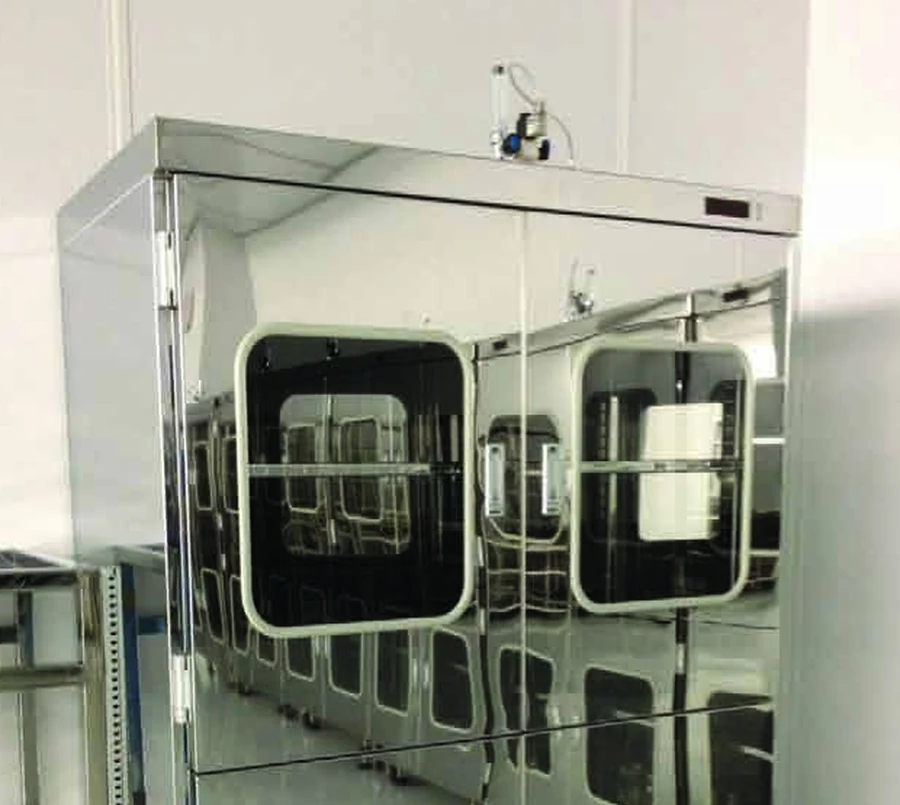
A nitrogen cabinet stores electronic parts that have been unsealed but not fully used, material waiting for reflow or wave soldering, components that have finished baking, and semiconductor wafers or precision work in progress. Nitrogen displaces the oxygen and moisture inside, so parts do not absorb humidity or oxidise while they wait to go back on the line.
A microprocessor control monitors humidity inside the cabinet and opens the nitrogen valve only when the set point is exceeded, closing again once it is met — it does not purge continuously. That control is what determines nitrogen cost: without it, the gas bill easily exceeds the amortised cost of the cabinet itself.
Key Specifications
- Control
- Simultaneous temperature and humidity readout on a dual-colour LED display; humidity 0–99% RH ±3% RH, temperature 0–99°C ±1°C. Microcontroller gas-saving unit purges nitrogen automatically above the humidity set point and stops on reaching it
- Structure
- Purpose-built sealed cabinet with multi-coat anti-rust paint; anti-static finish optional. Shelf heights are adjustable
- Certification
- Third-party certified; the original third-party calibration report ships with each unit
- Features & Accessories
- Temperature/humidity probe, solenoid gas valve, one-piece high-seal handle, anti-static grounding. Heavy-duty PU castors with levelling feet for easy repositioning



Specifications
- Structure
- Purpose-built sealed cabinet with multi-coat anti-rust paint; anti-static finish optional. Shelf heights are adjustable
- Control
- Simultaneous temperature and humidity readout on a dual-colour LED display; humidity 0–99% RH ±3% RH, temperature 0–99°C ±1°C. Microcontroller gas-saving unit purges nitrogen automatically above the humidity set point and stops on reaching it
- Features & Accessories
- Temperature/humidity probe, solenoid gas valve, one-piece high-seal handle, anti-static grounding. Heavy-duty PU castors with levelling feet for easy repositioning
- Certification
- Third-party certified; the original third-party calibration report ships with each unit
Model Reference
| Variant | Doors | Load per Shelf (kg) |
|---|---|---|
| 標準型氮氣櫃 | 4 | 100 |
| 晶圓/晶片專用氮氣櫃 | 6 | 100 |
| 大螢幕電子防潮櫃 | 6 | 100 |
Detailed Description
Nitrogen cabinet or dry cabinet
The two look almost identical; the difference is how moisture is removed. A dry cabinet uses a dehumidifying module — usually physical adsorption or thermoelectric cooling — to pull humidity down. No gas supply is needed, it runs from a wall socket, and running cost is low. It pulls down more slowly, and it deals only with moisture, not oxygen. A nitrogen cabinet replaces the humid air outright, dropping humidity quickly while also lowering oxygen concentration, so it prevents oxidation at the same time. The trade-off is a nitrogen supply and a refill cycle after every door opening. The rule of thumb: if only moisture is the risk — general electronic parts, bare PCBs — a dry cabinet is enough. A nitrogen cabinet is warranted when oxidation matters too: solder terminations, bare die, wafers after resist coating.The gas-saving control is where the cost sits
A nitrogen cabinet without gas-saving control purges continuously at low flow, relying on positive pressure to keep ambient air out. It is simple, but nitrogen is consumed the whole time, and a year of that often costs more than the cabinet. With a microprocessor gas-saving unit the solenoid opens only when humidity rises past the set point and closes when it is met. In a well-sealed cabinet that may be only a handful of fills a day. So cabinet tightness and gas-saving control have to be assessed together: a leaky cabinet will refill constantly even with the control fitted. Neither alone is sufficient.Selection References
Before ordering, verify the efficiency grade, media type, and whether the operating environment fits your requirements.