Stainless Steel Air Shower
Product Overview
Features & Specifications



Detailed Description
Stainless steel is chosen because of disinfectants
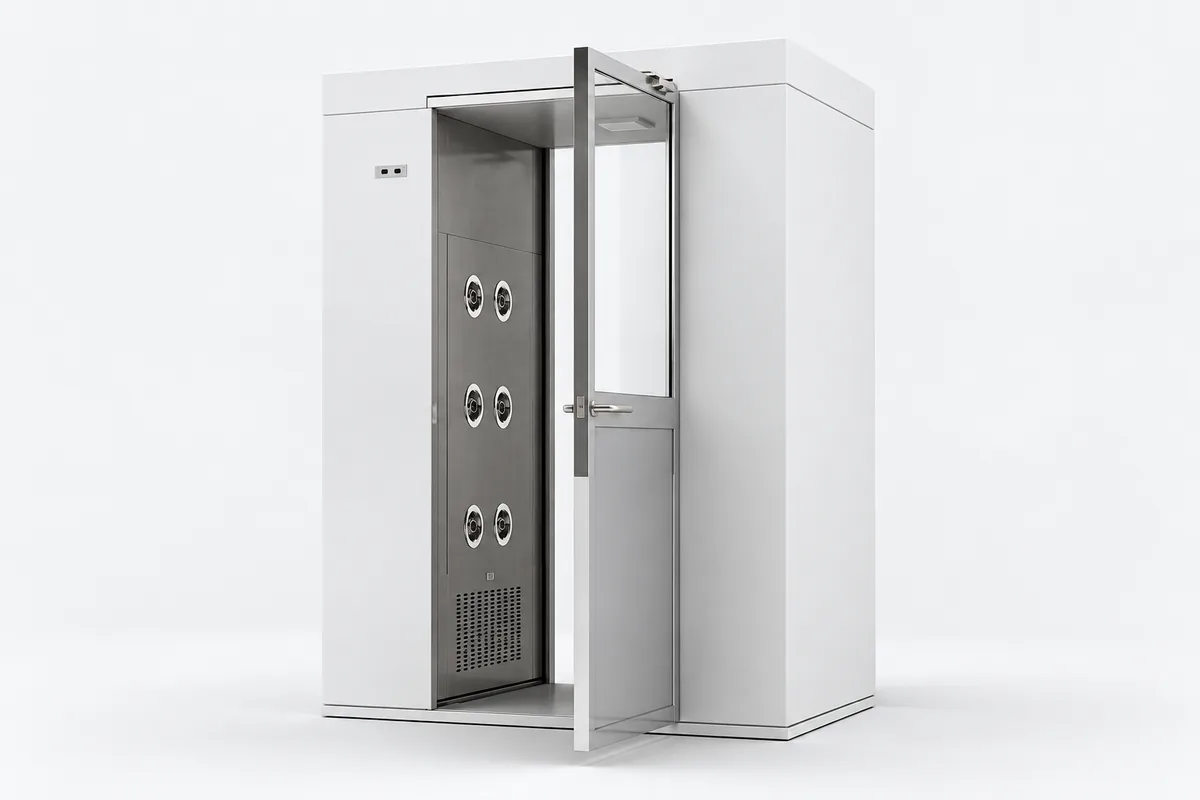
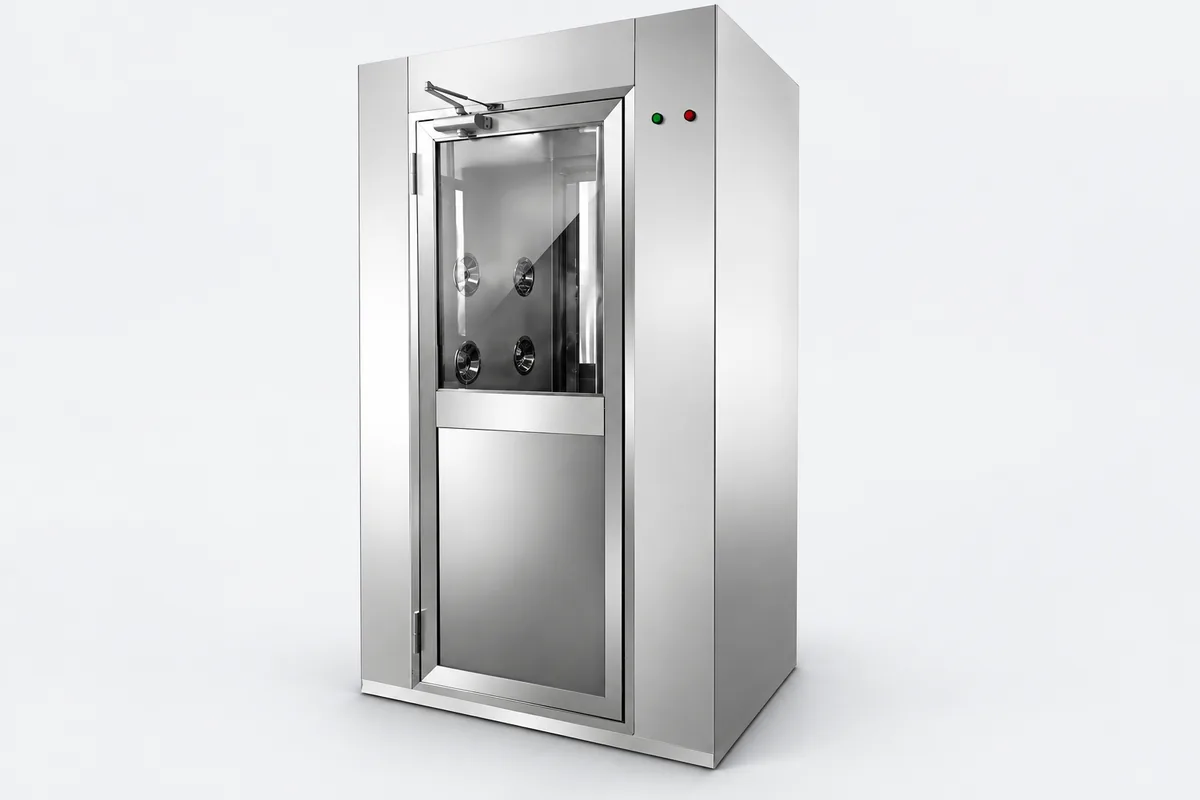
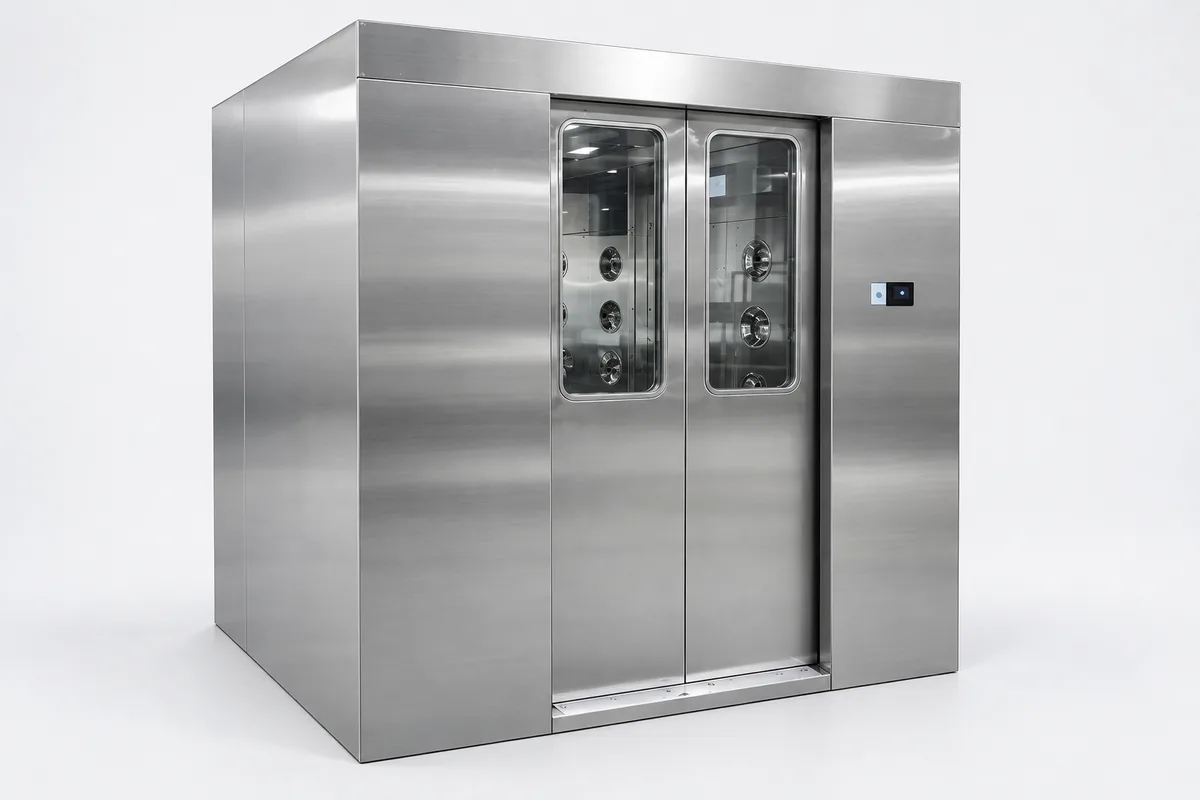
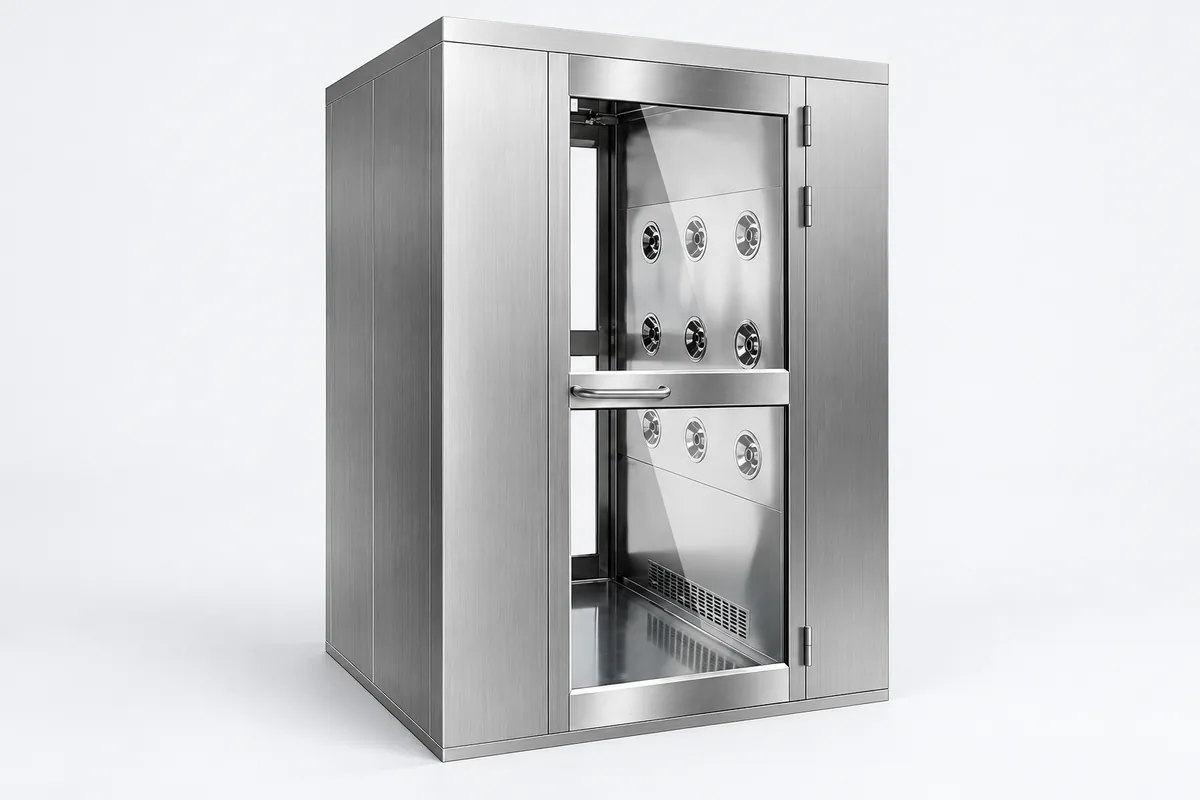
The stainless steel type and the standard type have almost identical shower performance; the difference lies entirely in the material. EU GMP Annex 1 (2022) §4.5 requires surfaces in clean areas to be smooth, impervious and unbroken; §4.7 requires materials to shed few particles and to withstand the cleaning agents and disinfectants used. Cold-rolled steel sheet with electrostatic powder coating is quite adequate where wiping is mainly with alcohol and disinfection is infrequent; but if surfaces are wiped daily with chlorine-based or strongly oxidizing disinfectants, or there is a washing area near the entrance and the environment stays humid for long periods, small scratches in the coating will gradually grow into rust spots. Rust spots are themselves a source of particles and a hiding place for dirt that disinfectants cannot reach. Choosing stainless steel in this case is about keeping the surfaces cleanable throughout their service life.304 or 316
SUS304 is the most common stainless steel for cleanroom equipment and is sufficient for general cleaning agents, alcohol and most disinfectants. SUS316 contains 2–3% more molybdenum than 304 and resists pitting caused by chloride ions better. Decide by the disinfectant and the environment: where chlorine-based disinfectants such as sodium hypochlorite are used routinely and residues are hard to remove completely after wiping, or the plant is in a coastal salt-mist area, 316 is the safer choice; otherwise 304 is fine. Whichever is used, after wiping with chlorine-based disinfectants, residues should be removed with water or alcohol according to procedure so that chloride ions do not remain on the surface for long periods.| Usage situation | Recommended enclosure material |
|---|---|
| Wiping mainly with alcohol, infrequent disinfection | Cold-rolled steel sheet with electrostatic powder coating is sufficient, or SUS304 |
| Daily wiping and disinfection, humid near the entrance | SUS304 |
| Routine use of chlorine-based disinfectants | SUS316 |
| Coastal salt-mist environment | SUS316 |
Surface finish and joints
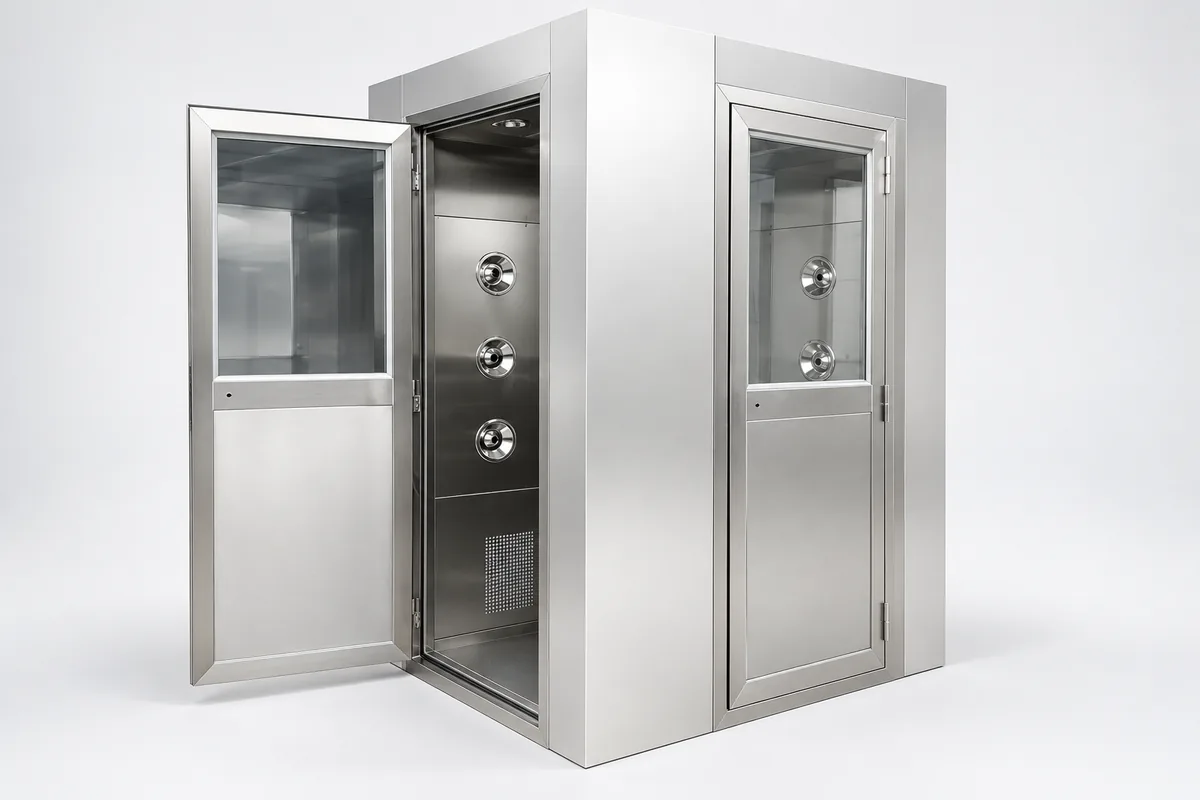
Designations such as 2B and No.4 describe how the stainless steel is processed and do not directly specify the surface roughness Ra; if the user specification has requirements for roughness, the Ra value should be stated directly rather than just the finish designation. Electropolishing is an optional treatment; at present no authoritative standard requires cleanroom equipment to be electropolished, and whether it is needed depends on the cleaning method. Joints affect cleaning more than the surface finish does. Annex 1 §4.6 requires that there be no recesses that are difficult to clean; how the enclosure corners, door frames and floor-plate joints are finished determines whether disinfectants can reach them and whether liquid pools there, and they should be checked one by one at acceptance.The inside of the enclosure must be wipeable too
A stainless steel shell does not mean every part that comes into contact with disinfectants can withstand them. Nozzles, return air grilles, light covers and control panels are all within the wiping scope, and their materials and protection should be confirmed when ordering. According to available sources, JG/T 296-2010 recommends that the face velocity at the return air inlet should not exceed 2 m/s; the return air grilles should be removable for wiping, and filter replacement should be possible from a fixed service side without removing the entire inner panel.Wipe, do not hose down
The stainless steel type can withstand repeated wiping and disinfection, but an air shower contains fans, filters and electrical components and is not designed to be sprayed down with water as a whole. If the site customarily applies disinfectants by spraying, confirm the protection rating of the control panel, sensors and light fittings in advance, and avoid spraying disinfectant directly at the return air inlets and filters.Frequently Asked Questions
Should a stainless steel air shower be 304 or 316?
It depends on the disinfectant and the environment. For general cleaning agents, alcohol and most disinfectants, SUS304 is sufficient; where chlorine-based disinfectants such as sodium hypochlorite are used routinely, or the plant is in a coastal salt-mist area, choose SUS316, because it contains 2–3% more molybdenum and resists chloride pitting better. Whichever is used, residues should be removed after wiping with chlorine-based disinfectants.
Can the stainless steel type be hosed down or sprayed with disinfectant as a whole?
Not recommended. The stainless steel enclosure can withstand repeated wiping and disinfection, but inside there are fans, filters, a control panel and sensors, and it is not designed for washing down. If disinfectants are customarily applied by spraying, confirm the protection rating of the panel, sensors and light fittings when ordering, and avoid spraying directly at the return air inlets and filters; routine cleaning should be mainly by wiping.
Does the stainless steel surface need to be specified as electropolished?
Not necessarily. At present no authoritative standard requires cleanroom equipment to be electropolished; designations such as 2B and No.4 also only describe the processing method and do not directly specify roughness. If the user specification has surface requirements, please state the Ra value directly. In practice, joints and corners affect cleaning more; EU GMP Annex 1 (2022) §4.6 requires that there be no recesses that are difficult to clean, and they should be checked one by one at acceptance.
Selection References
Before ordering, verify the efficiency grade, media type, and whether the operating environment fits your requirements.