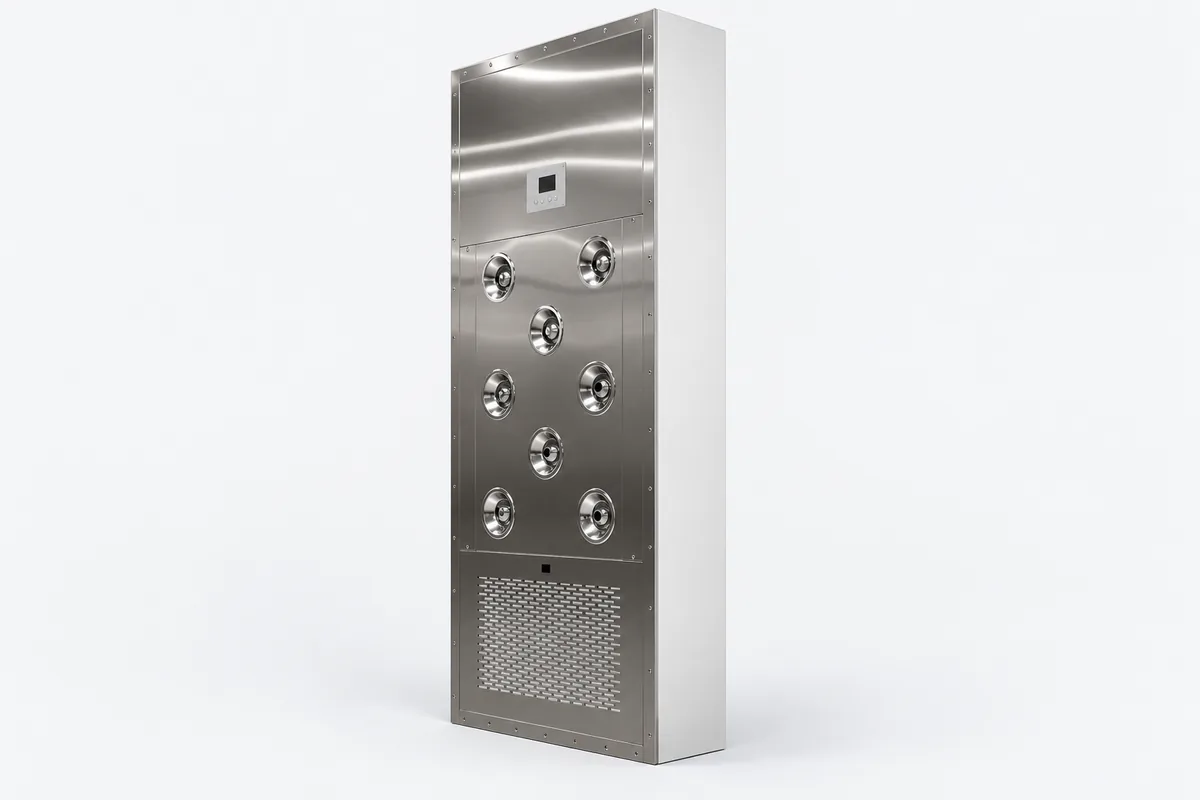
Portable Air Shower
Product Overview
Features & Specifications



Detailed Description
It is not an airlock
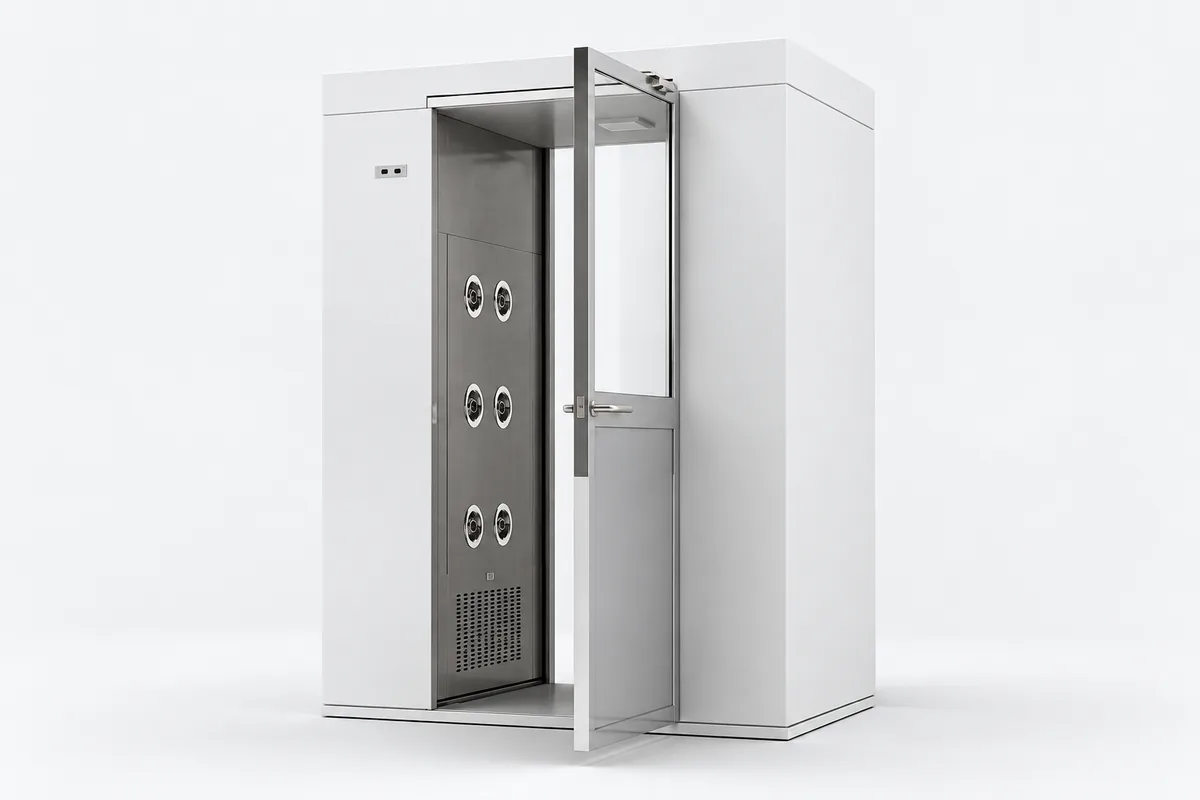
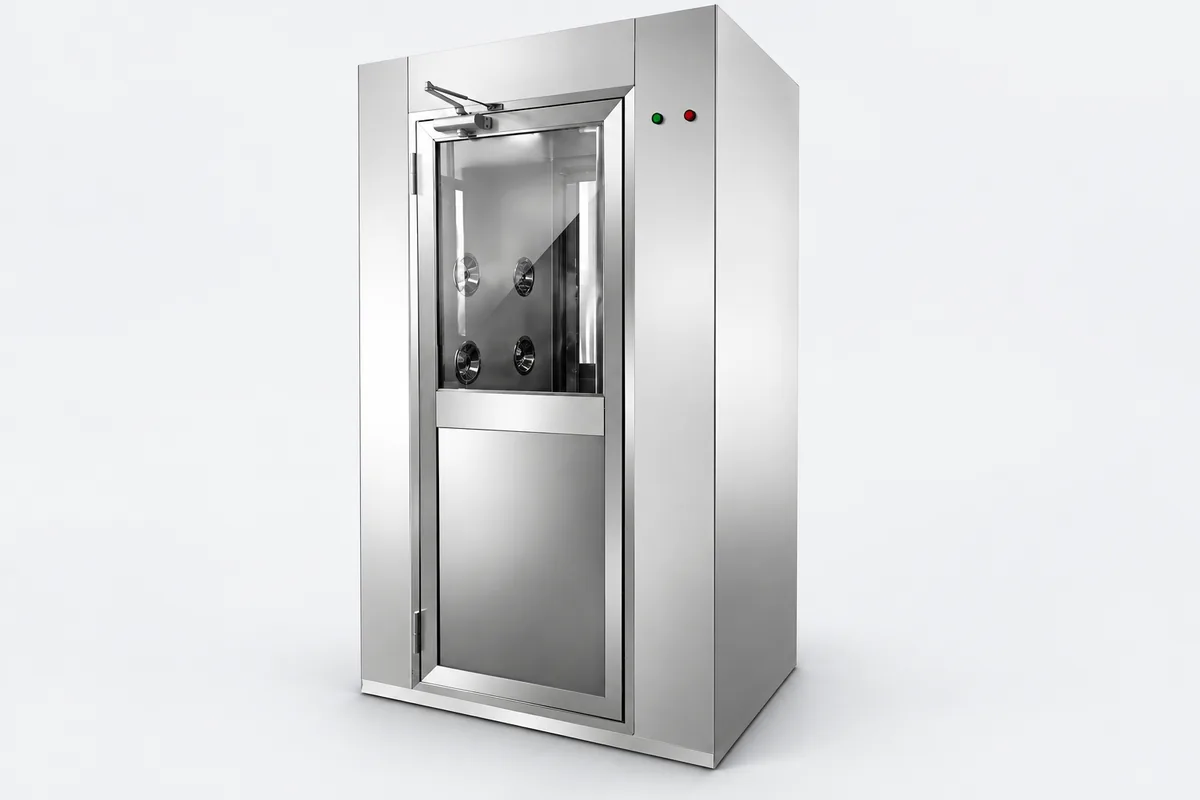
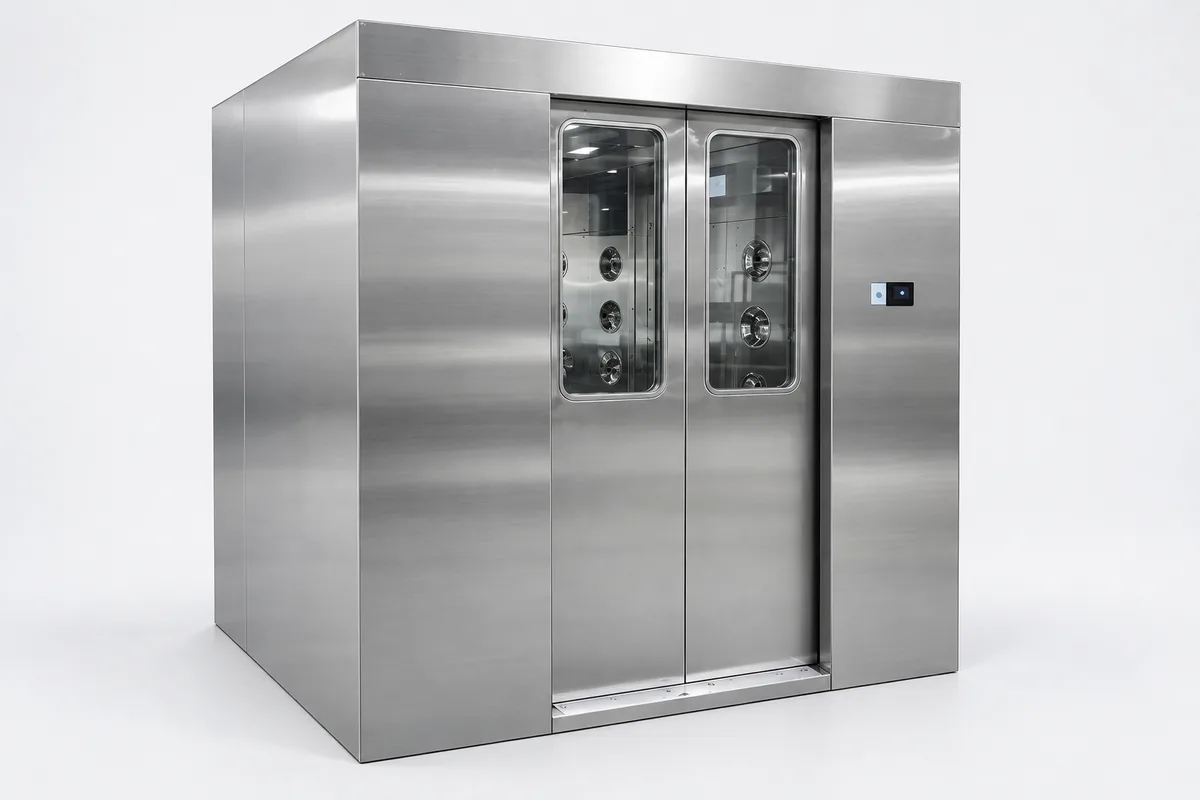
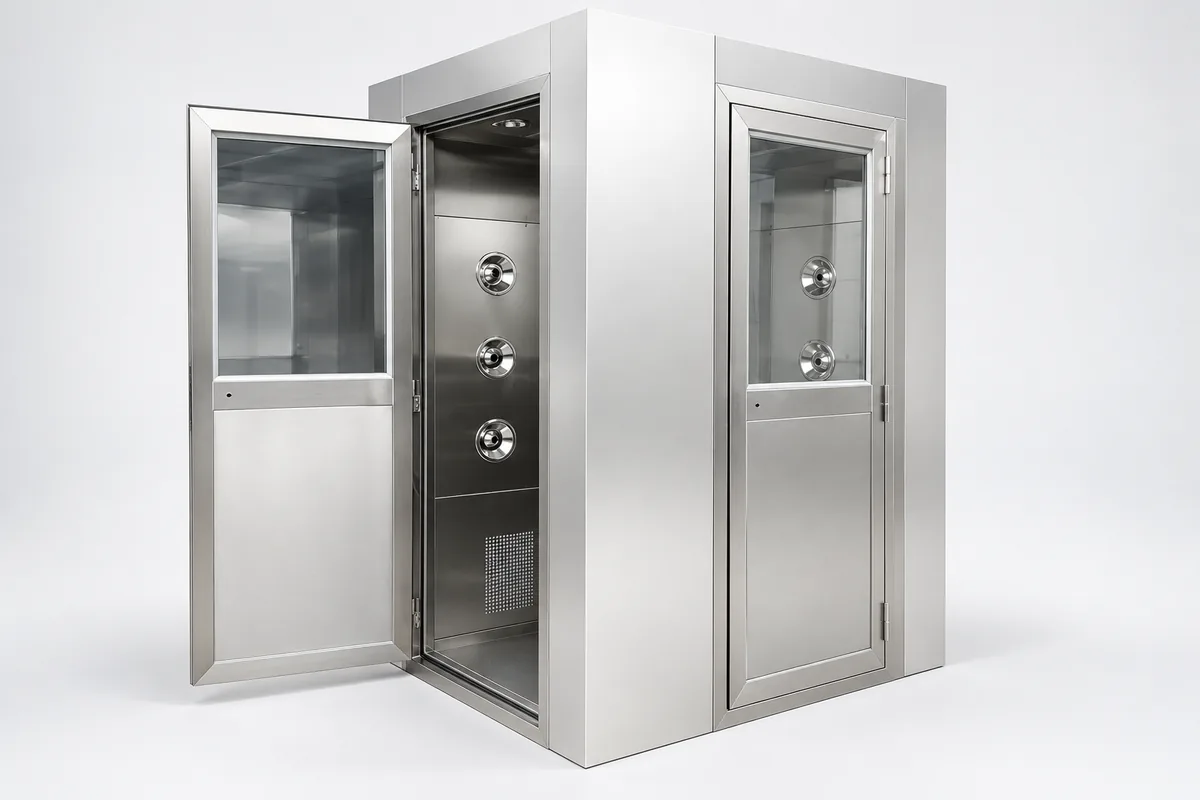
The most defensible function of an air shower at a clean-area entrance is the airlock formed by two interlocked doors. EU GMP Annex 1 (2022) does not require an air shower anywhere in its text, and the focus of personnel contamination control is on the gowning procedure (§7.10) and airlocks (§4.12). A portable panel has no enclosure and no doors; the shower function remains, but the airlock function is entirely absent. It therefore cannot directly replace an air shower at a clean-area entrance. If the entrance to the clean area already needs an airlock, the portable unit can only serve as an additional surface cleaning step, and the airlock must be provided by the doors of the changing room or buffer room itself.| Item | Portable panel | Enclosed air shower |
|---|---|---|
| Airlock function | None | Two interlocked doors |
| Shower direction | One side; people must turn around | Both sides or multiple surfaces |
| Particles blown off | Partly drawn back, the rest dispersed into the surroundings | Contained in the enclosure, drawn back to the filters and recirculated |
| Installation requirements | Wall or floor, power supply | Entrance space, door opening and swing clearance |
Where do the particles blown off go
An enclosed air shower keeps the particles it blows off inside the enclosure and recirculates the air after drawing it back through the filters; a portable panel is open, so part of the particles blown off are drawn back through the return air inlet of the panel, and the rest disperse into the surrounding space. This determines where it should be placed: in lower-grade spaces with their own return air, such as changing rooms or buffer rooms, where the particles blown off are carried away by the air conditioning of that space; it should not be placed inside a clean area, let alone near critical work zones, as this amounts to stirring up dust inside the clean area.Single-side blow: people must turn around
The panel blows from one side only; a person standing in front of it is reached only on the side facing the panel. To cover the whole body, the person must turn a full circle within the shower time so that the back and both sides are reached. This makes the effect highly dependent on people's cooperation. In practice, standing positions can be marked on the floor, the turning direction marked beside the panel, and the shower time set long enough to complete a full turn; the default 10–15 s is enough for most people, and it should not be shortened to save time.Where it fits
The portable unit suits three situations: first, in front of the changing room entrance, so people remove settled dust from their outer clothing before starting the gowning procedure; second, small laboratories or QC rooms where there is no space for an enclosed air shower and the cleanliness class does not require an airlock; third, temporary or short-term clean work areas that need equipment that can be moved and is easy to install and remove. If a personnel decontamination device is to be installed at the entrance to a clean area of ISO 7 or cleaner, an enclosed air shower should be considered first, or the gowning and airlock arrangements should be reviewed. In other words, the portable unit solves the problem of "no space for an enclosed unit", not the problem of "not wanting an airlock"; if the entrance needs an airlock, find a way to build the airlock first, however small the space.Installation and maintenance
For wall-mounted units, confirm that the wall can bear the weight of the panel and the vibration during operation, and add fixed supports on lightweight partition walls; for floor-standing units, confirm that the position does not block passage or escape routes. Confirm the power supply according to the model, and keep socket positions away from the area where people turn around. Filters are replaced from the service side of the panel, and nothing should be stacked in front of the return air inlet, otherwise the proportion drawn back will be even lower.Frequently Asked Questions
Can a portable air shower panel replace an air shower?
No. A portable panel has no enclosure, no doors and no interlock; it has only the shower function, not the airlock function, and the most important value of an air shower at a clean-area entrance is precisely the airlock formed by its interlocked doors. The focus of personnel contamination control in EU GMP Annex 1 (2022) is also on the gowning procedure and airlocks. The portable unit is suited to surface cleaning before gowning, or to small spaces that do not need an airlock.
Should a wall-mounted panel be installed inside or outside the clean area?
Outside, or in lower-grade spaces with their own return air, such as changing rooms or buffer rooms. The panel is open, so only part of the particles blown off are drawn back and the rest disperse into the surroundings; installing it inside the clean area amounts to stirring up dust inside the clean area, and it should certainly not be near critical work zones. The installation position must also not block passage or escape routes.
How long should a shower at a portable panel last?
The shower time is adjustable from 0–99 s, mostly preset to 10–15 s. Because the panel blows from one side only, people must turn a full circle within this time for the back and both sides to be reached; standing positions and turning direction can be marked on the floor. Do not shorten the time to save time — not completing a full turn means only one side has been showered.
Selection References
Before ordering, verify the efficiency grade, media type, and whether the operating environment fits your requirements.