NIPPON MUKI
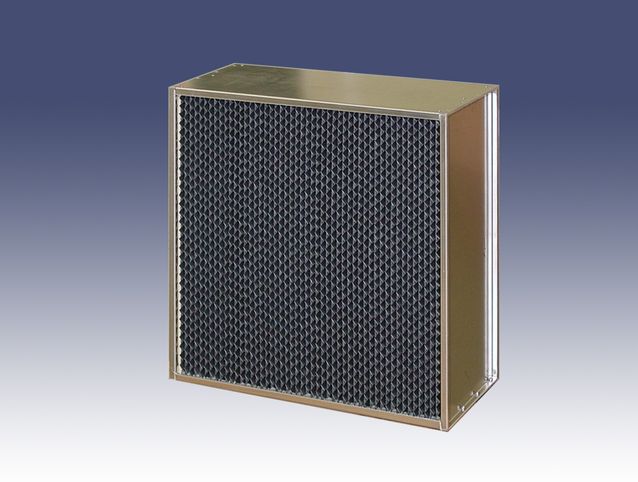
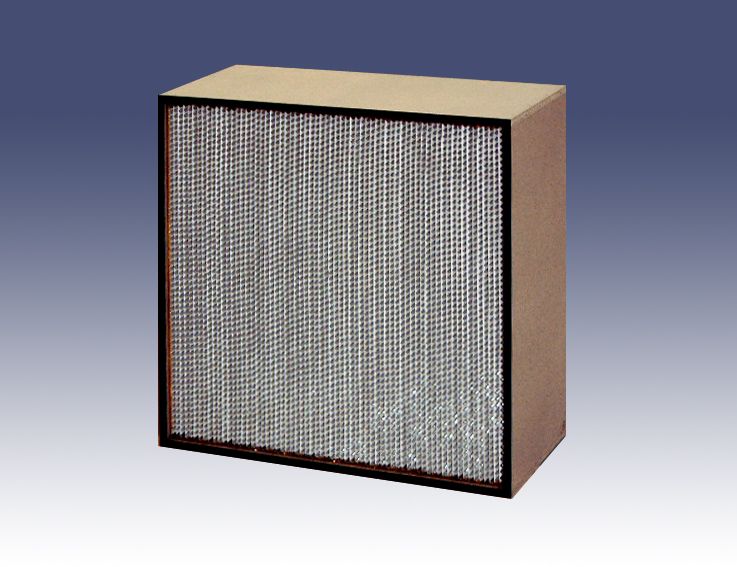
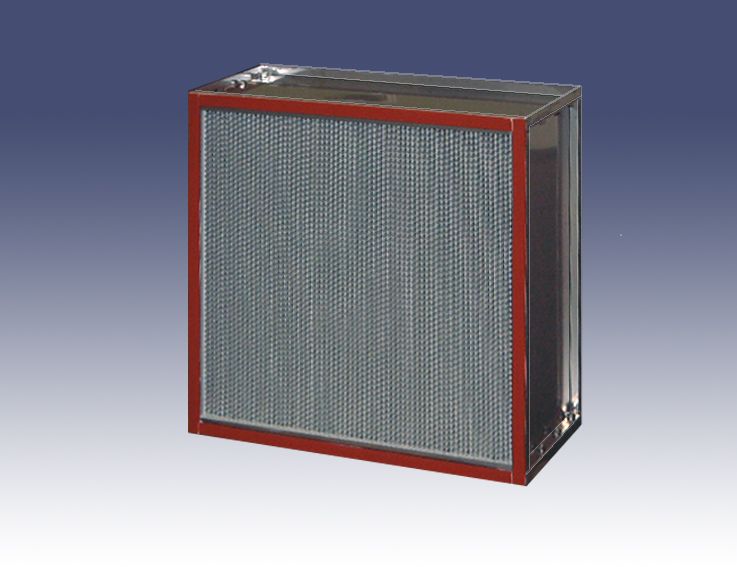
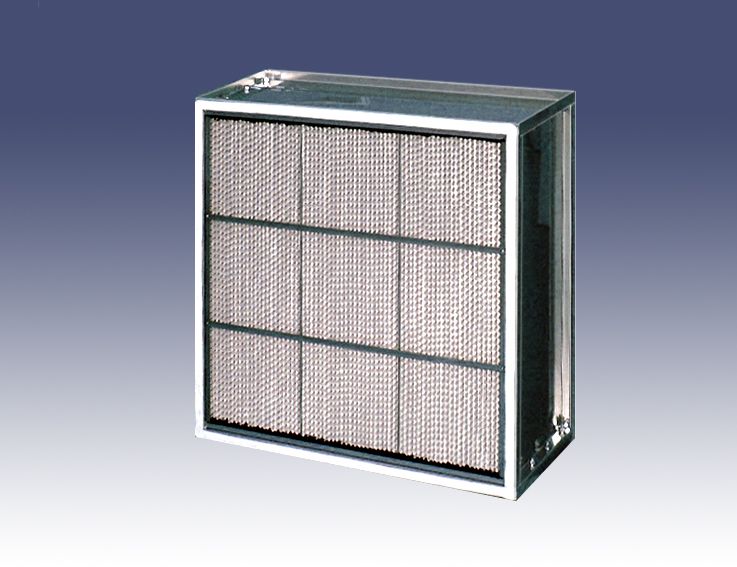
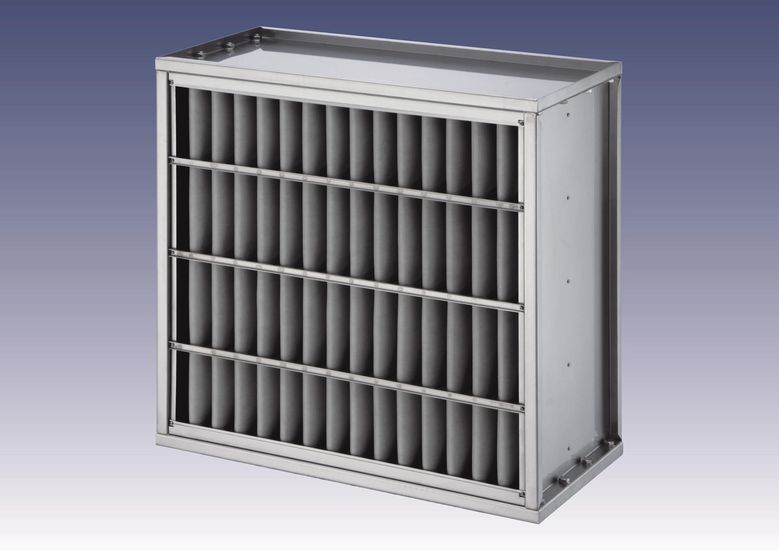
ATMCU Binder-Free Low-Shedding Heat-Resistant HEPA Filter (350°C)
Product Overview
High-temperature HEPA filter rated for continuous service up to 350°C (max 400°C × 1h), designed for depyrogenation tunnels and high-temperature clean processes in pharmaceutical manufacturing. Built with a stainless-steel frame and separator, glass-paper media and glass-fiber sealant — no organic binders — for stable performance through repeated heat cycles.
Key features
・Continuous operation up to 350°C, short peak 400°C × 1h
・99.99% @ 0.3 μm filtration efficiency
・Separator-type HEPA construction with stainless-steel support
・All-metal + glass construction — no organic outgassing
・Available in 150 mm (Q) and 290 mm (P) depths
・Binder-free construction: no organic adhesive in media or seal — low particle shedding, no siloxane outgassing
Target industries:Pharmaceutical, Medical, Electronics, Power generation, Nuclear power
Key Specifications
- Filtration Efficiency
- 99.99%@0.3μm
- Rated Airflow
- 11 – 44 CMM (660 – 2640 CMH)
- Initial Pressure Drop
- 250 Pa
- Max. Operating Temperature
- 350°C



Specifications
- Filtration Efficiency
- 99.99%@0.3μm
- Rated Airflow
- 11 – 44 CMM (660 – 2640 CMH)
- Initial Pressure Drop
- 250 Pa
- Standard Dimensions
- W 305–915 × H 457–610 × D 150–290 mm
- Max. Operating Temperature
- 350°C
Model Reference
| No. | Model | Efficiency | W (mm) | H (mm) | D (mm) | Airflow (CMM) | Airflow (CMH) | Initial ΔP (Pa) |
|---|---|---|---|---|---|---|---|---|
| 1 | ATMCU-Z-Q-FS4HR | 99.99%@0.3μm | 305 | 610 | 150 | 11.0 | 660 | 250 |
| 2 | ATMCU-Z-Q-FS4HR | 99.99%@0.3μm | 457 | 457 | 150 | 12.5 | 750 | 250 |
| 3 | ATMCU-24-Q-FS4HR | 99.99%@0.3μm | 610 | 610 | 150 | 24.0 | 1440 | 250 |
| 4 | ATMCU-Z-Q-FS4HR | 99.99%@0.3μm | 915 | 610 | 150 | 36.5 | 2190 | 250 |
| 5 | ATMCU-Z-P-FS4HR | 99.99%@0.3μm | 305 | 610 | 290 | 16.0 | 960 | 250 |
| 6 | ATMCU-Z-P-FS4HR | 99.99%@0.3μm | 457 | 610 | 290 | 25.5 | 1530 | 250 |
| 7 | ATMCU-35-P-FS4HR | 99.99%@0.3μm | 610 | 610 | 290 | 35.0 | 2100 | 250 |
| 8 | ATMCU-Z-P-FS4HR | 99.99%@0.3μm | 762 | 610 | 290 | 44.0 | 2640 | 250 |
Detailed Description
ATMCU is designed for continuous operation in high-temperature clean processes where standard HEPA filters fail. Its all-inorganic construction (stainless steel + glass) eliminates organic outgassing that could contaminate sensitive processes, making it the filter of choice for depyrogenation tunnels in pharmaceutical manufacturing.
Materials & Construction
| Property | Specification |
|---|---|
| Filter frame | STAINLESS STEEL |
| Media | GLASS PAPER |
| Max. temperature | 350°C (Max. 400°C/1h) |
| Separator | STAINLESS STEEL |
| Gasket | GLASS PAPER |
| Grille (downstream) | - |
| Grille (upstream) | - |
| Sealant | GLASS FIBER |
| Max airflow | Can be calculated on request |
| Max final PD (Pa) | 500 |
Airflow vs Pressure Drop (representative)
Binder-Free, Low-Shedding Construction
A conventional HEPA bonds and seals its media and frame with polyurethane (PU) or silicone, and those sealants are generally rated for long-term service somewhere in the 100–200°C range. Above that, the adhesive first softens and cracks, releasing organic molecules, then embrittles and flakes under repeated thermal cycling — at which point the filter itself becomes a particle source. ATMCU uses no organic adhesive anywhere: sealing is done with glass fiber, the frame and separators are stainless steel, and the entire assembly is metal and glass only.| Component | Conventional adhesive HEPA | ATMCU (binder-free) |
|---|---|---|
| Sealant | Polyurethane / silicone | GLASS FIBER |
| Media bonding | Organic binder | None (glass paper) |
| Separator | Aluminium foil + hot-melt | STAINLESS STEEL |
| Outgassing at temperature | Organic molecules, siloxane | None |
| Shedding after thermal cycling | Rises as adhesive degrades | Stays stable |
With no organic adhesive there is nothing to thermally decompose. Two practical consequences follow:
- Low particle shedding — degrading, flaking adhesive is the most common source of self-generated particles in high-temperature filters. A binder-free build keeps downstream particle counts from creeping back up as the filter ages through repeated heat-up and cool-down cycles.
- No siloxane contamination — silicone seals release siloxane at elevated temperature, and siloxane deposited on wafers, optical surfaces or coated substrates causes hazing and yield loss. Semiconductor, optical coating and OLED processes are particularly sensitive to this.
Depyrogenation tunnels cycle up and down in temperature every day and run continuously — the duty cycle where adhesive degradation shows up fastest. A binder-free build keeps ATMCU downstream particle counts consistent across the full service life, avoiding the case where counts rise before the filter ever reaches its terminal pressure drop.
Applications
- Depyrogenation tunnels in pharmaceutical cleanrooms - High-temperature clean ovens for sterile component manufacturing - Terminal filtration in high-temperature process equipment - Power generation and nuclear facility HVACSelection Notes
- 150 mm (Q) depth — choose when installation space is limited or the airflow demand is moderate. - 290 mm (P) depth — choose when maximum airflow per unit face area is required, or when extended service life matters (larger dust-holding capacity). - Scan-testable as standard; leak-free versions available on request. - Replace when pressure drop reaches 500 Pa (2× initial) or per site maintenance schedule.Selection References
Before ordering, verify the efficiency grade, media type, and whether the operating environment fits your requirements.