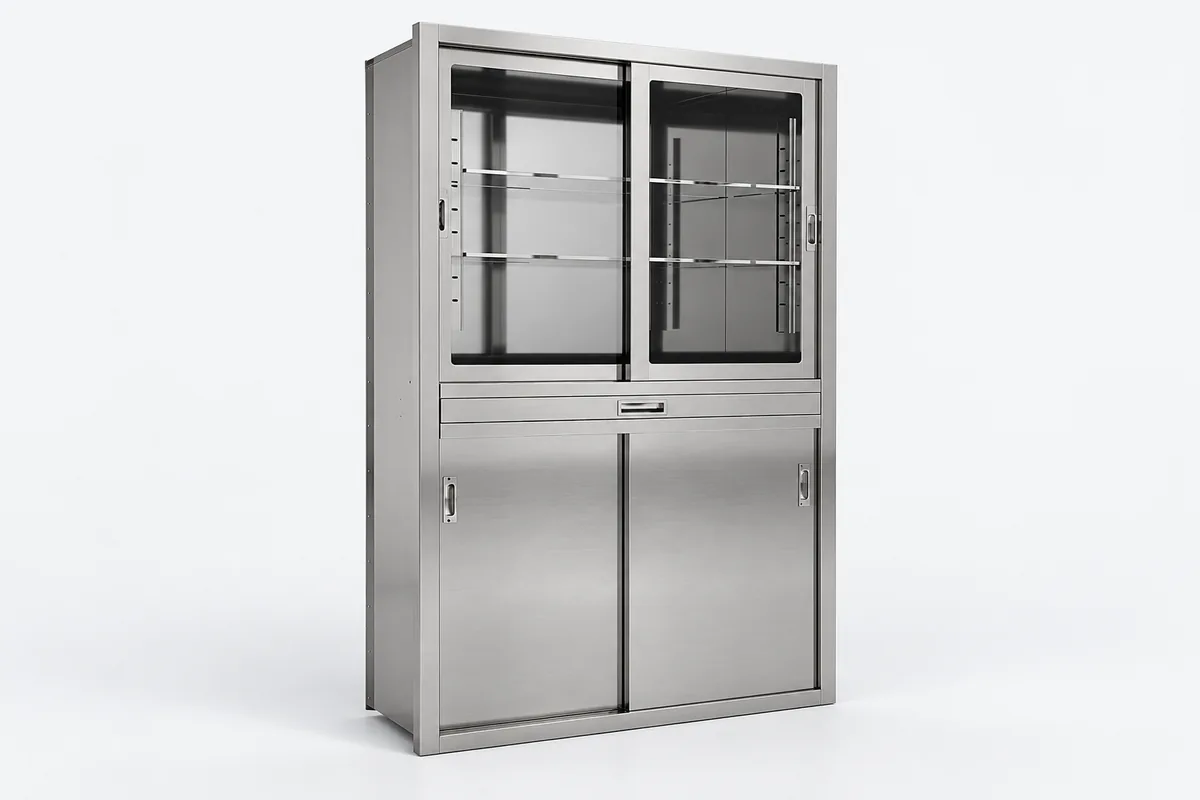
Cleanroom Stainless Steel Storage Cabinet
Product Overview
Features & Specifications



Detailed Description
For a cabinet in a clean area, first ask whether it can be left out
EU GMP Annex 1 (2022) §4.6 requires clean areas to avoid recesses that are difficult to clean and to keep projecting ledges, shelves, cupboards and equipment to a minimum. A cabinet is an object with doors, an internal space and hinges, and every one of them is a cleaning and audit burden. So the first step in planning storage cabinets is not choosing models but sorting items into two groups: items that are taken out at any moment during work and whose storage outside the area would affect the work stay inside; spares, stock and rarely used tools are kept outside the area or in a space before the gowning area. The fewer cabinets remain inside, the more thoroughly each one can be cleaned.What is stored decides how the cabinet is built
| Stored items | Recommended cabinet | Design focus |
|---|---|---|
| Photomasks, ceramic boxes | Photomask storage cabinet, ceramic box storage cabinet, mobile photomask cabinet | Individual compartments and cushioning to prevent vibration and impact |
| Chemicals, reagents | Multi-purpose reagent cabinet | Close-fitting doors; exhaust connection provided where needed |
| Tools, jigs | Tool cabinet, double-door tool cabinet, drawer cabinet | Located compartments for easy counting and return |
| Glassware | Glassware cabinet (glass viewing window) | Stock visible without opening the door; shallow shelves for easy access |
| General materials | Four-door storage cabinet | Separate doors and zones limit what each opening affects |
Write polish as a number, not just a name
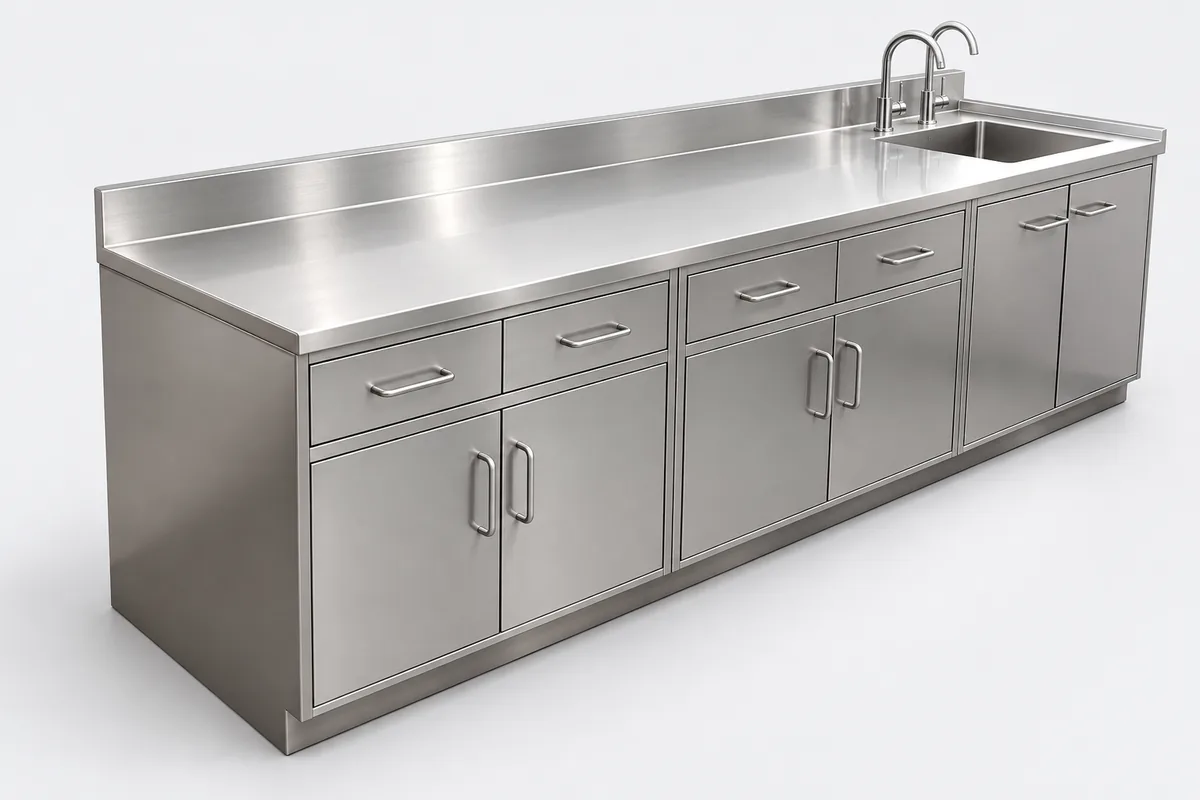
Annex 1 §4.5 requires surfaces to be smooth, impervious and unbroken, and FDA 2004 guidance IV.E requires them to be smooth, hard and easy to clean; these clauses specify the surface condition, not any particular polishing method. The 2B and No.4 often seen in purchasing are just names of stainless steel sheet finishes and do not in themselves specify a surface roughness Ra. If your process really cares about roughness, write the maximum Ra and the measurement method directly into the specification so acceptance has a number to check against; writing only "mirror" or "polished" can be understood very differently by different suppliers.Two limits of a reagent cabinet
Flammable solvents: a single-skin stainless steel reagent cabinet is not a flammable storage cabinet. The flammable liquid storage cabinet of OSHA 1910.106(d)(3) must pass a 10-minute fire test with the interior temperature not exceeding 325°F, and a steel cabinet is double-walled 18-gauge sheet with a 1½-inch air space between the walls; the European equivalent is EN 14470-1:2023. Solvents such as IPA and acetone must be stored in a flammable storage cabinet meeting these requirements. Strong acids and chlorine-containing chemicals: hydrochloric acid and chlorine-based disinfectants attack the passive film on stainless steel, and long-term storage causes pitting inside the cabinet; 316 contains 2–3% molybdenum and resists chloride pitting better than 304, but for large quantities of strong acid a PP acid- and alkali-resistant chemical cabinet is still recommended.Doors, hinges and door gaps
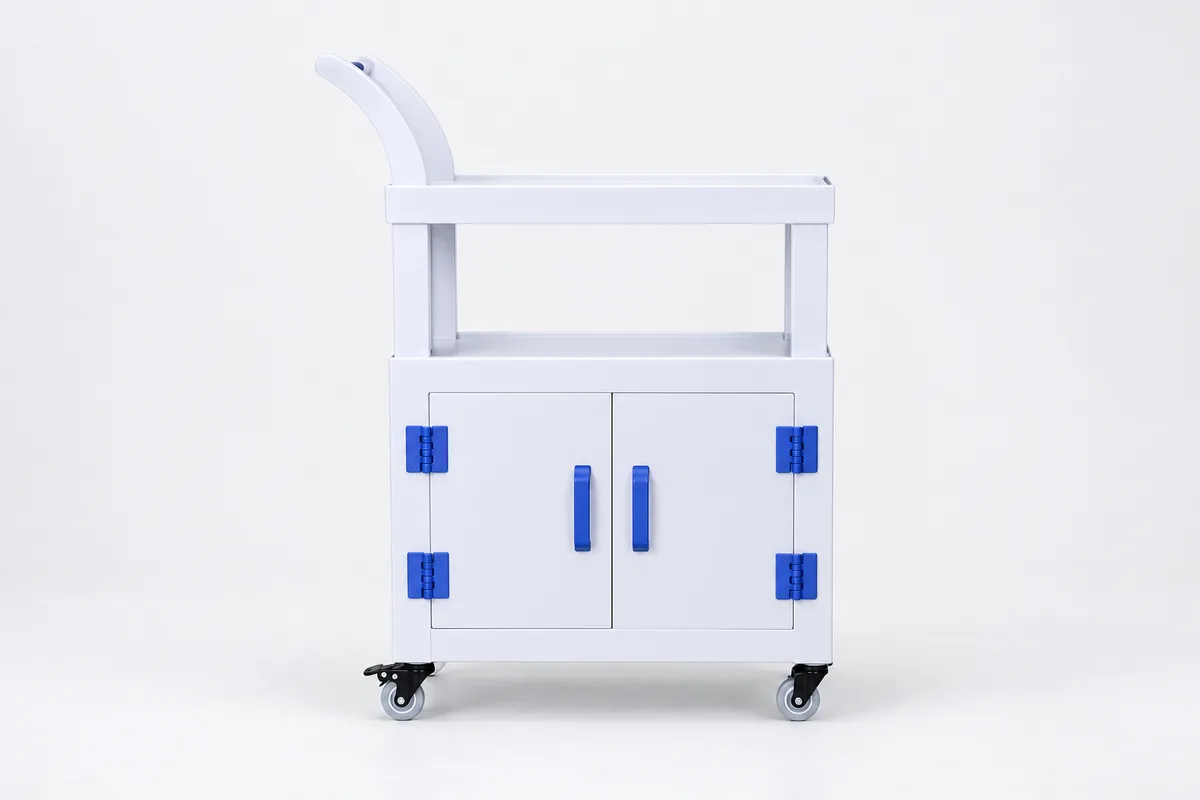
A cabinet door is opened and closed dozens of times a day, and the hinges and door gaps are the first places to collect dust and the first to work loose. When choosing, check whether the hinges are also stainless steel, whether the door gaps are even, and whether there are recessed grooves that can hide dirt once the door is closed. For glassware cabinets with glass windows, check how the glass is joined to the frame; gaskets and retaining strips are the hardest parts to clean. A drawer cabinet adds one more part that rubs: the slides. Every pull of a slide means metal-on-metal friction, so when selecting confirm that the slides are also stainless steel and run smoothly without sticking, and that the inside corners of the drawers are shaped for easy wiping. A mobile photomask cabinet also needs attention to its castors and brakes, on the same principles as a cleanroom cart.Frequently Asked Questions
Is it enough to write "mirror polish" or "No.4" in the purchase specification?
It is not specific enough. 2B and No.4 are just names of stainless steel sheet finishes and do not specify a surface roughness Ra; "mirror" and "polished" are understood differently by each supplier. EU GMP Annex 1 and the FDA guidance require surfaces to be smooth, impervious and easy to clean, without specifying a polishing method. If the process cares about roughness, state the maximum Ra, the measurement locations and the measurement method in the specification and judge acceptance against the numbers; include the roughness of ground welds as well, since welds are usually the roughest spots.
Should a photomask cabinet be fixed or mobile?
It depends on where the photomasks are used. If photomasks are stored centrally and issued by designated staff, choose a fixed photomask storage cabinet, which has more complete compartments and cushioning and is more stable; if photomasks have to move with the tools or process stations, choose a mobile photomask cabinet to cut down how often people walk around carrying photomask boxes. A mobile cabinet needs extra attention to its castors (low-particle, sealed bearings), vibration while it is pushed, and its brakes when parked. Both should have individual compartments made to the shape of the photomask boxes.
Can a stainless steel reagent cabinet hold IPA and hydrochloric acid?
Neither is recommended. IPA is a flammable solvent and should be stored in a flammable storage cabinet that complies with OSHA 1910.106(d)(3) or EN 14470-1:2023, which a single-skin stainless steel cabinet is not; hydrochloric acid attacks the passive film on stainless steel, and its vapour causes pitting inside the cabinet over time. Even 316 is only more resistant, not immune, so large quantities should go in a PP acid- and alkali-resistant chemical cabinet. A stainless steel reagent cabinet suits non-flammable, low-corrosivity reagents and consumables.
Selection References
Before ordering, verify the efficiency grade, media type, and whether the operating environment fits your requirements.