Cleanroom Equipment
Pass Box
Product Overview
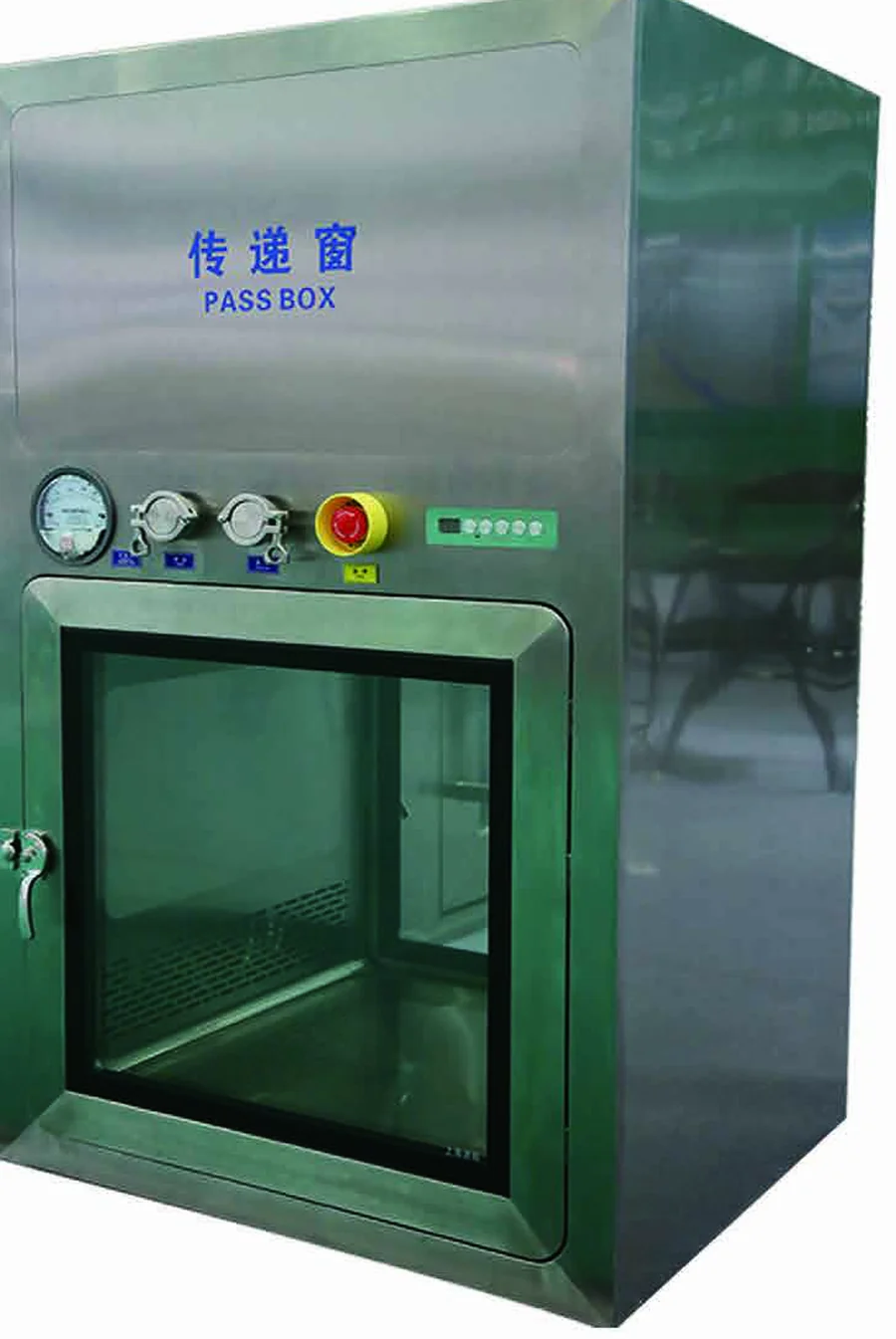
A pass box sits at a cleanroom entrance or between rooms of different cleanliness classes so that materials can be transferred without letting air flow straight through. The two doors are interlocked and cannot open at the same time: an item goes in, the door closes, and only then is the far door opened, so the air on both sides never connects directly.
The plain type relies on the airlock alone and suits transfers between rooms of similar classification. The blow type adds a HEPA filter and nozzles in the top of the chamber so that incoming items are swept with clean air before they pass through — the arrangement used where material enters a high-grade clean zone from outside. Dedicated seals on the inner edge of both doors maintain airtightness.
Key Specifications
- Control
- Electronic or mechanical interlock
- Body Material
- Electrostatic powder-coated cold-rolled steel; all-stainless option available
- Structure
- The air-shower variant carries a top-mounted HEPA filter and nozzles that blow surface particles off items in transit
- Custom Sizes
- Beyond the standard models, built to your opening and payload dimensions



Specifications
- Body Material
- Electrostatic powder-coated cold-rolled steel; all-stainless option available
- Structure
- The air-shower variant carries a top-mounted HEPA filter and nozzles that blow surface particles off items in transit
- Control
- Electronic or mechanical interlock
- Features & Accessories
- Standard: dedicated door seals on both sides and a viewing window. Options: UV germicidal lamp, differential pressure gauge, DOP test port, intercom
- Custom Sizes
- Beyond the standard models, built to your opening and payload dimensions
Standard (No Air Shower)
| Size Code | Length ext./int. (mm) | Width ext./int. (mm) | Height ext./int. (mm) |
|---|---|---|---|
| 555 | 700/500 | 570/500 | 700/500 |
| 666 | 800/600 | 670/600 | 800/600 |
| 777 | 900/700 | 770/700 | 900/700 |
| 888 | 1000/800 | 870/800 | 1000/800 |
Air-Shower Type
| Size Code | Length ext./int. (mm) | Width ext./int. (mm) | Height ext./int. (mm) | Tiers |
|---|---|---|---|---|
| 666 | 800/600 | 670/600 | 1200/600 | 1 |
| 555 | 700/500 | 570/500 | 1700/500・500 | 2 |
Detailed Description
The interlock is the whole point
A pass box looks like nothing more than a box with two doors, and the only thing it actually does is guarantee those two doors never open together. Without the interlock the box becomes a short duct connecting outside air straight into the cleanroom. Mechanical interlocks use linkages: simple, unaffected by power loss, but heavier to operate. Electrical interlocks use solenoid locks and sensors, feel lighter, and allow indicator lamps and buzzers — but the fail state on power loss, locked or released, has to be confirmed. For high classifications or transfers across a pressure differential, an electrical interlock with status indication is the better choice.When the blow type is needed
The deciding question is where the material comes from. For transfers between adjacent rooms inside the clean zone, the plain type is enough — both sides are of similar cleanliness and the airlock does the job. When material enters a high-grade zone from a general area, its packaging carries outside particles, and an airlock cannot remove what is stuck to the object. That is where the blow type belongs, sweeping the surface with clean air first. External material entries in semiconductor and pharmaceutical plants are almost always the blow type.Do not size on the item alone
The internal code is the clear internal dimension: 555 means a 500mm internal square, 888 an 800mm one. Leave working clearance when selecting — if an item only just fits, operators have to reach inside and manoeuvre it, and contact with the inner wall sheds particles. Installation height is the other commonly missed factor. A pass box is built into a wall, and the shelf height dictates the posture used to load and unload. Too low forces bending, too high makes heavy items hazardous, and any floor level difference between the two rooms has to be taken into account at design stage.Selection References
Before ordering, verify the efficiency grade, media type, and whether the operating environment fits your requirements.