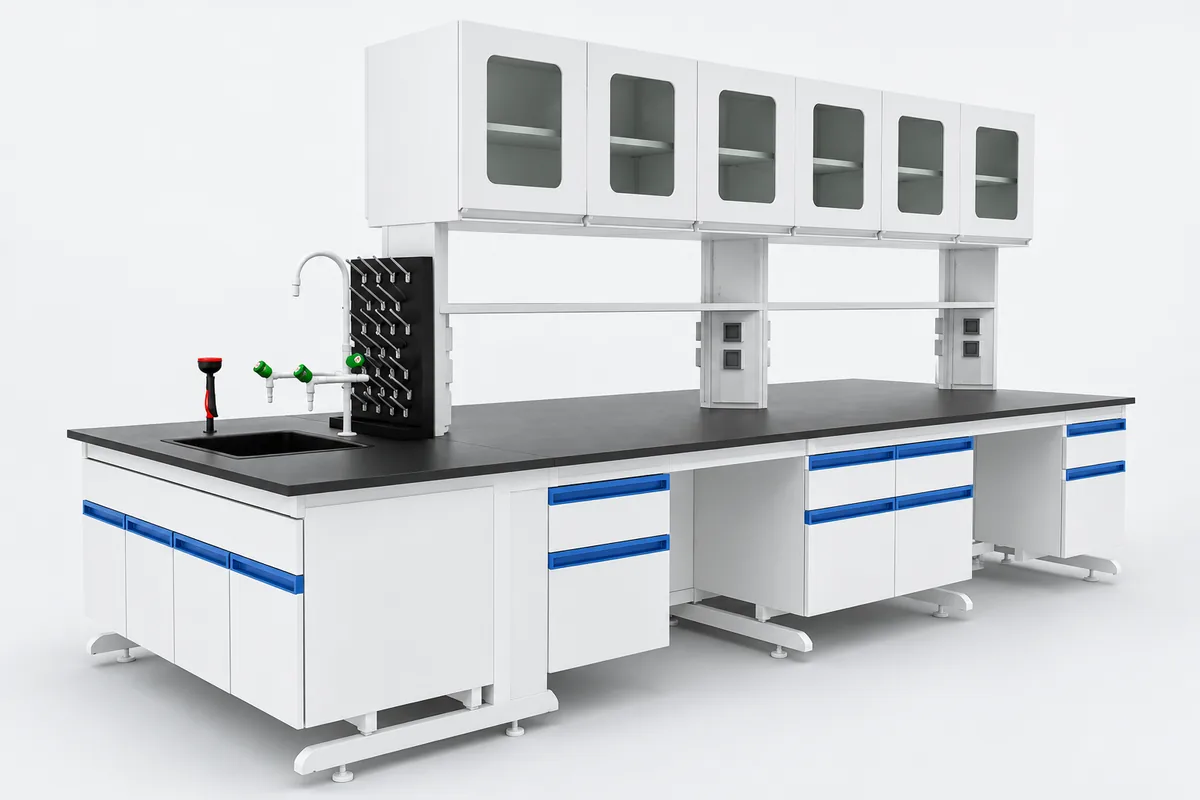
Steel-Wood Laboratory Bench
Product Overview
Features & Specifications



Detailed Description
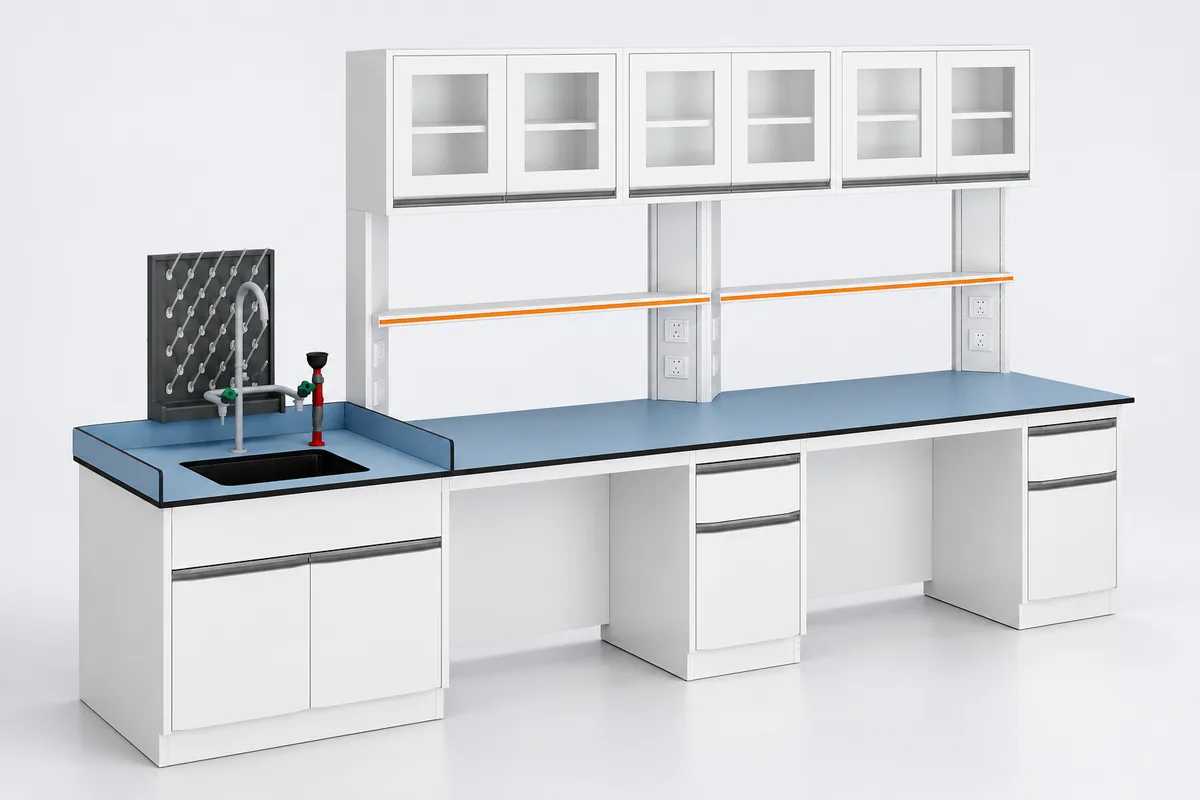
Structure: the steel frame carries the load, the wooden cabinets provide storage
On a steel-wood bench the load path is "worktop → steel frame → floor"; the wooden cabinets do not carry the weight of the instruments on the worktop. With a C-frame the cabinets hang from the cross rails, clear of the floor: they can be pulled out and moved, swapped for drawer units, or left out to give knee space for seated work; with no cabinet feet on the floor, mopping and disinfection are easy. Levelling feet under the frame absorb unevenness in the floor and keep a whole run of worktops level. With floor-standing construction the cabinets stand directly on the floor and share the load. The structure is simpler and cheaper, but the cabinets cannot be moved freely and dirt collects more easily at the joints with the floor.The weak point of wooden cabinets is water, not load
The most common damage on a steel-wood bench is not a rusting frame but cabinets swelling with moisture. The surface of melamine-faced board is water-resistant, but the core is wood fibre; once the edge banding is broken at a single point, moisture is drawn in through the cut edge, and the swelling cannot be reversed. Problems are most likely in two places: cabinets under sinks, and board edges cut on site to let pipes through. Edges sealed at the factory are usually fine, but a cut edge made on site that is not resealed will start to bulge within a few months. So zones should be planned from the start: steel-wood benches in dry work areas, and all-steel, stainless steel or PP cabinets in sink and glassware washing areas. The US NIH laboratory design requirements go further, stating that research laboratories should in principle not use wooden cabinets and shelving unless there is a special need — further evidence that steel-wood benches are not suited to long-term damp conditions.Choosing the worktop
The worktop decides more than the cabinets whether a bench suits your work. The table below compares five common worktops; heat resistance figures come from each material manufacturer's technical data, and the purchase specification governs in practice.| Worktop material | Typical thickness | Heat resistance | Chemical resistance | Suitable areas |
|---|---|---|---|---|
| Solid phenolic resin | 12.7 / 16 / 19 / 25 mm | Moderate; do not place heat sources directly on it | Good against common acids, alkalis and solvents | The main choice for dry chemistry, biology and teaching laboratories |
| Epoxy resin | approx. 19–25 mm | High; heat deflection temperature approx. 190°C | Excellent; very low water absorption | Sink areas, corrosive chemicals, wet areas |
| Ceramic | approx. 20 mm | Highest; up to 550°C per manufacturer data | Excellent, but hydrofluoric acid (HF) damages the surface | Hot plates, high-temperature work areas |
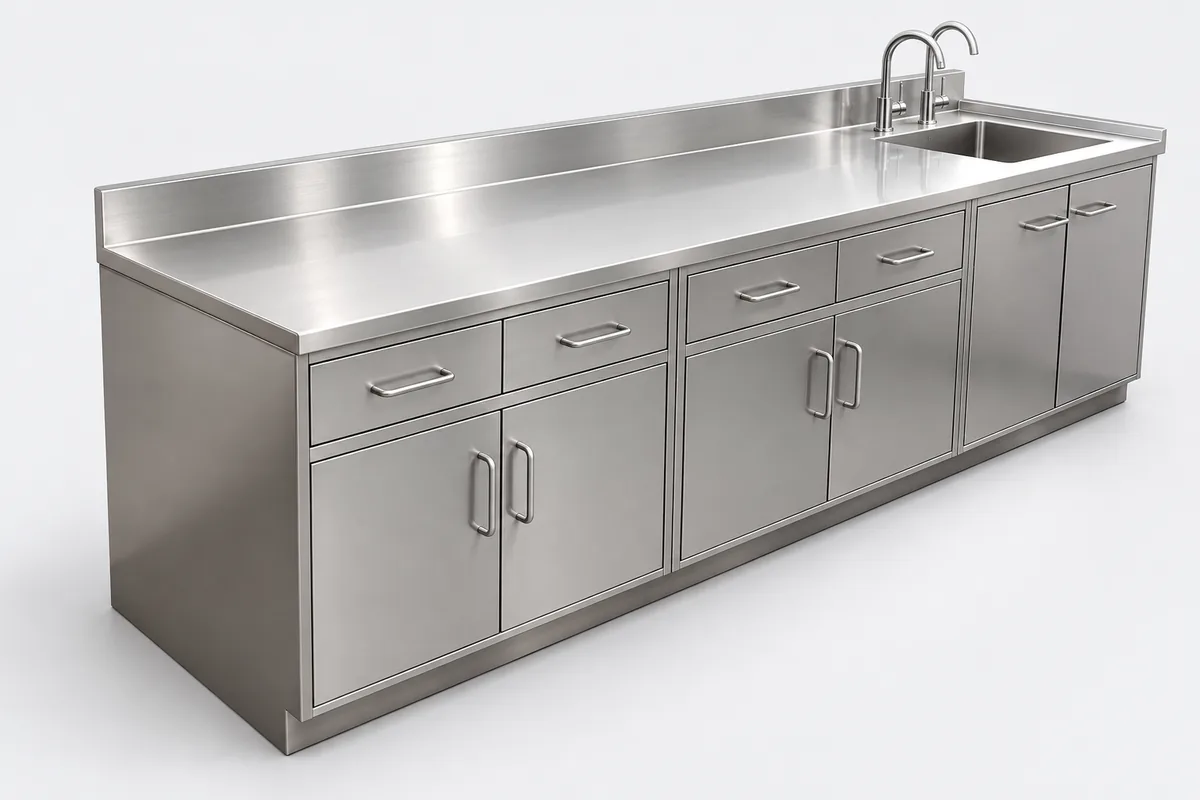
| Stainless steel 304 / 316 | sheet approx. 1.2–2.0 mm | High | Resists solvents; vulnerable to chloride ions and strong acids | Aseptic, biological and glassware washing areas |
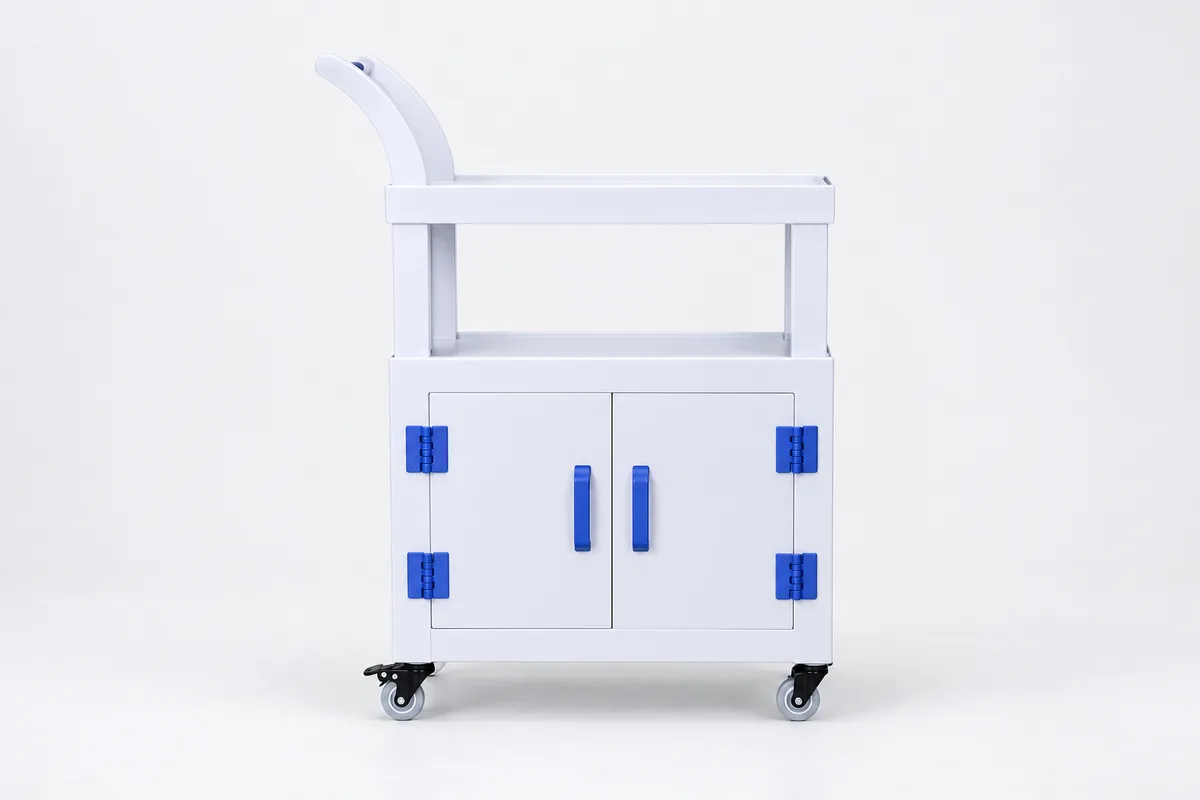
| PP | designed to size | Low; approx. 80–100°C long-term | Excellent; resists hydrofluoric acid | Strong acids, hydrofluoric acid, trace metal analysis |
Reference standards
SEFA 8-W: the wood laboratory casework standard of the US Scientific Equipment and Furniture Association (SEFA), covering cabinet construction, load and chemical resistance tests; metal cabinets are covered by SEFA 8-M. SEFA 3: the work surfaces standard. 49 reagents are applied to the worktop for 24 hours and the damage is rated on grades 0–3; for laboratory grade, no more than 4 reagents may reach the most severe grade 3. GB/T 24820-2024: China's General Technical Requirements for Laboratory Furniture, effective 2025-01-01, replacing GB 24820-2009. Many catalogues list numbers such as GBJ 17-88 and GBJ 18-87. These are withdrawn building steel structure design codes (GBJ 17-88 has been replaced by GB 50017-2017), not product standards for laboratory benches, so do not be misled by such numbers when comparing suppliers.Applications
Teaching laboratories in schools and universities, dry work areas in QC and testing laboratories, instrument rooms, physics and electronics laboratories, and general chemical analysis. For areas that are persistently damp, have many sinks or are wiped frequently with disinfectants, all-steel, stainless steel or PP benches are recommended instead.Frequently Asked Questions
How do I choose between a steel-wood and an all-steel laboratory bench?
The frame and worktop can be exactly the same; the only difference is the cabinets: steel-wood uses 18 mm melamine-faced board, all-steel uses cold-rolled steel sheet. Decide on two factors — ambient humidity and cleaning frequency. In dry teaching laboratories and instrument rooms that are cleaned infrequently, steel-wood benches cost less; in laboratories with many sinks, poor humidity control, or daily wiping with disinfectant, the life of wooden cabinets is noticeably shorter, and all-steel works out more economical over time. A common approach is to mix both in one laboratory: steel-wood in dry areas, all-steel in wet areas.
With a C-frame the cabinets are suspended — how heavy an instrument can the worktop carry?
In a suspended design the weight is carried by the steel frame and cross rails, not the cabinets, so load capacity depends on the steel tube size, leg spacing and worktop span rather than on the cabinets. Ordinary balances, incubators and small centrifuges are no problem; for large centrifuges, heavy analytical instruments or equipment that vibrates, a separate reinforced instrument bench or balance table is recommended. When requesting a quotation, list the weight and position of the heaviest instruments so the frame and support spacing can be designed accordingly.
The wooden cabinets have already swollen with moisture — can they be repaired?
Swelling of MDF or particleboard from water absorption is irreversible; even after drying it does not return to its original size, so the deformed doors or the whole cabinet must be replaced. Fortunately, on a steel-wood bench the cabinets and frame are separate, and suspended cabinets can be replaced individually without touching the worktop or frame. To prevent it, check that every board edge cut on site has been resealed, use PP or steel cabinets under sinks, and repair leaking faucets and drain pipes promptly.
Selection References
Before ordering, verify the efficiency grade, media type, and whether the operating environment fits your requirements.