Laboratory Benches
All-Steel Laboratory Bench
Product Overview
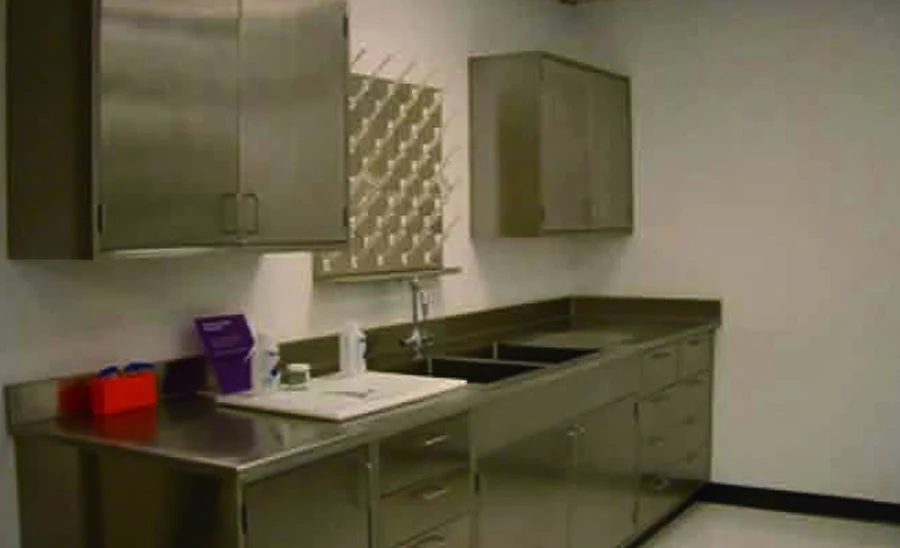
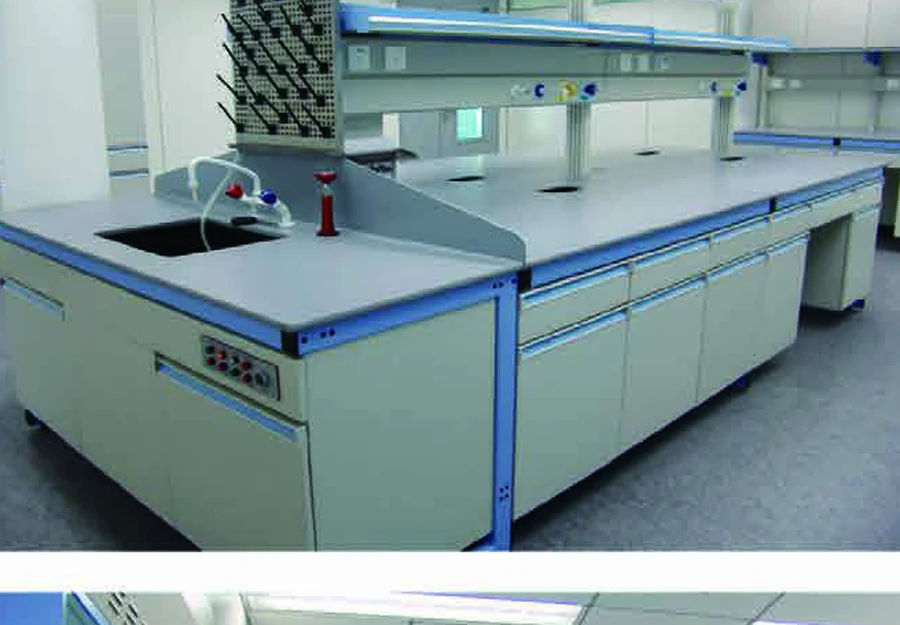
On an all-steel bench both cabinets and frame are metal, with no wooden parts, so there is nothing to swell with moisture and the bench stands up better to routine laboratory cleaning and disinfection.
Cabinets are made from 1.0 and 1.2mm quality cold-rolled steel, blanked on CNC punch presses, CNC folded, gas-shielded welded and polished, then given a seven-stage pickling and phosphating treatment and a high-temperature epoxy powder coating.
Features & Specifications
►Fabrication:gas-shielded welding and polished forming, followed by a seven-stage pickling and phosphating treatment for chemical rust protection
►Surface finish:high-temperature epoxy powder coating; resists acid and alkali corrosion, carries load well and lasts
►Worktop options:solid epoxy board / stainless steel (304, 316) / ceramic / epoxy resin board
►Customisation:modular design; size and configuration selected or adjusted to requirement
►Key specifications: cabinets in 1.0、1.2mm quality cold-rolled steel, blanked on CNC punch press and CNC folded
►Design standards: GBJ17–88/GBJ18–87/BDJ08–68–97



Detailed Description
Where all-steel costs more, and whether it is worth it
The price difference is mostly in the cabinets: steel has to be blanked, folded, welded, pickled, phosphated and coated, which is far more process than cutting and edge-banding board. Whether it pays depends on ambient humidity and cleaning frequency. In laboratories wiped down regularly with disinfectant, or where humidity is poorly controlled, board cabinets have a visibly shorter life than steel, and all-steel works out cheaper over time. Conversely, in a dry teaching laboratory cleaned infrequently, steel-wood offers better value and the budget is better spent on worktop material or ventilation. The design standards GBJ17–88, GBJ18–87 and BDJ08–68–97 are national steel structure standards used to verify the load design of the frame; they are not marketing language.Selection References
Before ordering, verify the efficiency grade, media type, and whether the operating environment fits your requirements.