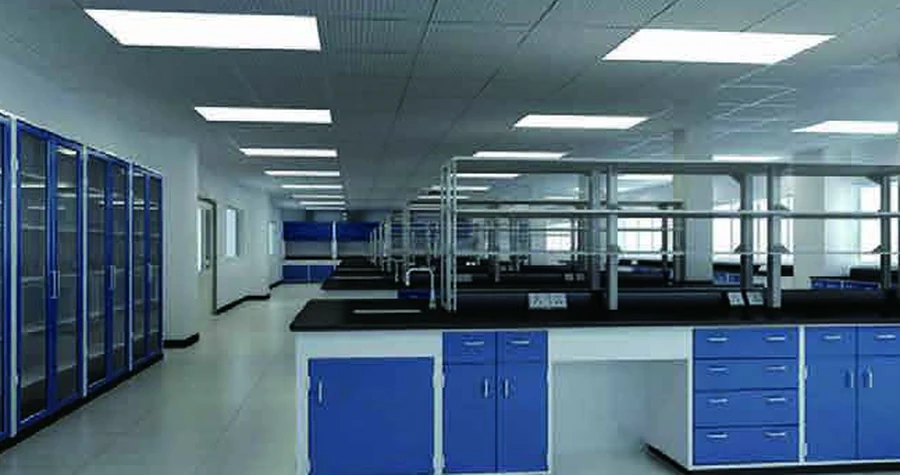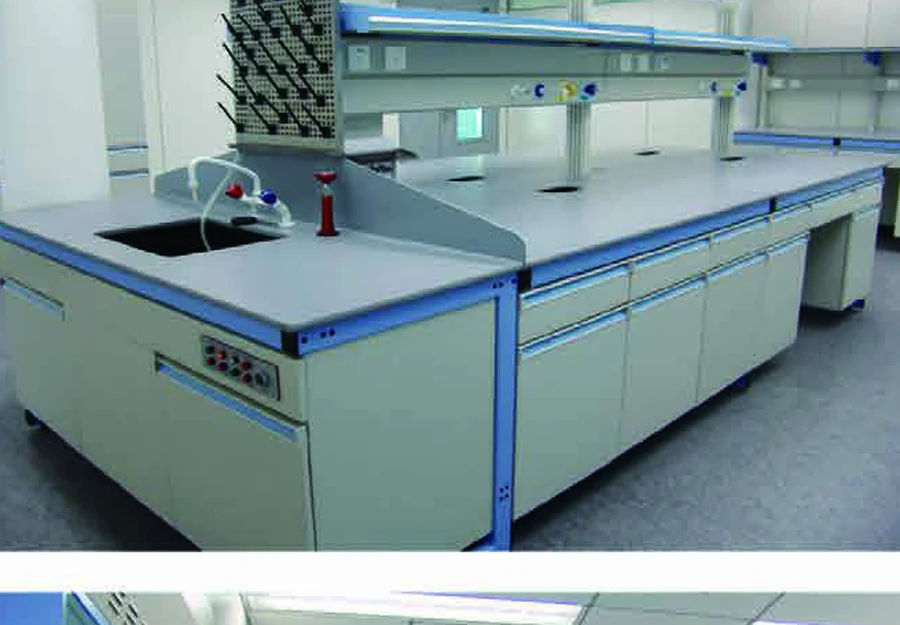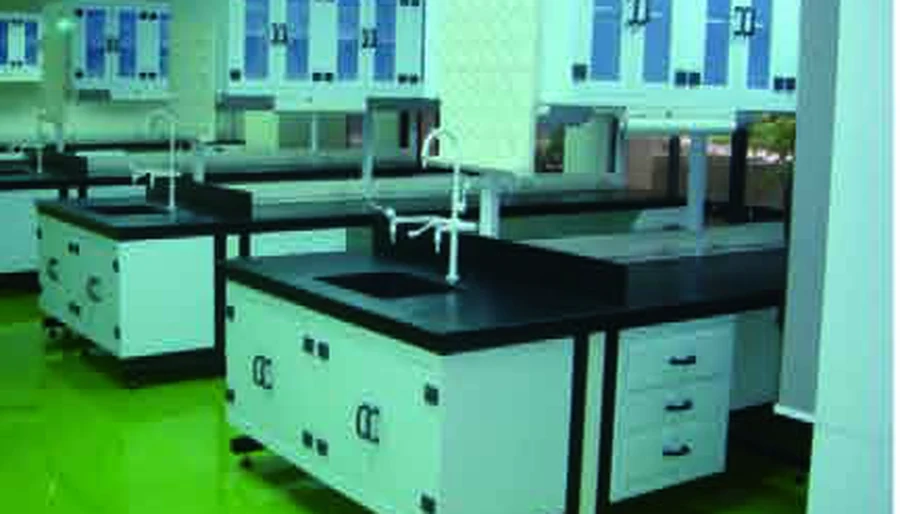
Laboratory Benches
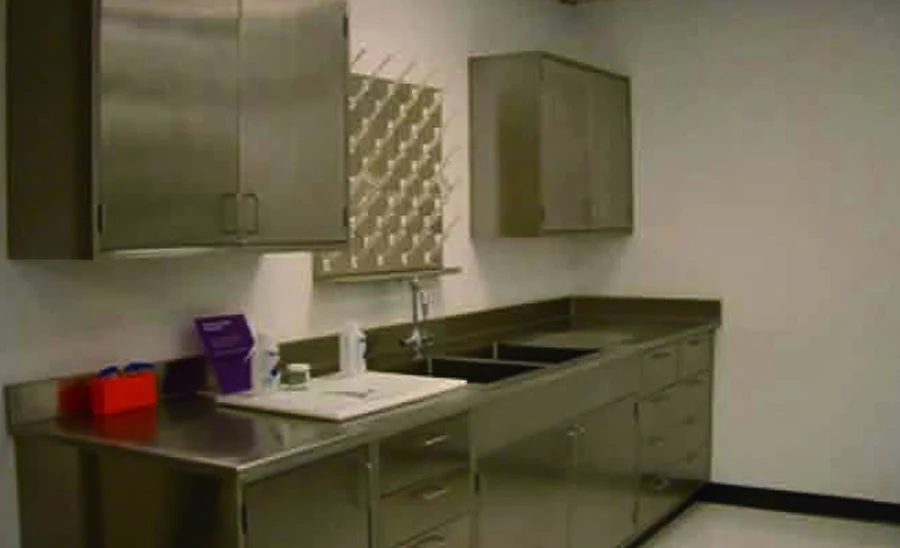
Stainless Steel Laboratory Bench
Product Overview
Stainless steel benches serve the settings with the highest demands on cleanliness and corrosion resistance: aseptic work, biological research, food testing and laboratory operations inside clean zones. The surface does not adsorb, tolerates repeated disinfection, and will not rust from scratches exposing a substrate the way a painted finish does.
Cabinets use 1.0 and 1.2mm 304/316 stainless sheet, CNC blanked, CNC folded, gas-shielded welded and polished. Reagent shelving is formed and welded from 1.0 to 1.2mm stainless sheet with fully adjustable shelf positions, and can carry gas lines, power and water services.
Features & Specifications
►Fabrication:gas-shielded welding and polished forming, followed by a seven-stage pickling and phosphating treatment for chemical rust protection
►Surface finish:high-temperature epoxy powder coating; resists acid and alkali corrosion, carries load well and lasts
►Worktop options:solid epoxy board / stainless steel (304, 316) / ceramic / epoxy resin board
►Customisation:modular design; size and configuration selected or adjusted to requirement
►Key specifications: cabinets in 1.0、1.2mm 304/316 stainless sheet; reagent shelving in 1.0~1.2mm stainless sheet
►Design standards: GBJ17–88/GBJ18–87/BDJ08–68–97
►Multi-service trunking: carries cabling and condensate with multi-purpose use, suited to service outlets at internal and external wall corners



Detailed Description
Choosing between 304 and 316
304 is the default: it handles the chemistry of a general laboratory at a reasonable cost and is sufficient for the large majority of situations. 316 adds molybdenum and resists chloride pitting appreciably better. Coastal sites, laboratories wiped down regularly with chlorine-based disinfectant such as sodium hypochlorite, and work with chlorinated compounds should specify 316. The test is direct: check whether chlorine appears on the cleaning agent and reagent lists. If it does, 304 will show pitting within a few years — pinhole corrosion driving inward from the surface, which polishing cannot remove. Reagent shelving at 1.0 to 1.2mm looks thin, but because it is formed and the shelves adjust, load capacity comes from the structure rather than the gauge. Heavy items still belong on the worktop, not on the reagent shelf.Selection References
Before ordering, verify the efficiency grade, media type, and whether the operating environment fits your requirements.