Multi-person Dual-blow Air Shower Tunnel
Product Overview
Features & Specifications



Detailed Description
At what throughput should you switch to a tunnel
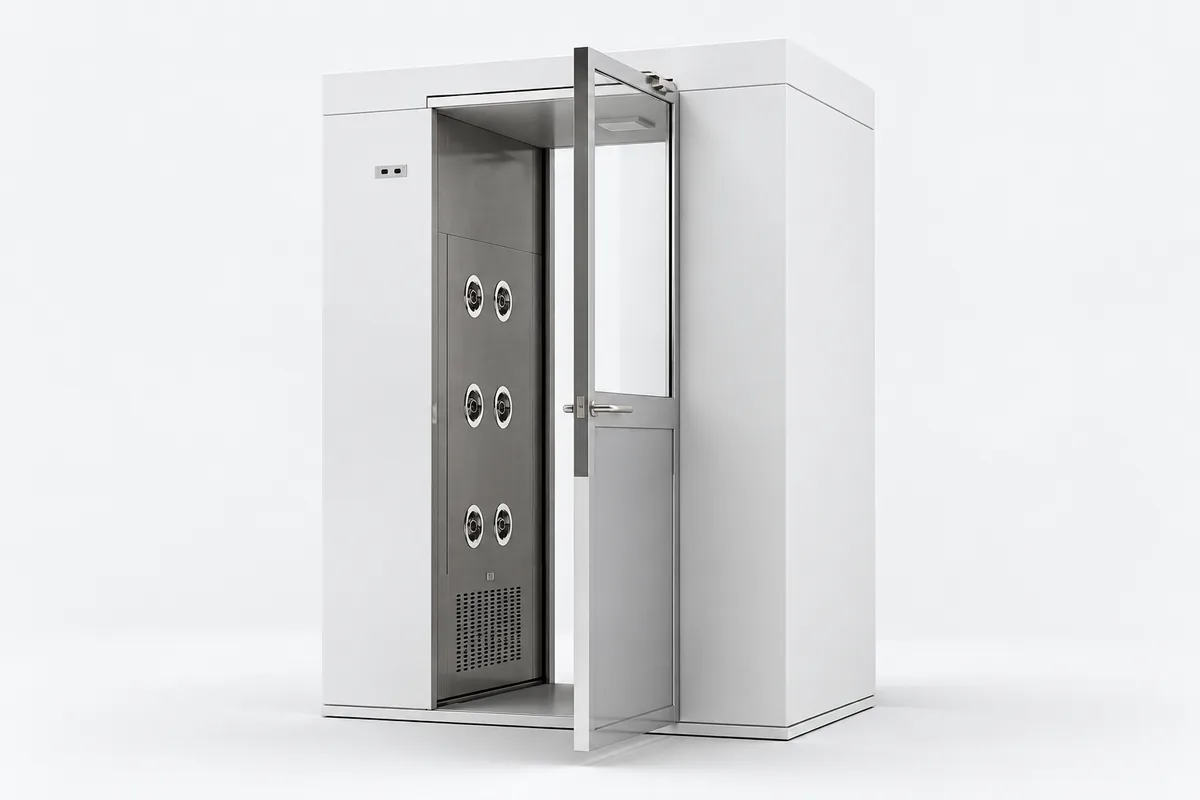
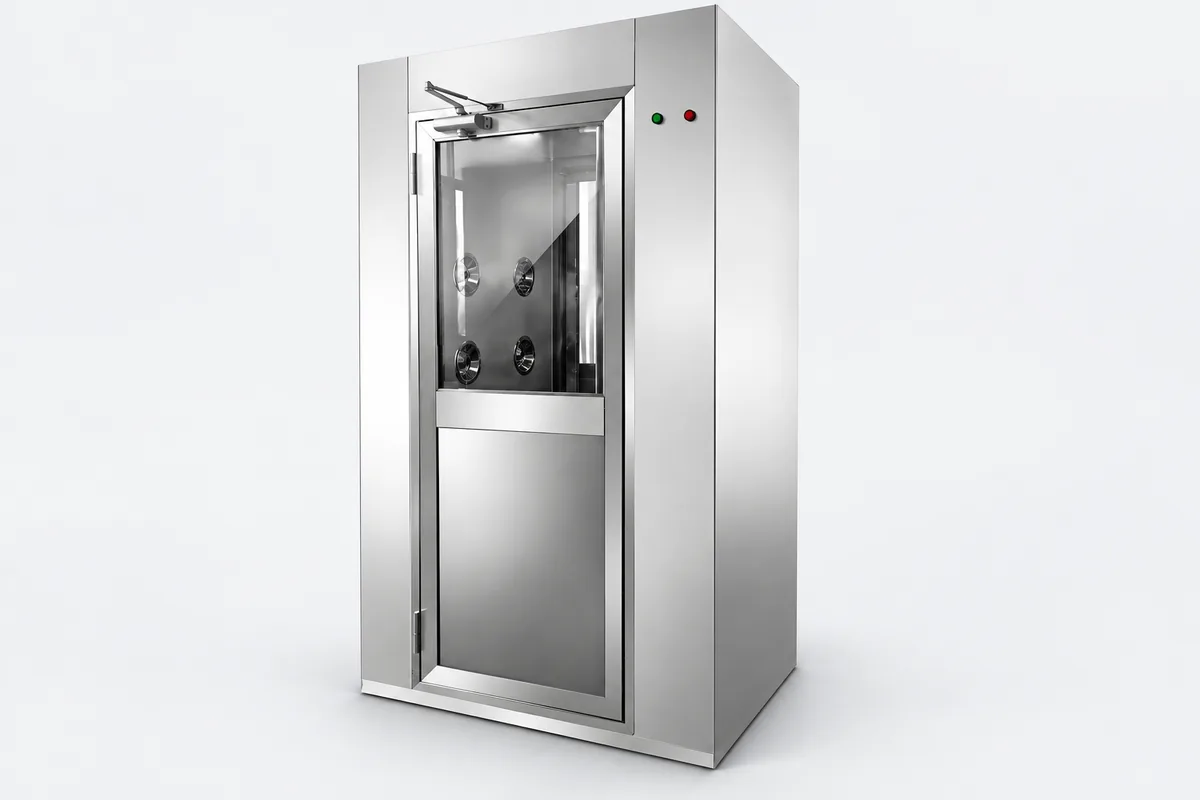
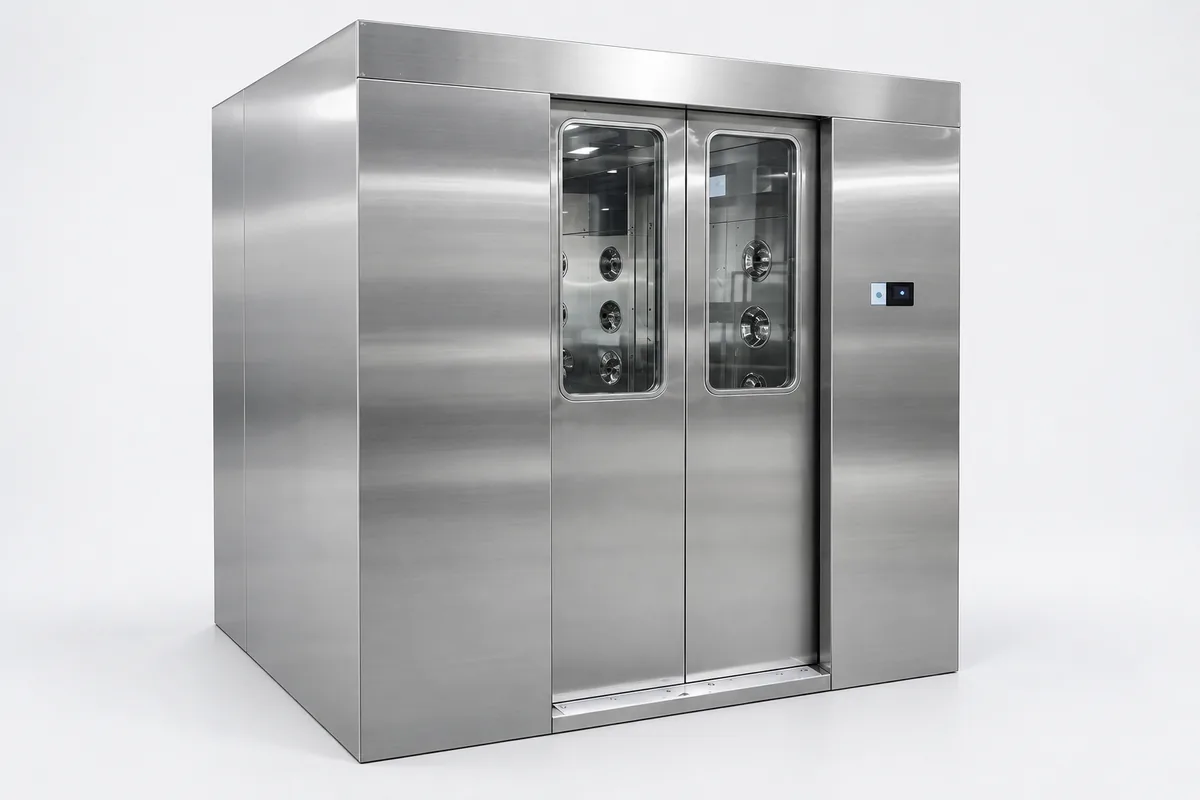
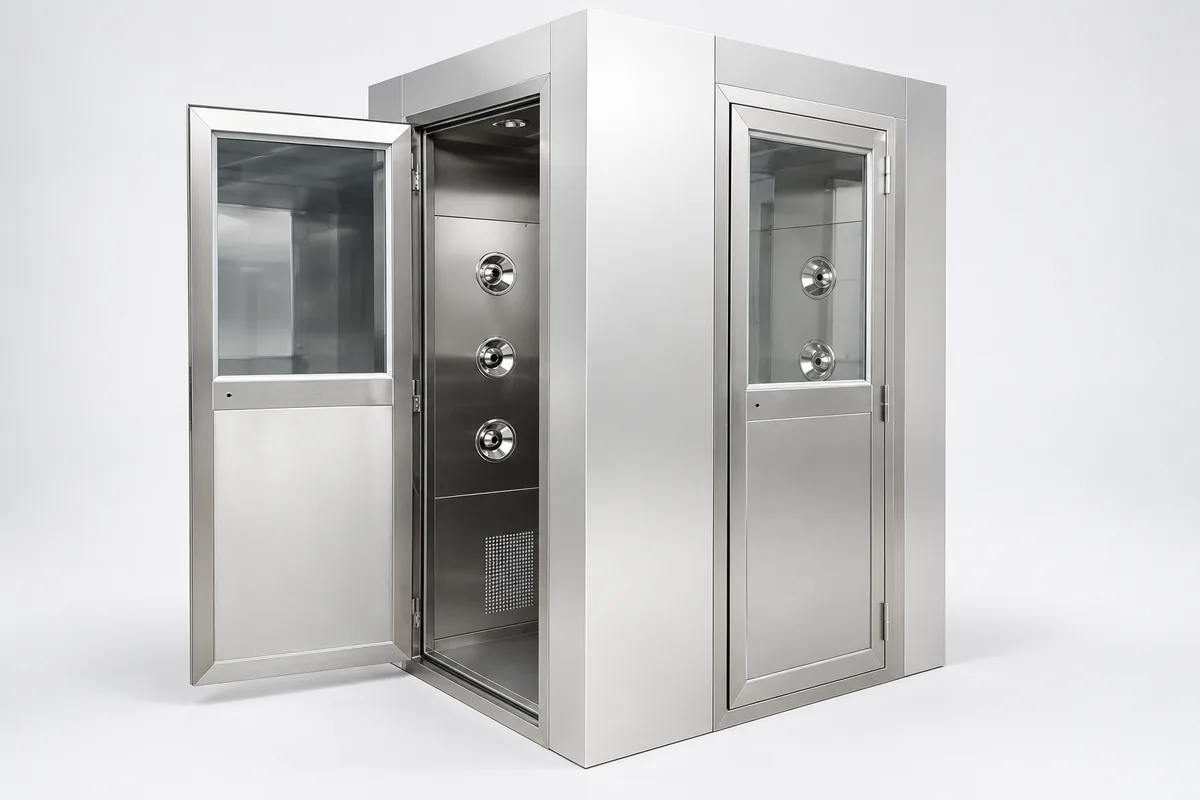
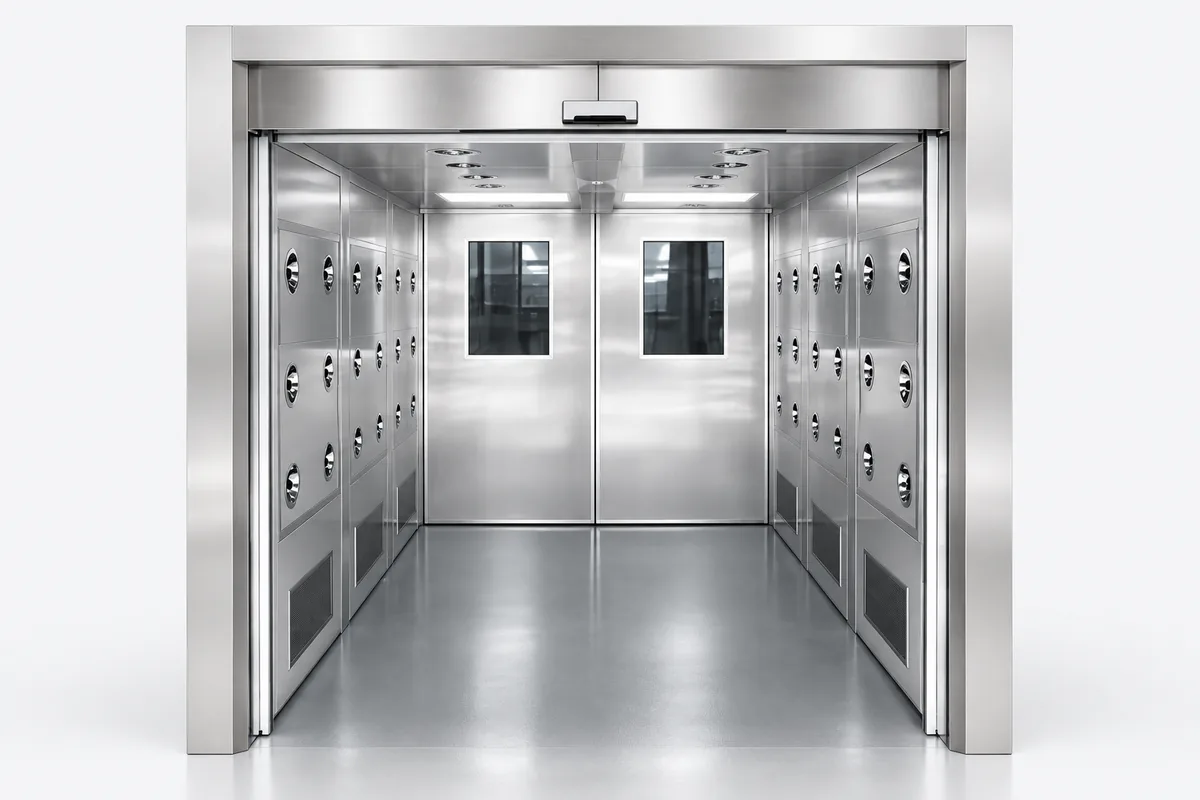
The capacity of a single air shower is determined by "shower time + door opening and closing time". Assuming a 20-second shower and 5 seconds each for entering and leaving, each cycle takes 30 seconds, so only two people can pass per minute; a shift of 300 people would take two and a half hours just to enter. A tunnel lets a group of people share one door cycle and be showered as they walk through, greatly reducing the number of cycles. To decide, work backwards from the number of people per shift and the acceptable entry time window: if a single unit cannot provide enough cycles, a tunnel or several units in parallel should be considered. The differences between the four types are summarized below:| Type | Nozzle arrangement | Suited to | Trade-off |
|---|---|---|---|
| Dual-blow | Both sides, pitch 1500 mm | Shift traffic at most electronics and pharmaceutical plants | Weaker showering of horizontal surfaces |
| Triple-blow | Both sides + overhead, mixed 1500 / 1000 mm pitch | Processes where particles brought in by personnel directly affect yield | Higher airflow, power and cost |
| Serpentine | Both sides, S-shaped path, turning-section pitch approx. 1400 mm | A long path is needed but the available length is insufficient | Complex floor plan, more difficult construction |
| Cargo air shower tunnel with high-speed PVC roll-up doors | Both sides, wider and taller | Pallets, material carts and forklifts going in and out | Treats only material surfaces; does not replace disinfection |
How to determine tunnel length
According to available sources, China's JG/T 296-2010 (Air Shower) requires tunnel-type units to have at least 16 nozzles per meter and a passage time generally of no less than 9 seconds. Converting on that basis, a 1500 mm module needs at least about 24 nozzles; the shorter the tunnel, the more people have to slow down to make up the time. Length is determined first by two things: the number of people each group must hold, and the time people need to walk through. Only when the available length on site is insufficient should the serpentine type below be considered.Triple-blow: covering horizontal surfaces
Air from the side nozzles flows horizontally; it works best on the sides of the body but only skims over horizontal surfaces such as the tops of the shoulders, the top of the hood and the top of a backpack. These are exactly where settled dust is most likely to rest: as people move about in non-clean areas, settling particles fall onto horizontal surfaces. The triple-blow type adds a row of nozzles at the top of the tunnel so that air strikes horizontal surfaces from directly above; the module pitch mixes 1500 mm and 1000 mm, and the combination can be adjusted to the length available on site. The trade-off is higher airflow and power and increased cost, so it is usually used only for processes where particles brought in by personnel directly affect yield.Serpentine: decoupling path length from floor area
A straight tunnel has a practical problem: people walk straight in one direction, so the angle of the front and back of the body relative to the nozzles stays fixed, and covering the whole body relies on signs reminding people to turn around — something that is usually poorly followed. The serpentine type folds the tunnel into an S shape, with a total unfolded length of 6000 mm or more and a turning-section pitch of approx. 1400 mm. People naturally change direction at the corners, so within the same path the body faces the nozzles at different angles without relying on people's cooperation. When a 6 m path is needed but only 2 m of length is available, a straight tunnel cannot do it, but folding it into three sections can.Cargo air shower tunnel with high-speed PVC roll-up doors: the route for materials
Personnel entering go through layers of control — gowning, hand washing, air showers — whereas a material entrance is often just a door and a trolley. EU GMP Annex 1 (2022) §4.10 and §4.11 list material transfer as one of the main sources of contamination in clean areas; the dust that outer packaging accumulates in warehouses and during transport is often more than that carried by a person in a properly worn cleanroom garment. The cargo air shower tunnel enlarges the width and the roll-up door height so that pallets, material carts and forklifts can pass straight through while nozzles on both sides shower the surfaces of the goods. Measurements must include the highest point of the forklift mast and the actual outer edge of the pallet, not just the goods themselves. The shower can only remove loose surface particles; materials entering Grade A / B must still be wiped and disinfected according to procedure.Frequently Asked Questions
How many modules should a multi-person air shower tunnel have?
First work backwards from the number of people per shift and the entry time window to find how many people each group must hold, then see how long it takes people to walk through. According to available sources, JG/T 296-2010 requires tunnel-type units to have at least 16 nozzles per meter and a passage time generally of no less than 9 seconds; a dual-blow module is 1500 mm long, so on that basis each module needs at least about 24 nozzles. When the length on site is insufficient, the serpentine type can be used instead, with a total unfolded length of 6000 mm or more and a turning-section pitch of approx. 1400 mm.
What is the difference between triple-blow and dual-blow, and when is the extra cost worth it?
The triple-blow type adds a row of overhead nozzles to the nozzles on both sides, specifically to treat horizontal surfaces such as the shoulder line, the top of the hood and the top of a backpack — places where settled dust most easily rests and side jets only skim over. The module pitch is a mix of 1500 mm and 1000 mm. The trade-off is higher airflow, power and cost, so the triple-blow type is only worth choosing where particles brought in by personnel directly affect yield, for example at the entrance to front-end processes.
How should the dimensions of a cargo air shower tunnel be measured?
Base them on the handling equipment actually used: measure the width at the maximum outer edge of the pallet or material cart and the height at the highest point of the forklift mast, not just the goods themselves, and then add passing clearance on both sides and above. Both ends of the tunnel have high-speed PVC roll-up doors with electronic interlocking. The shower can only remove loose surface particles; under EU GMP Annex 1 (2022) §4.10 and §4.11, materials entering Grade A / B must still go through a validated disinfection procedure.
Selection References
Before ordering, verify the efficiency grade, media type, and whether the operating environment fits your requirements.