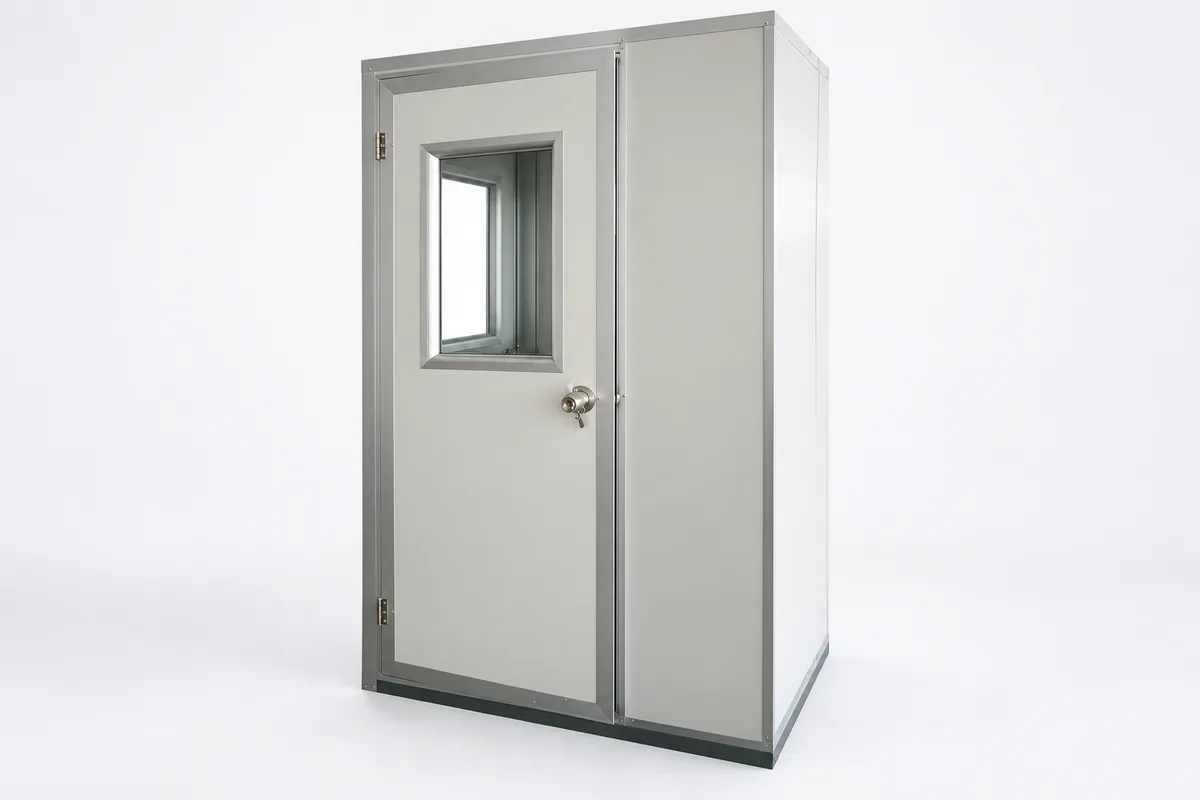
Simple-Type Air Shower
Product Overview
Features & Specifications



Detailed Description
What has been simplified
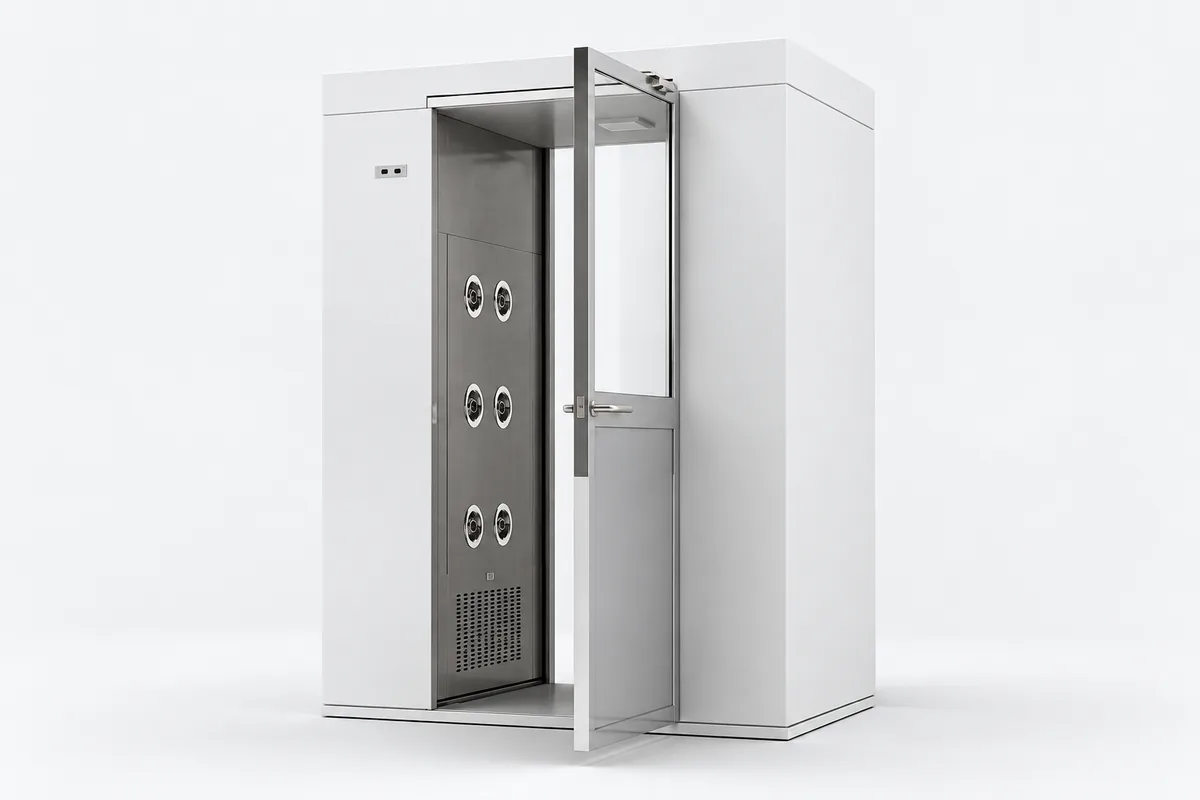
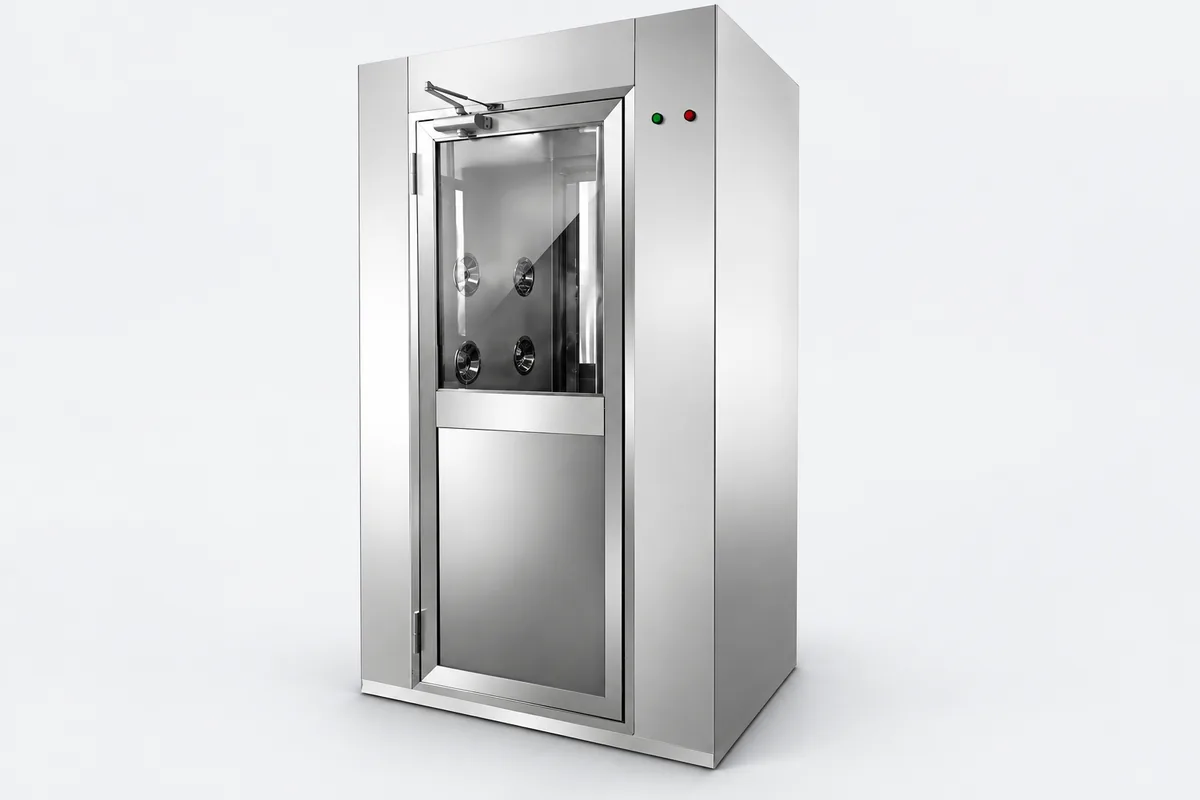
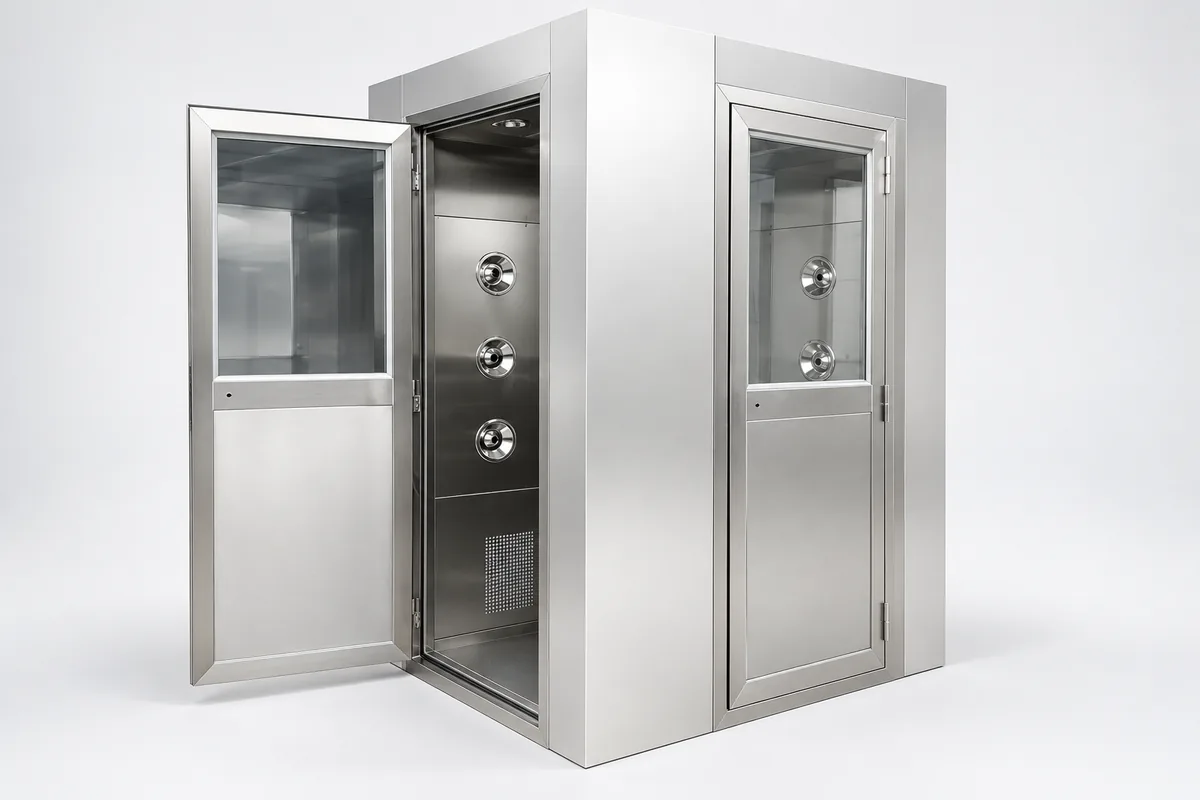
The difference between the simple type and a standard air shower lies in what has been removed. Automatic doors, multi-stage air velocity, a larger enclosure and a complex control interface are all left out, keeping only a single shower section, manual doors and basic time control. Three things cannot be left out: the HEPA filter, adjustable nozzles and the two-door interlock. Of these, the interlock is the least negotiable. The function of an air shower at a clean-area entrance that truly holds up is the airlock; if a simple-type unit drops even the interlock, all that is left is a blower, and it would be better not to install one at all.Single-side or dual-side blow
Single-side blow has nozzles on one wall only, commonly about 6 nozzles, a fan of about 0.55–0.65 kW and an enclosure about 1100–1200 mm wide, saving the most space and power; the trade-off is that people must turn around during the shower for the back and the other side to be reached. Dual-side blow has nozzles on both walls, commonly about 12 nozzles, about 1.1 kW and an enclosure about 1300–1400 mm wide, so both sides are showered at once even when the person stands still. Where the entrance width allows, dual-side blow depends less on people's cooperation; where space really is insufficient, single-side blow should be paired with clear turn-around markings.Suitable applications
The simple type suits entrances where three conditions are all met: throughput is low, so people passing one at a time do not queue; the cleanliness class is ISO 7–8 (per the FDA 2004 cross-reference, equivalent to Fed-Std-209E Class 10,000 and Class 100,000; that standard was withdrawn in 2001 and replaced by ISO 14644-1); and only people go in and out, without trolleys or materials. Small laboratories, QC rooms, electronics assembly rooms and R&D prototyping rooms mostly fall into this category.Unsuitable applications
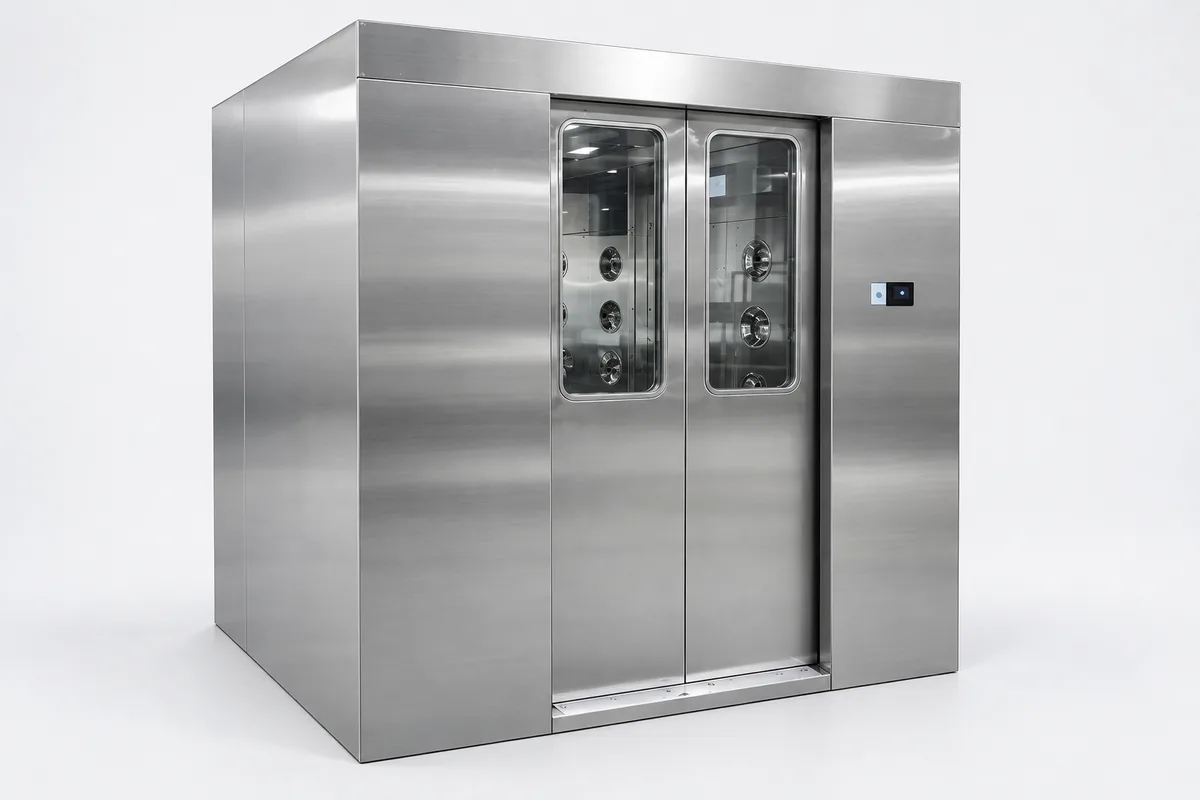
When people arrive en masse at peak times, a single unit does not provide enough cycles, and a multi-person tunnel or parallel units should be used instead. When trolleys or tote boxes regularly go in and out, the enclosure depth and door width are insufficient, and the twin-unit or roll-up door type should be chosen. When surfaces are wiped daily with chlorine-based or strongly oxidizing disinfectants, powder-coated steel sheet will rust once scratched down to the substrate, and the stainless steel type should be chosen. Note also that EU GMP Annex 1 (2022) does not require an air shower anywhere in its text; personnel contamination control in high-grade aseptic areas relies on the gowning procedure and airlocks, and a simple-type air shower cannot be expected to make up for gaps in procedure.| Site situation | Is the simple type suitable | Recommended alternative |
|---|---|---|
| Single person passing in sequence, ISO 7–8 | Suitable | Not needed |
| Concentrated entry at peak times, queues form | Not suitable | Multi-person air shower tunnel or parallel units |
| Trolleys or tote boxes regularly pass through | Not suitable | Twin-unit or roll-up door type |
| Wiped daily with chlorine-based disinfectants | Not suitable | Stainless steel type |
| Entrance at a corner, or flows must be separated | Not suitable | LT type |
Confirm three things before installation
Power supply: single-phase 220 V or three-phase 380 V depending on the model; confirm the power supply available on site first, then choose the model. Door swing direction: manual doors need swing clearance, and both the entrance and exit sides must be measured. Return air and filter replacement: according to available sources, JG/T 296-2010 recommends that the face velocity at the return air inlet should not exceed 2 m/s; nothing should be stacked in front of the return air inlet, and working space must be left at the service side for filter replacement.Frequently Asked Questions
Is single-side blow enough for a simple-type air shower?
If there is enough space, choose dual-side blow. Single-side blow commonly has about 6 nozzles and an enclosure about 1100–1200 mm wide, and people must turn around during the shower for the back and the other side to be reached; dual-side blow commonly has about 12 nozzles and is about 1300–1400 mm wide, showering both sides at once while the person stands still. Single-side blow suits locations where the entrance width really is insufficient, and turn-around markings should be placed inside the enclosure.
Can the simple type be connected to an ordinary single-phase power supply?
It depends on the model. In typical configurations, the single-side blow fan is about 0.55–0.65 kW and the dual-side blow fan about 1.1 kW, and there are models for single-phase 220 V as well as models for three-phase 380 V. When requesting a quote, please first state the number of phases and the voltage available on site so that the model can be selected accordingly, rather than discovering after delivery that a three-phase supply has to be run.
How many people is the simple type suited to?
The simple type is designed for one person passing at a time. Estimating a 10–15 s shower plus two door openings and closings, each person needs about 20–30 s, giving about 2–3 people per minute at peak. If dozens of people or more on a shift must enter within a short time, queues will form at the entrance, and a multi-person air shower tunnel or several units in parallel should be used instead of shortening the shower time.
Selection References
Before ordering, verify the efficiency grade, media type, and whether the operating environment fits your requirements.