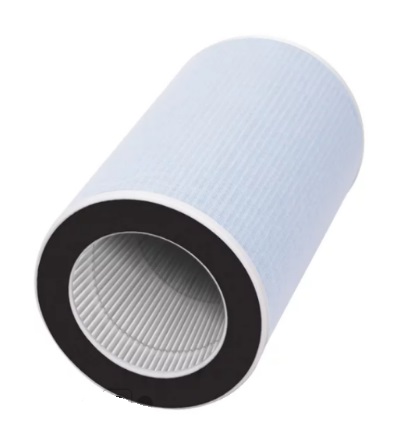
Air Purifier True HEPA Filter Cartridge
Product Overview
Features & Specifications



Detailed Description
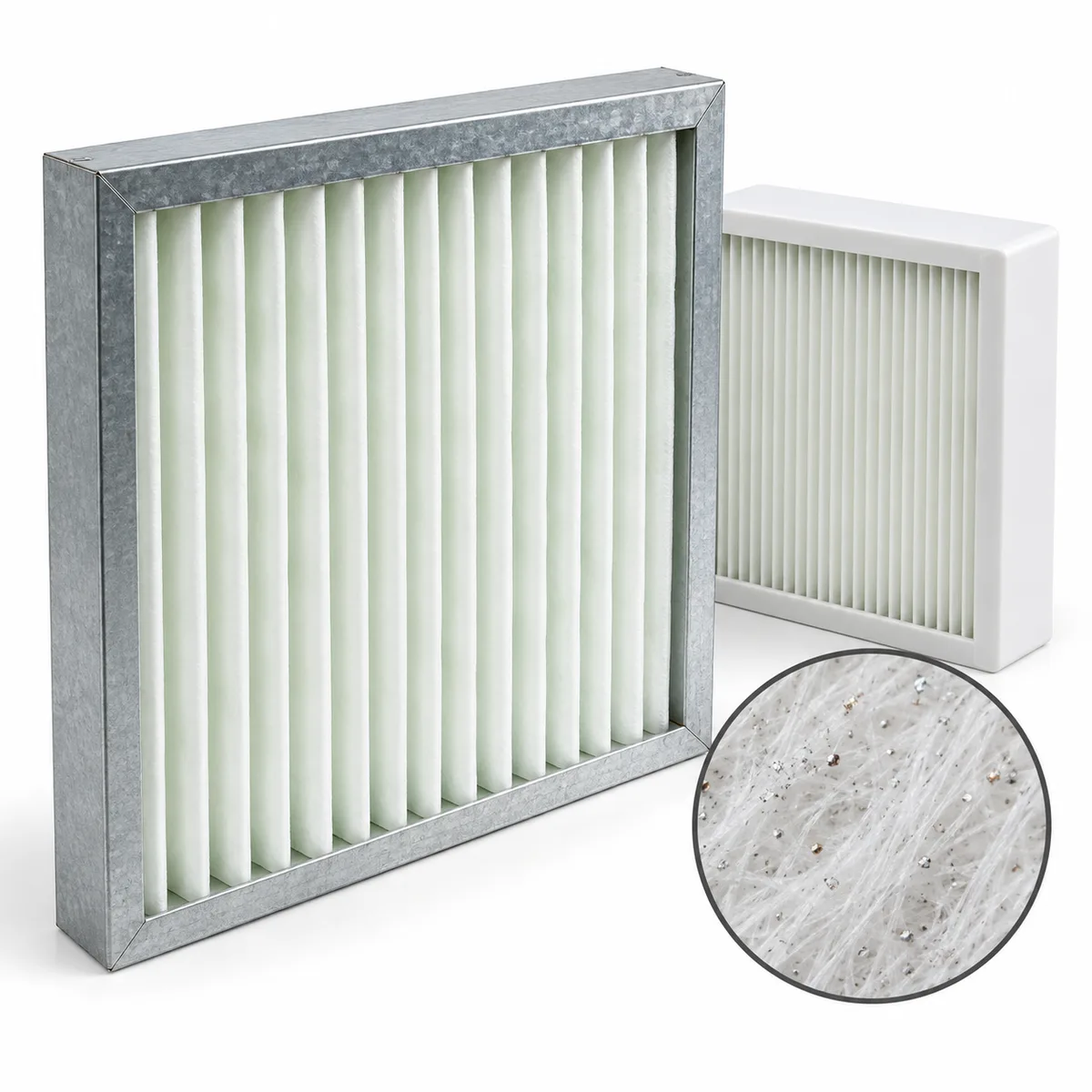
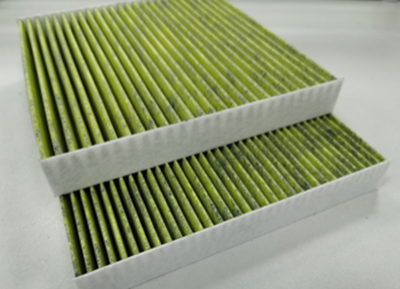
We make both cylindrical and flat types
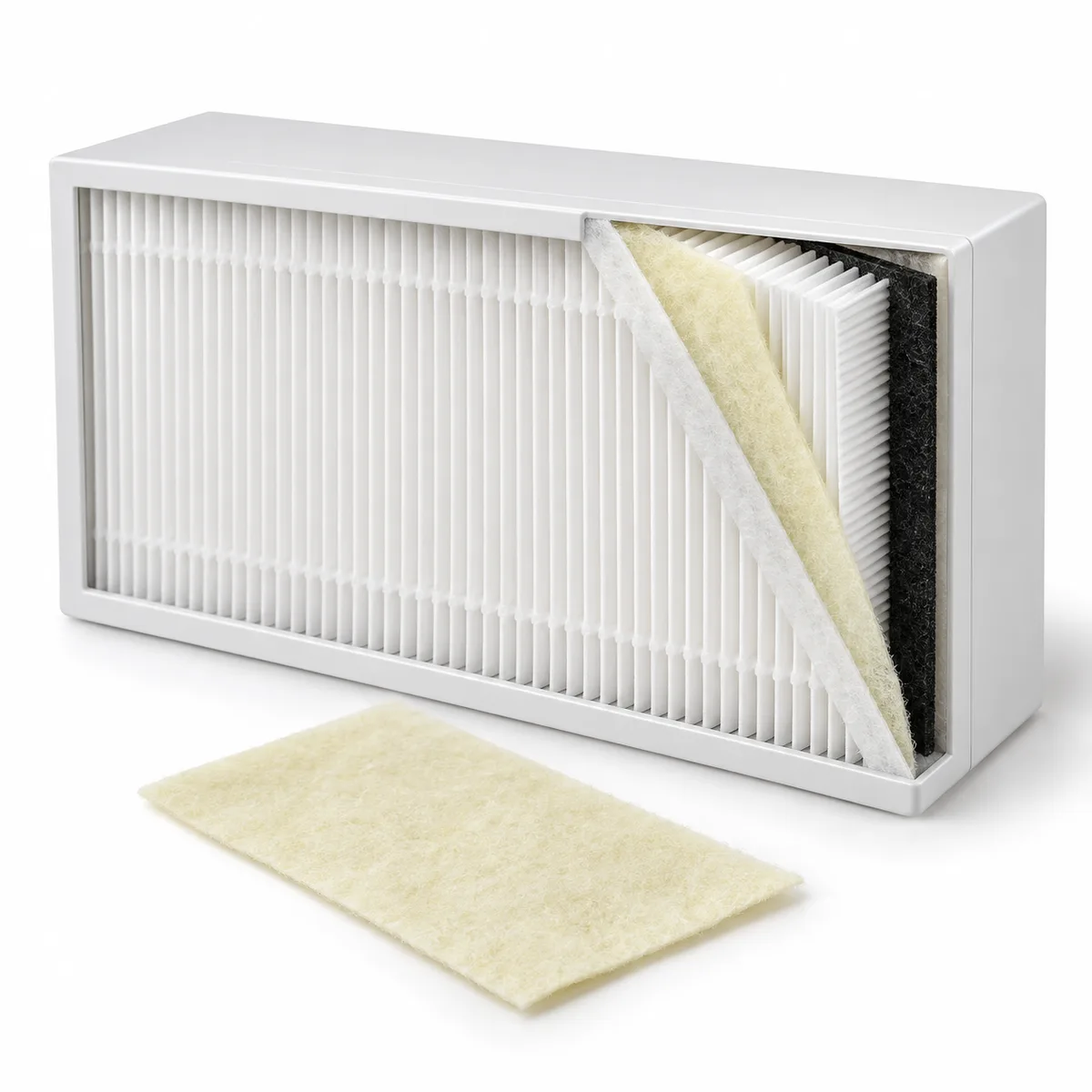
Yes — both are made to match the original filter. Examples we have made: - Cylindrical: φ200×φ144×290 mm (outer diameter × inner diameter × height, H12 melt-blown media + activated carbon), φ240/φ165×260 mm, φ350/φ171.5×255 mm - Flat composite: 475×205×95 mm, with the pre-filter, carbon non-woven, HEPA and antimicrobial layers stacked and pleated together Size, layers and grade are all set by the customer's model. When replacing filters for the same model, ordering to the specification of the original filter is the safest choice.What layers are inside a cartridge?
A typical combination has three or four layers, each with its own job: the pre-filter takes the big stuff, the carbon takes odors, and the HEPA takes fine particles.Layers in a composite air purifier filter
Cylindrical and flat types (made to the customer's model)
Schematic, not to scale. Number, order and thickness of layers and the HEPA grade depend on the customer's model; cylindrical filters usually have no antimicrobial layer.
How is it made, and can it carry our brand?
Taking the flat composite type as an example, the process is roughly: - Pleating: the media is folded into about 88–109 pleats (depending on size) - Glue on both faces to hold the pleats in shape - Paper frame - Self-adhesive foam, which is compressed when the filter is installed so air cannot leak around the edges - Pull handle for easy removal and replacement We can apply the customer's own brand label: we have shipped models carrying a customer's English label, and some customers reorder the same composite filter on a regular basis.True HEPA, HEPA-type, EN 1822 H classes: who defines each?
These terms all appear on air purifier filters, but they are not one system: only "HEPA" (US) and the EN 1822 H classes (Europe) have real definitions, while nobody governs "True HEPA" or "HEPA-type".| Term | Who defines it | How it is judged |
|---|---|---|
| HEPA | Defined by the US Department of Energy (DOE), adopted by the US EPA | Efficiency ≥ 99.97% on 0.3 μm particles |
| True HEPA | No regulation or certification body; a marketing term | No common test method; used to set a product apart from "HEPA-type" |
| HEPA-type / HEPA-like | No standard definition | No threshold; efficiency depends on the figure the maker states |
| EN 1822 H classes (H13, H14, etc.) | European standard EN 1822 | Overall efficiency measured at the most penetrating particle size (MPPS), then classified |
CADR and P4 / F4 are numbers for the whole purifier
They are not filter specifications. CADR (clean air delivery rate) and CCM (cumulative clean mass; P1–P4 for particles, F1–F4 for gaseous pollutants such as formaldehyde) are test metrics in China's national standard GB/T 18801 for the whole air purifier. The results depend on the fan, the air path and how well the housing seals, so the same filter gives different numbers in different machines. What can be specified for the filter itself is its size, layers, HEPA grade and materials. We make filters to the original machine's specification and do not label filters with CADR or CCM.Frequently Asked Questions
Are the CADR, P4 and F4 figures on an air purifier filter the filter's own specifications?
No. CADR and the CCM grades (P1–P4 for particles, F1–F4 for gaseous pollutants such as formaldehyde) are test metrics in China's GB/T 18801 for the whole air purifier. They depend on the fan, air path and housing seal, so the same filter gives different numbers in different machines. What you can specify for the filter itself is size, layers, HEPA grade (we have made H10–H14) and materials.
Can you ship the filters under our own brand, with our label?
Yes. We have shipped air purifier filters carrying a customer's English brand label, and some customers regularly reorder the same composite filter. When you ask for a quote, tell us the label content, size and where it goes, together with the filter specification and quantity.
Can you make both cylindrical and flat filters? What information do you need?
We have made both. Cylindrical examples include φ200×φ144×290 mm and φ350/φ171.5×255 mm; a flat composite example is 475×205×95 mm. Please send the original filter (or photos with measured dimensions): outer diameter, inner diameter and height for a cylinder, or length, width and thickness for a flat filter, plus the layers, HEPA grade and quantity.
Can HEPA and activated carbon be combined in one filter?
Yes — this is the most common design for air purifier filters. A cylindrical filter can combine, for example, H12 melt-blown media and activated carbon in one cylinder; a flat filter stacks the pre-filter, carbon non-woven, HEPA and antimicrobial layer and pleats them together, as in our 475×205×95 mm model. More layers mean more airflow resistance, so the layers and thickness must suit the space and fan of the original machine.
We want to label our filter "True HEPA". Is there an official certification to apply for?
No. No regulation or certification body governs "True HEPA"; it is a marketing term makers use to set themselves apart from "HEPA-type". What is clearly defined is HEPA as set by the US Department of Energy (DOE): efficiency ≥ 99.97% on 0.3 μm particles. Europe also has the EN 1822 H classes, measured at MPPS with a different method. When ordering, we suggest stating the grade you need, or the efficiency together with its test conditions.
Selection References
Before ordering, verify the efficiency grade, media type, and whether the operating environment fits your requirements.