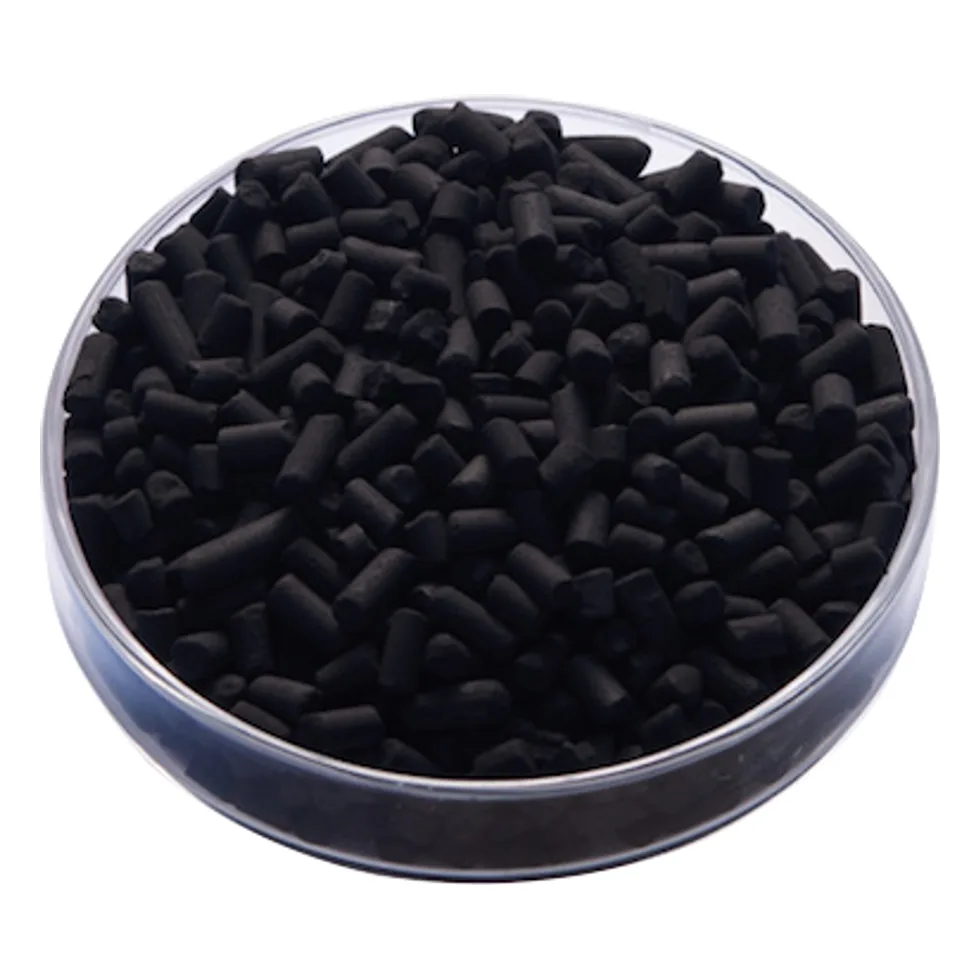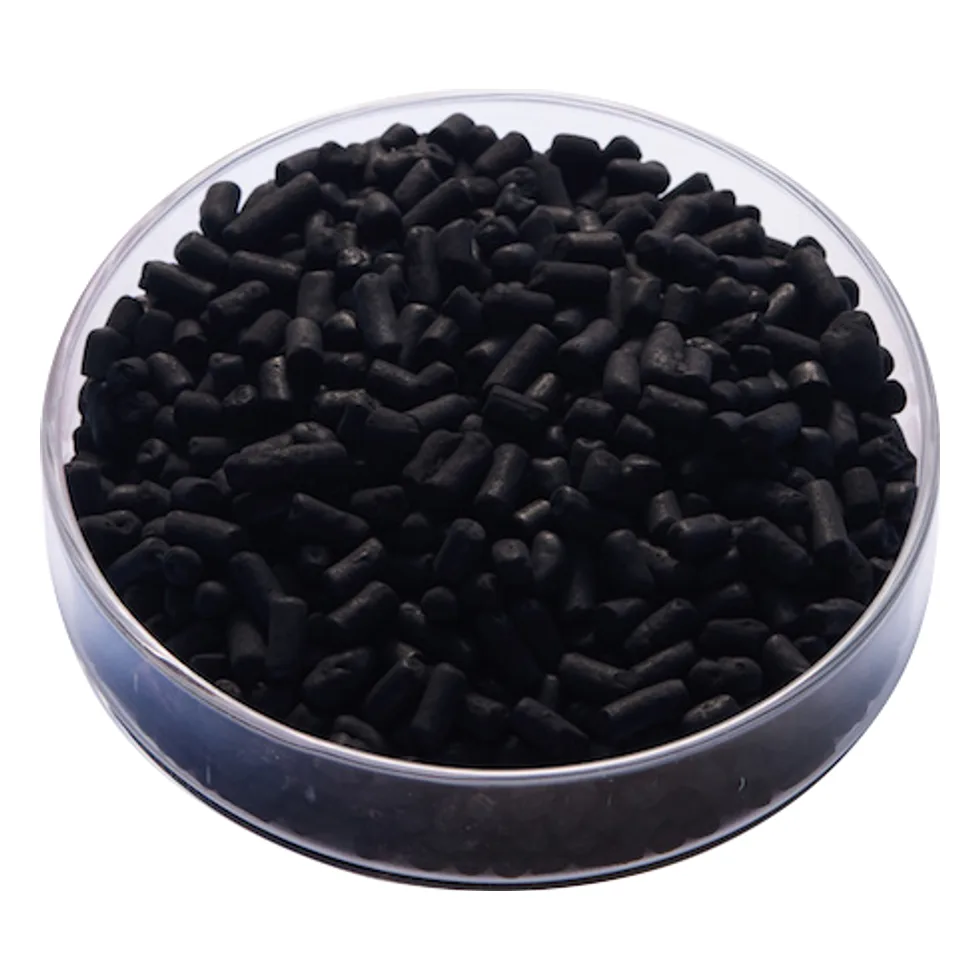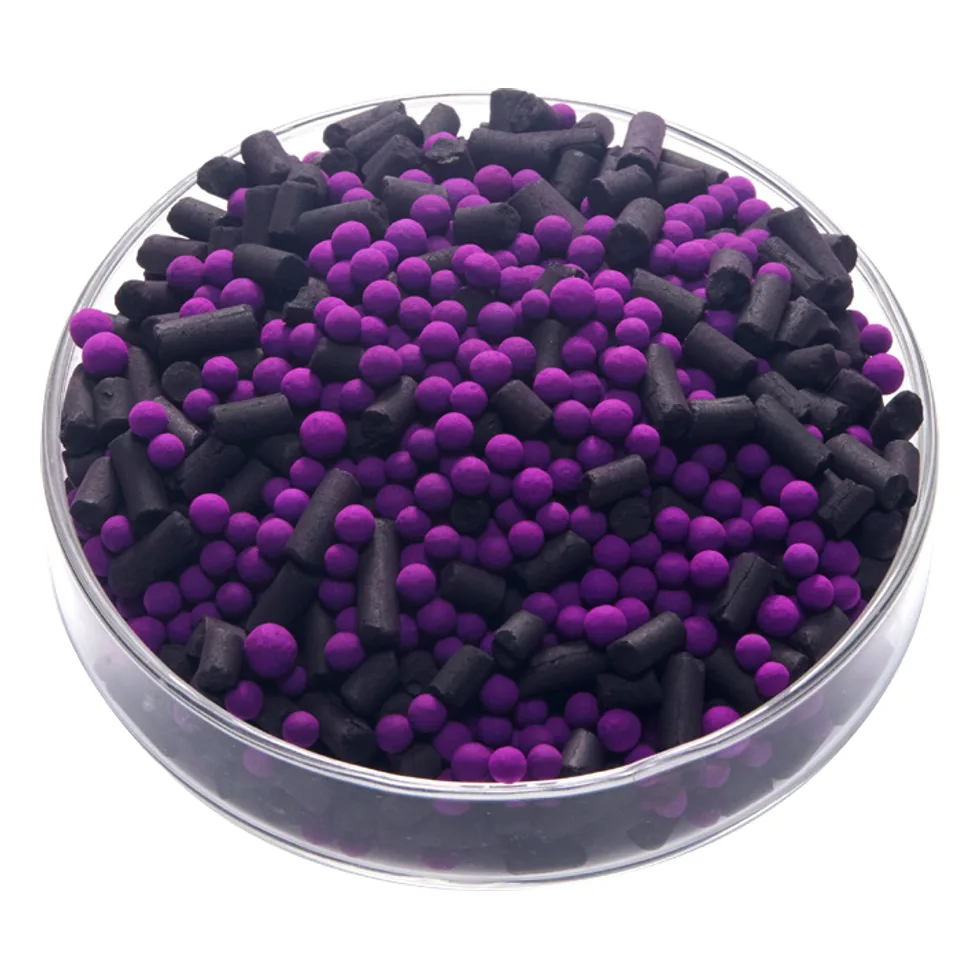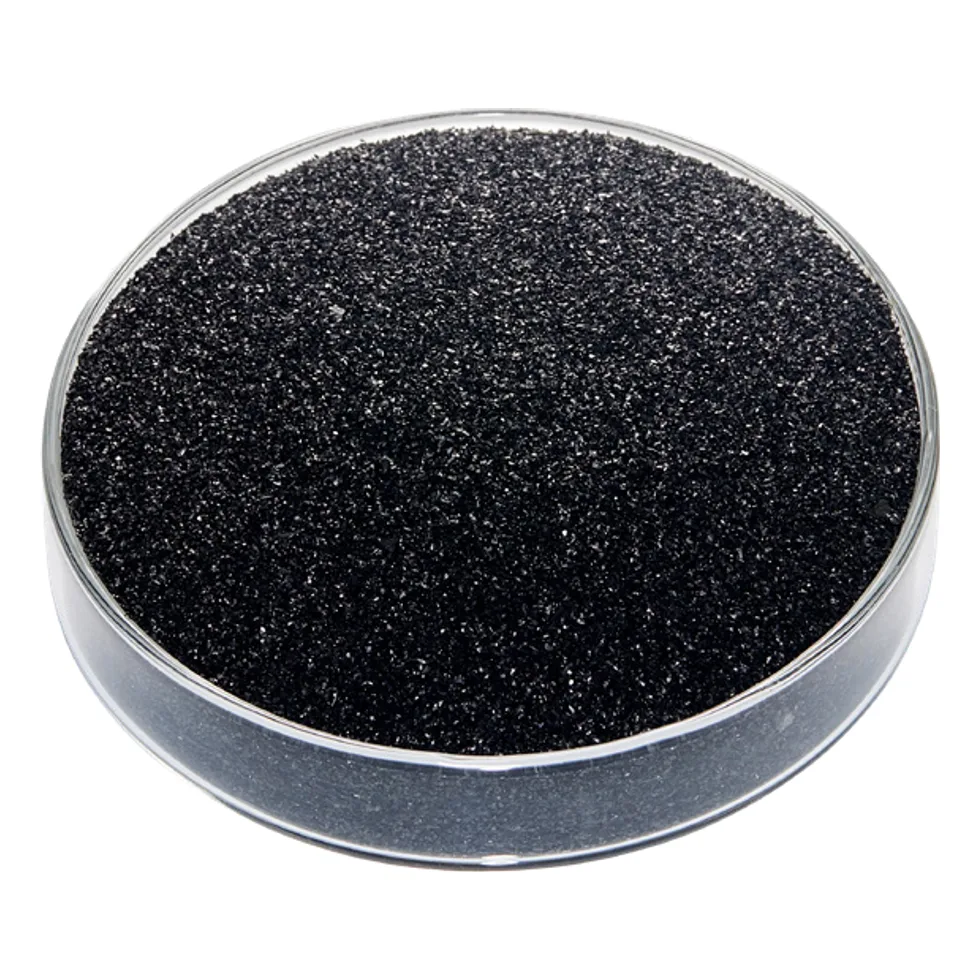
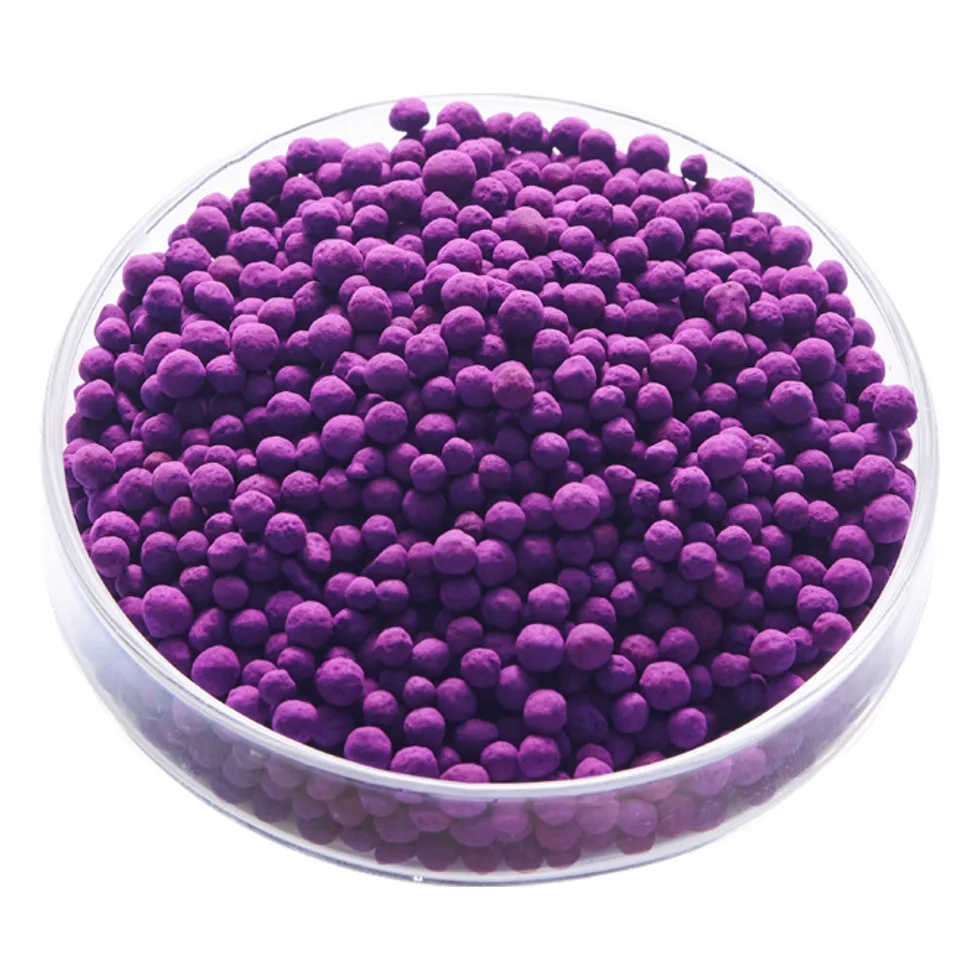
Potassium Permanganate Alumina Chemical Media (KMnO₄ Alumina Pellets)
Product Overview
Features & Specifications



Detailed Description
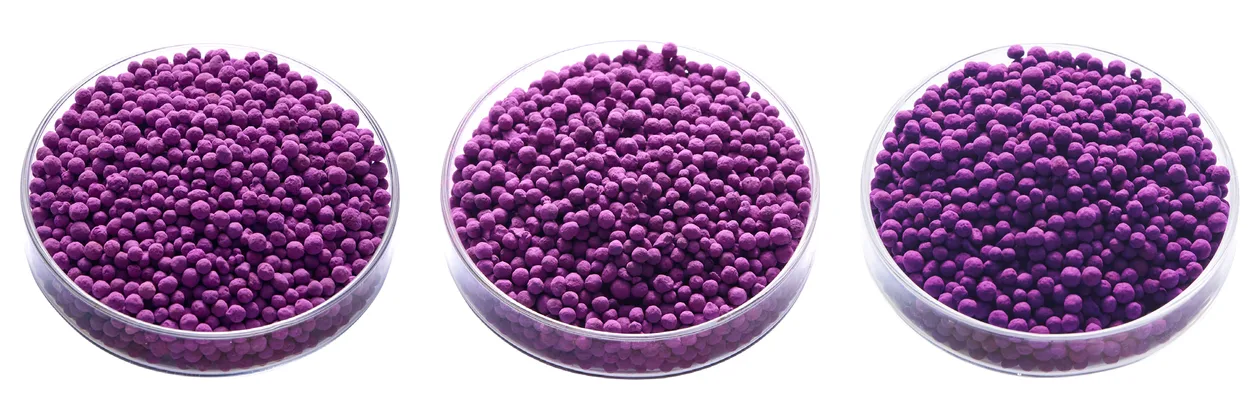
How to choose between the three permanganate alumina grades
All three share the same substrate, pellet size and bulk density; they differ in the type and amount of impregnant, and the higher the loading, the more contaminant gas each kilogram can remove. BS-PMA12N uses sodium permanganate and has the highest capacity of the three, so choose a higher loading where concentrations are high or longer change-out intervals are wanted. The table gives catalogue-rated removal capacities by weight; for example, 100 kg of BS-PMA12N removes at least 23.0 kg of hydrogen sulfide.| Item | BS-PMA4K | BS-PMA8K | BS-PMA12N |
|---|---|---|---|
| Impregnant and loading | Potassium permanganate ≥ 4% | Potassium permanganate ≥ 8% | Sodium permanganate ≥ 12% |
| Hydrogen sulfide H₂S | 8.2% | 14.0% | 23% |
| Sulfur dioxide SO₂ | 4.1% | 7.0% | 11% |
| Nitric oxide NO | 2.90% | 5.0% | 8.2% |
| Nitrogen dioxide NO₂ | 10.12% | 20.96% | 32% |
| Formaldehyde HCHO | 1.4% | 2.5% | 4.5% |
Measured H₂S breakthrough capacity: BS-PMA12N outside-lab data
A BS-PMA12N sample was sent to an outside laboratory in October 2026 and tested to ASTM D6646 for H₂S breakthrough capacity, with moisture and apparent density measured to ASTM D2867 and ASTM D2854. The measured H₂S breakthrough capacity was 0.156 g/cm³ (22.41%), against a catalogue rating of 23% by weight. Catalogue bulk density and laboratory apparent density are different measurements, so the table lists them separately with their sources.| Item | Catalogue rating | Outside-lab result (BS-PMA12N sample) |
|---|---|---|
| H₂S removal / breakthrough capacity | 23% (by weight) | 0.156 g/cm³; 22.41% |
| H₂S breakthrough time | Not stated | 786 min |
| Moisture | ≤ 20% | 17.46% |
| Density | Bulk density 800 kg/m³ | Apparent density 0.696 g/mL |
Face velocity and pressure drop: alumina pellet beds have the lowest
Velocity vs bed pressure drop (1.0 ft bed)
Pelletised carbon 2.0 / 3.0 / 4.0 mm and 3–5 mm alumina pellets
Redrawn from the supplier's measured curves, ±15%. 1.0 ft (about 305 mm) bed, ambient air; pressure drop is proportional to bed depth, so thinner beds are lower.
Operating temperature, humidity, velocity and packaging
The media work at −20 to 51°C and 10–95% RH, with an initial removal efficiency of ≥ 99.5% in a matched chemical filtration unit under design conditions. As a microporous adsorbent the media take up oxygen from the air, so closed vessels or poorly ventilated spaces may be oxygen-deficient; before anyone enters a vessel holding the media to sample or work, check the oxygen level and follow confined-space procedures.| Item | Specification |
|---|---|
| Operating temperature | −20 to 51°C |
| Relative humidity | 10–95% |
| Air velocity | 0.30–2.54 m/s |
| Initial removal efficiency | ≥ 99.5% (matched chemical filtration unit, design conditions) |
| Packaging | 1.0 ft³ (about 28 L) carton or drum; 6.0 ft³ and 20 ft³ bulk bags |
| Remaining life | Remaining-life analysis of the media available |
Frequently Asked Questions
How much hydrogen sulfide can 100 kg of permanganate alumina remove?
By the catalogue weight ratings, 100 kg of BS-PMA4K, BS-PMA8K and BS-PMA12N removes at least 8.2, 14.0 and 23.0 kg of hydrogen sulfide respectively. The real change-out interval has to be estimated from inlet concentration, airflow and media charge, and we can provide a remaining-life analysis of the media.
Does the measured H₂S capacity of BS-PMA12N match the catalogue?
The catalogue rating is 23% by weight; an outside laboratory tested it to ASTM D6646 in October 2026 and measured 0.156 g/cm³ (22.41%), with a breakthrough time of 786 min. The two are close, and we suggest using the measured value when estimating service life.
Can permanganate alumina be used together with activated carbon?
Yes, and it is common: the permanganate alumina handles gases that need an oxidation reaction, such as hydrogen sulfide, sulfur dioxide, nitrogen oxides and formaldehyde, while activated carbon handles VOCs and odours. The two can be installed as separate stages, or you can choose our pre-blended chemical media.
What should I watch for when changing media or entering a housing?
The media adsorb oxygen from the air, so a closed housing or drum may be oxygen-deficient. Ventilate and measure the oxygen level before anyone enters, follow confined-space procedures, and never enter alone.
Selection References
Before ordering, verify the efficiency grade, media type, and whether the operating environment fits your requirements.