Acid Gas and H₂S Removal Impregnated Activated Carbon Media
Product Overview
Features & Specifications



Detailed Description
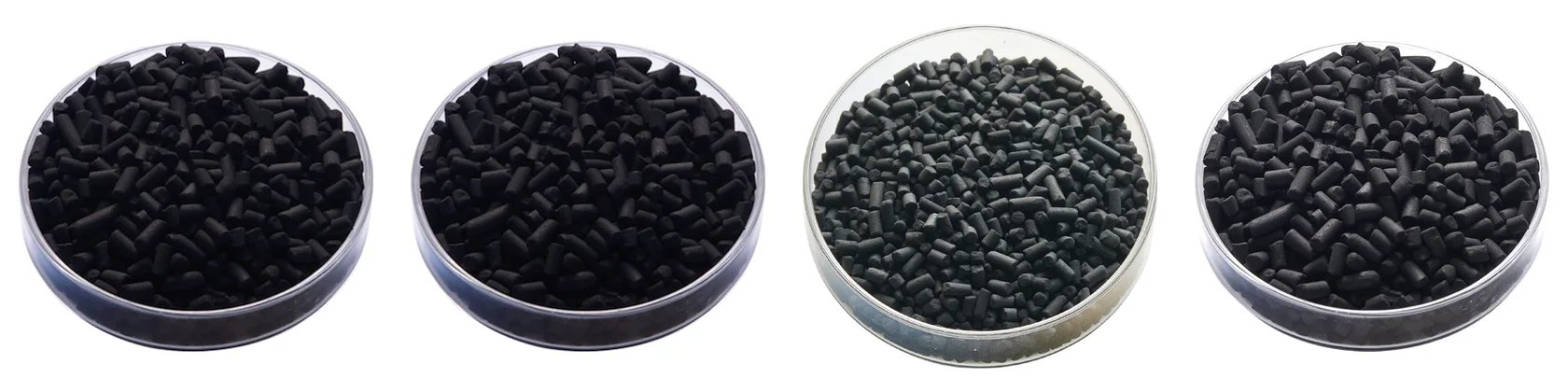
H₂S removal carbon: four impregnation formulas compared
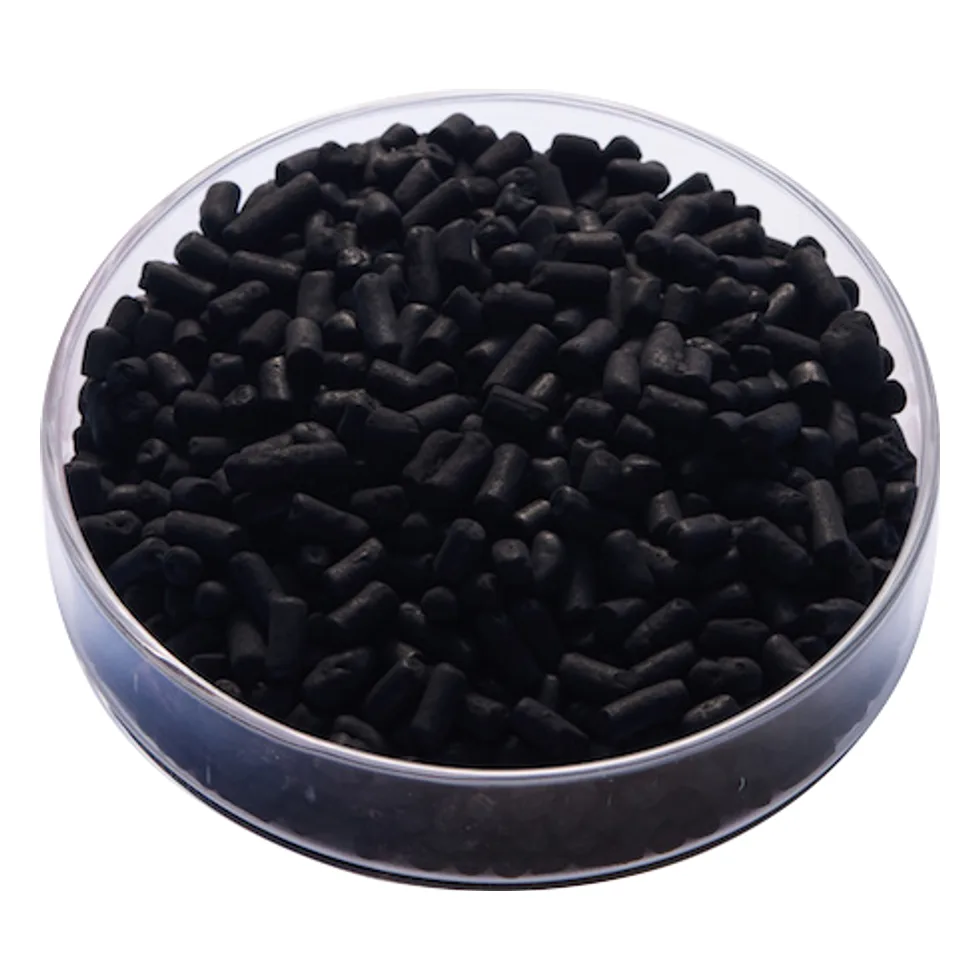
The four grades differ in the type and amount of impregnant, and H₂S capacity is stated to ASTM D6646 in g/cc (grams of hydrogen sulfide absorbed per cc of media). Figures in brackets are catalogue weight ratios; for BS-IAC-MG the weight ratio is given in the shipping data sheet. Initial removal efficiency refers to a matched chemical filtration unit under design conditions.| Item | BS-IAC-K8 | BS-IAC-K10 | BS-IAC-MG | BS-IAC-CU |
|---|---|---|---|---|
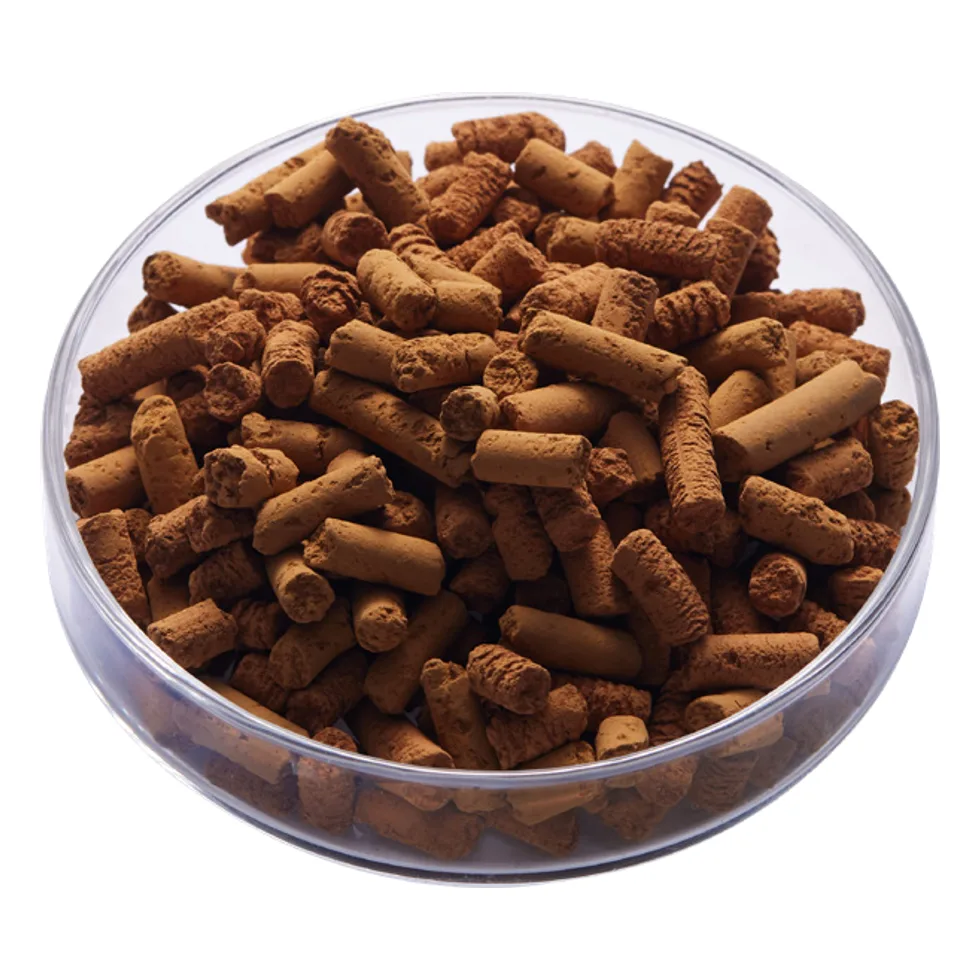
| Impregnant | Potassium hydroxide 8% | Potassium hydroxide 10% | Magnesium oxide 5.0% | Copper oxide |
| H₂S capacity (ASTM D6646) | 0.14 g/cc (about 25%) | 0.187 g/cc (30.11%) | 0.253 g/cc | Not stated |
| Pellet diameter / length | 4 mm / 7 mm | 4 mm / 7 mm | 4 mm / 7 mm | 4.0 mm / 6–8 mm |
| Bulk density | 600 kg/m³ | 600 kg/m³ | 480 kg/m³ | 540±10 kg/m³ |
| Hardness | ≥ 95% | ≥ 95% | ≥ 95% | ≥ 95% |
| Moisture | 15% | 15% | 15% | 18% |
| Ignition point | 285°C | 267°C | 425°C | 425°C |
| Initial removal efficiency | ≥ 99.5% | ≥ 99.5% | ≥ 99.5% | ≥ 99.85% |
Which acid gases and sites suit impregnated carbon?
BS-IAC-K8, K10 and MG treat hydrogen sulfide, mercaptans, sulfur dioxide, chlorine and hydrogen chloride in air, and the catalogue lists industrial processes, municipal treatment plants, paper mills and indoor air filtration as their sites. BS-IAC-CU handles low-molecular-weight, polar toxic gases that plain carbon barely adsorbs, and is also used to purify process gases.| Model | Main target gases | Uses listed in the catalogue |
|---|---|---|
| BS-IAC-K8 | Hydrogen sulfide (25%), sulfur dioxide (7%), mercaptans, chlorine, hydrogen chloride | Industrial processes, municipal treatment plants, paper mills, indoor air filtration |
| BS-IAC-K10 | Hydrogen sulfide (30.11%), mercaptans, sulfur dioxide, chlorine, hydrogen chloride | Industrial processes, municipal treatment plants, paper mills, indoor air filtration |
| BS-IAC-MG | Hydrogen sulfide (0.253 g/cc), mercaptans, sulfur dioxide, chlorine, hydrogen chloride | Industrial processes, municipal treatment plants, paper mills, indoor air filtration |
| BS-IAC-CU | Hydrogen sulfide, sulfur dioxide, sulfur trioxide, hydrogen cyanide, arsine, phosphine, formaldehyde | Purifying chemical feed and synthesis gases, pharmaceutical gases, beverage carbon dioxide, hydrogen and other gases |
How do impregnated carbon, permanganate alumina and plain carbon divide the work?
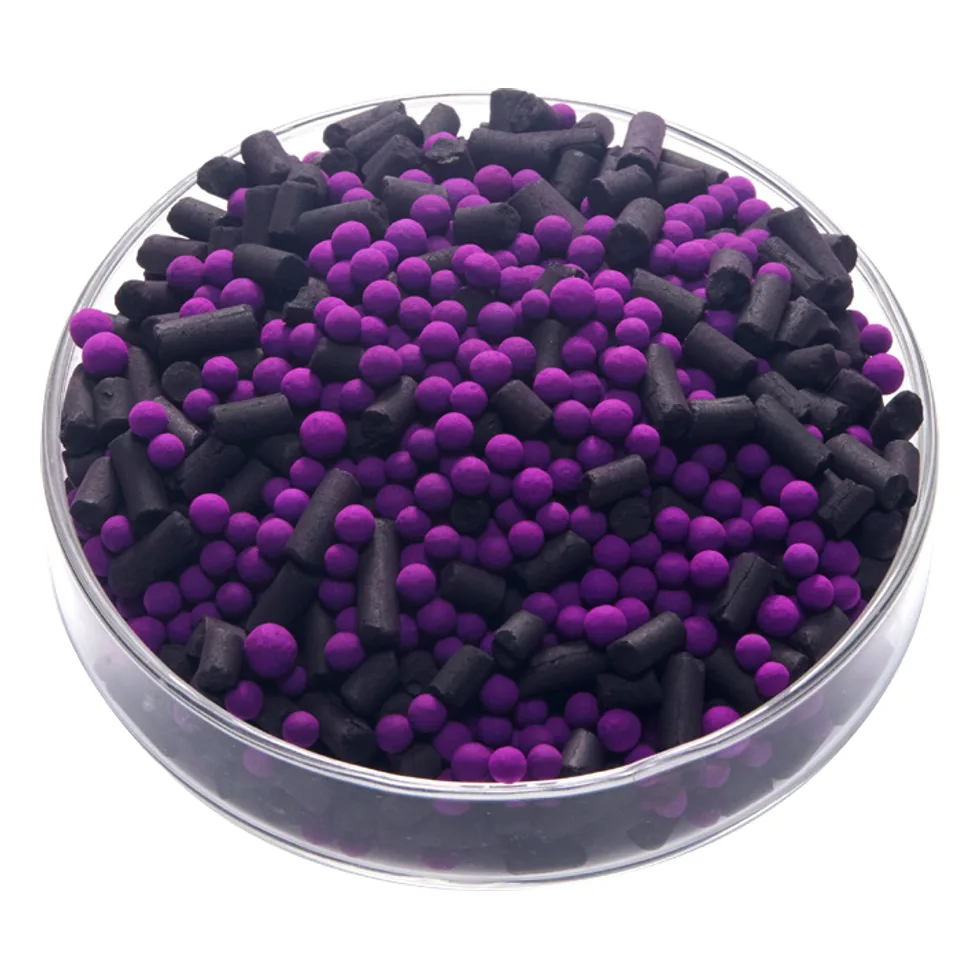
The three types of chemical media remove gases in different ways and target different gases; where several gases are present, two media are often installed in series. For biogas or process gas with very high hydrogen sulfide concentrations, see the iron-based H₂S removal media instead.| Media | Removal mechanism | Main targets |
|---|---|---|
| Acid gas impregnated carbon (this page) | Chemisorption by the impregnant | Acid gases such as hydrogen sulfide, sulfur dioxide, chlorine, hydrogen chloride |
| Permanganate alumina | Oxidation reaction | Hydrogen sulfide, sulfur dioxide, nitrogen oxides, formaldehyde; broad spectrum |
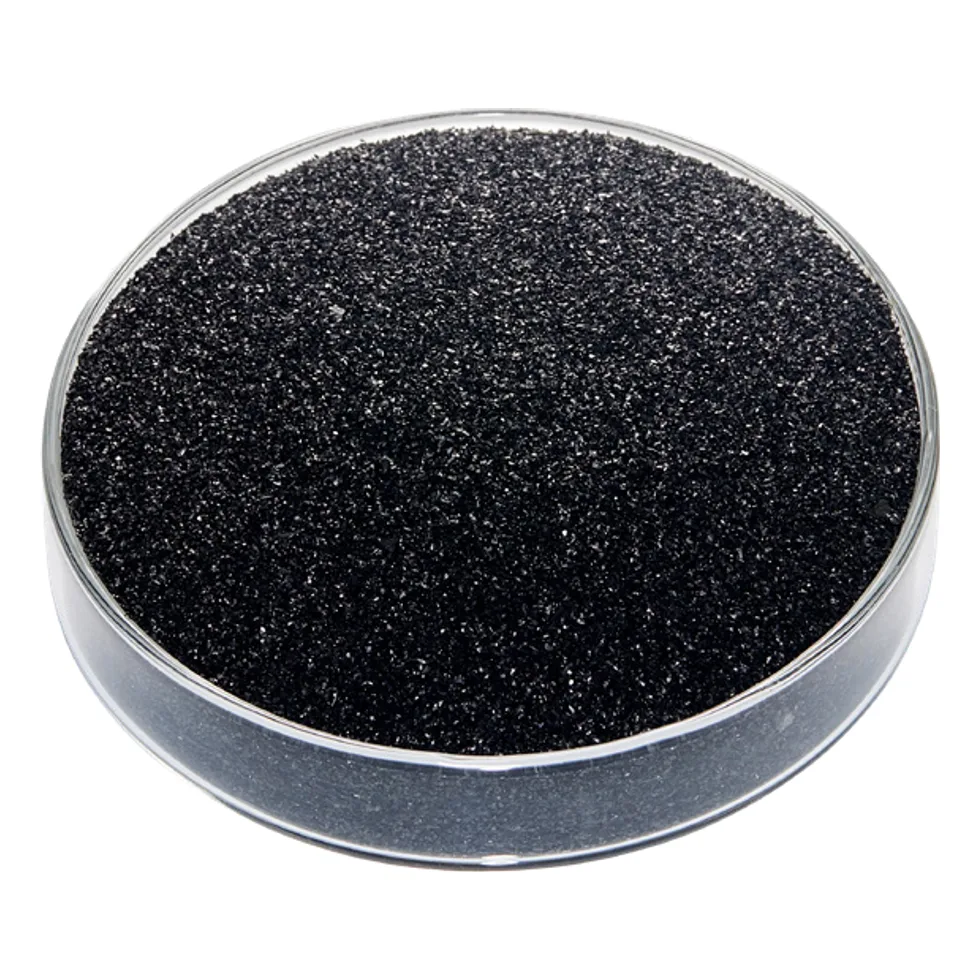
| Plain activated carbon (pelletised, coconut shell) | Physical adsorption | VOCs, organic solvents, ozone, odours |
Operating conditions, packaging and safety for impregnated carbon
All four grades work at −20 to 51°C, 10–95% RH and air velocities of 0.30–2.54 m/s. The media adsorb oxygen from the air, so closed vessels or poorly ventilated spaces may be oxygen-deficient; check the oxygen level before anyone enters a vessel holding the media.| Item | Specification |
|---|---|
| Operating temperature | −20 to 51°C |
| Relative humidity | 10–95% |
| Air velocity | 0.30–2.54 m/s |
| Packaging | 1.0 ft³ (about 28 L) carton or drum; 6.0 ft³ and 20 ft³ bulk bags |
| Remaining life | Remaining-life analysis of the media available |
Frequently Asked Questions
Which of the four impregnated carbons has the highest H₂S capacity?
By the ASTM D6646 ratings, BS-IAC-MG is highest at 0.253 g/cc, followed by BS-IAC-K10 at 0.187 g/cc and BS-IAC-K8 at 0.14 g/cc; the catalogue gives no H₂S capacity for BS-IAC-CU. The weight ratio of BS-IAC-MG is given in the shipping data sheet.
KOH-impregnated carbon has a lower ignition point. What should I watch for?
BS-IAC-K8 and BS-IAC-K10 have ignition points of 285°C and 267°C, lower than the 425°C of BS-IAC-MG and BS-IAC-CU. The recommended operating range for all four is −20 to 51°C, so cool exhaust above 51°C first, and keep away from ignition sources and hot work when loading or changing media.
Can copper oxide impregnated carbon handle arsine and phosphine?
The catalogue uses for BS-IAC-CU include toxic gases such as hydrogen cyanide, arsine and phosphine, removed by chemisorption with the copper oxide, with an initial removal efficiency of ≥ 99.85% in a matched chemical filtration unit under design conditions. For dry treatment of semiconductor process exhaust we also offer specialty gas exhaust adsorbents, selected by gas type and concentration.
Our biogas or process gas has very high H₂S. Can the media on this page be used?
The impregnated carbons on this page are mainly for air filtration and odour control. For desulfurising high concentrations of hydrogen sulfide, see the iron-based H₂S removal media and select by concentration, flow rate and moisture content.
Selection References
Before ordering, verify the efficiency grade, media type, and whether the operating environment fits your requirements.