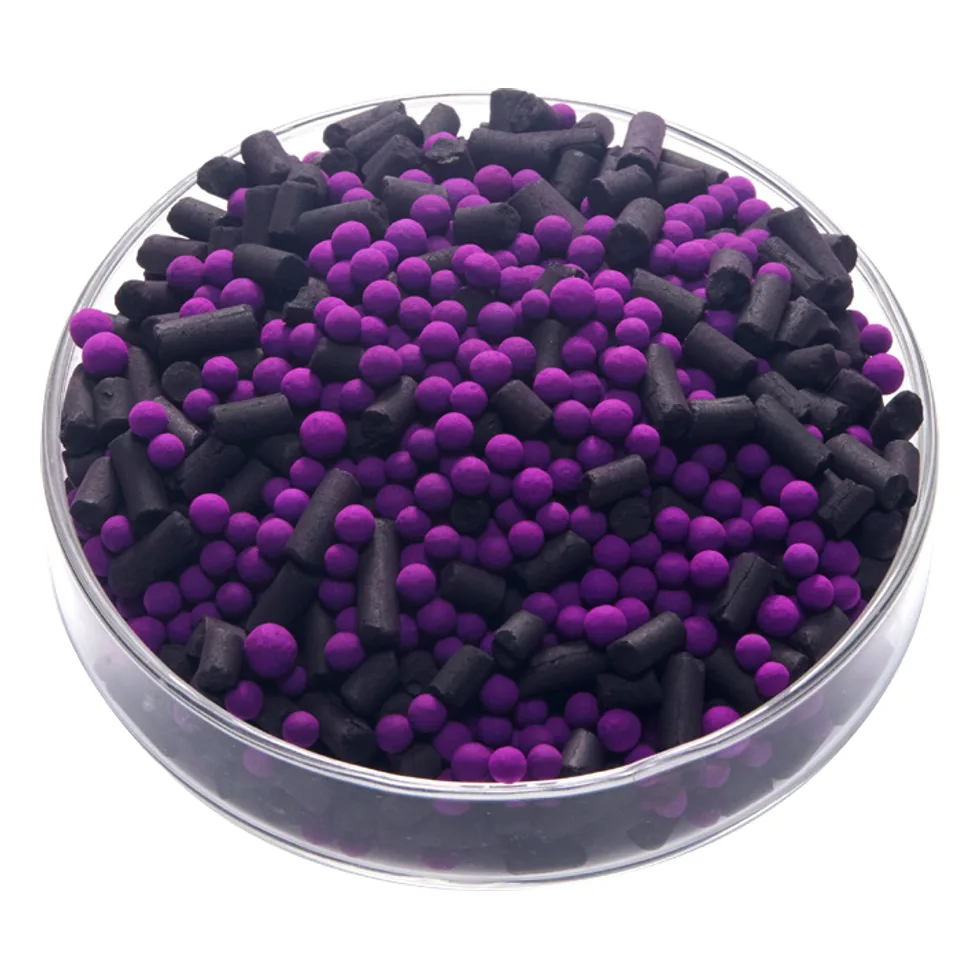
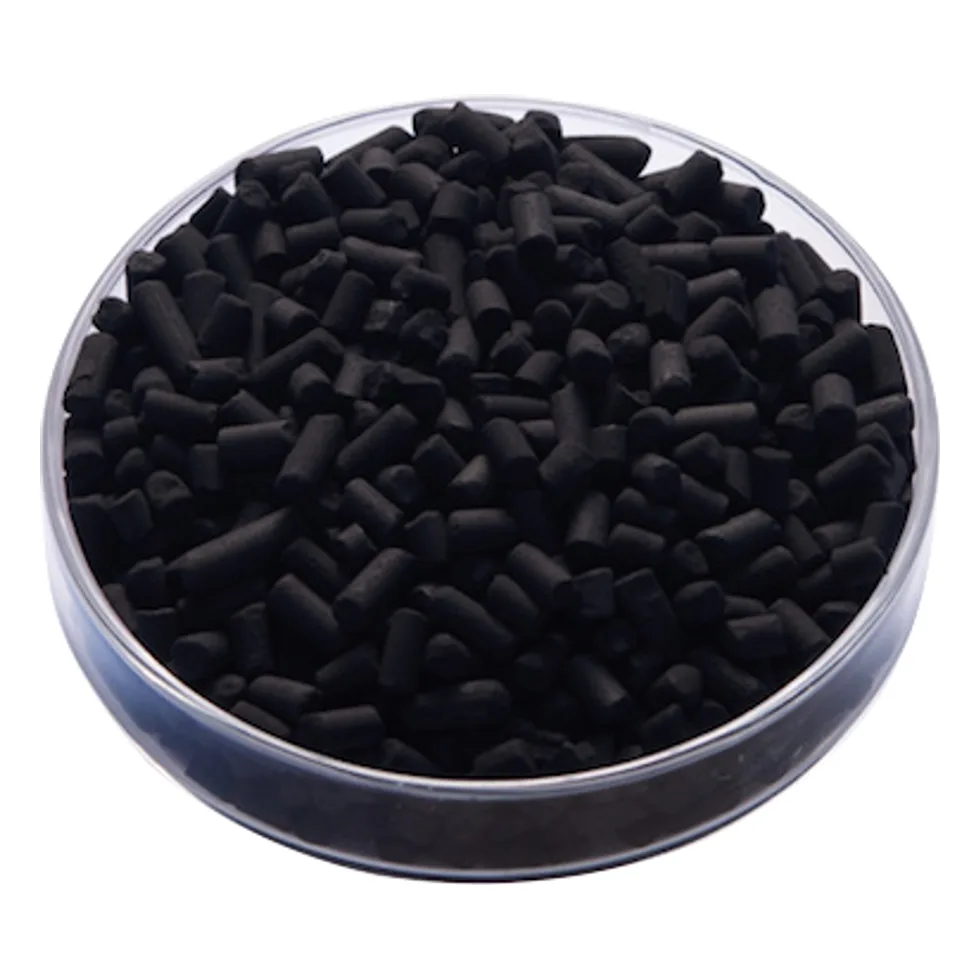
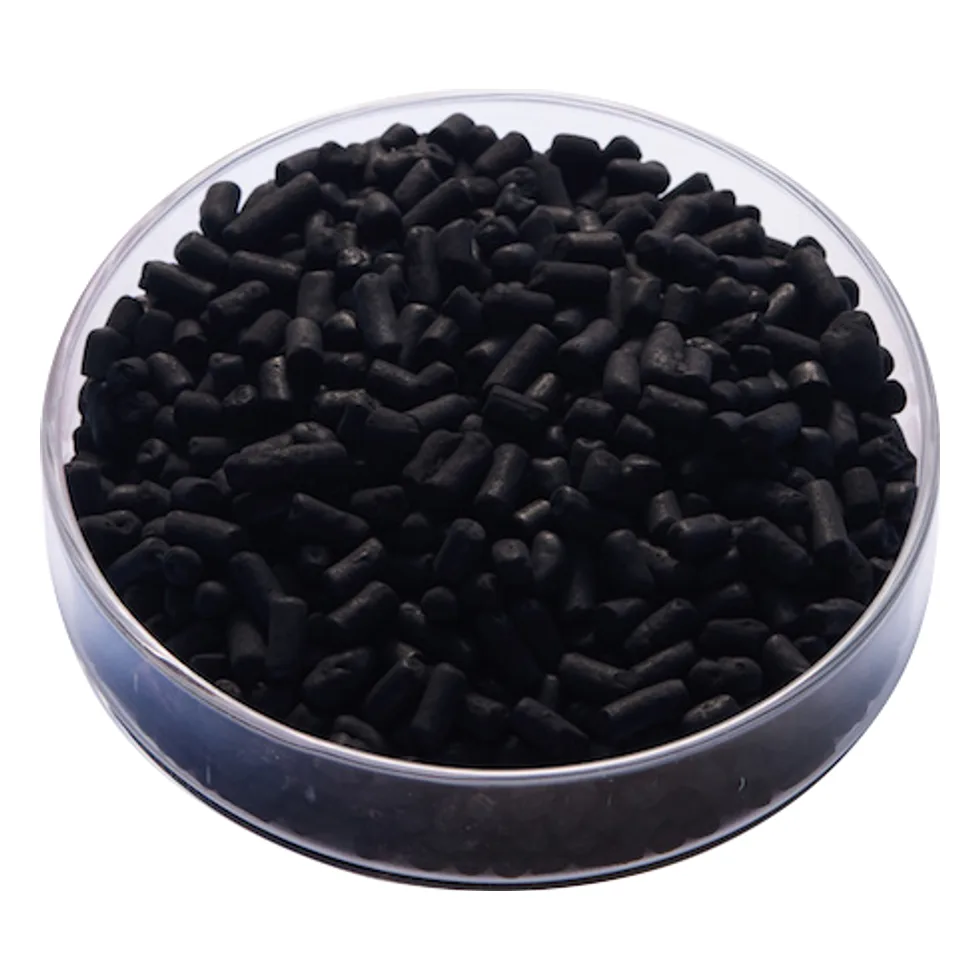
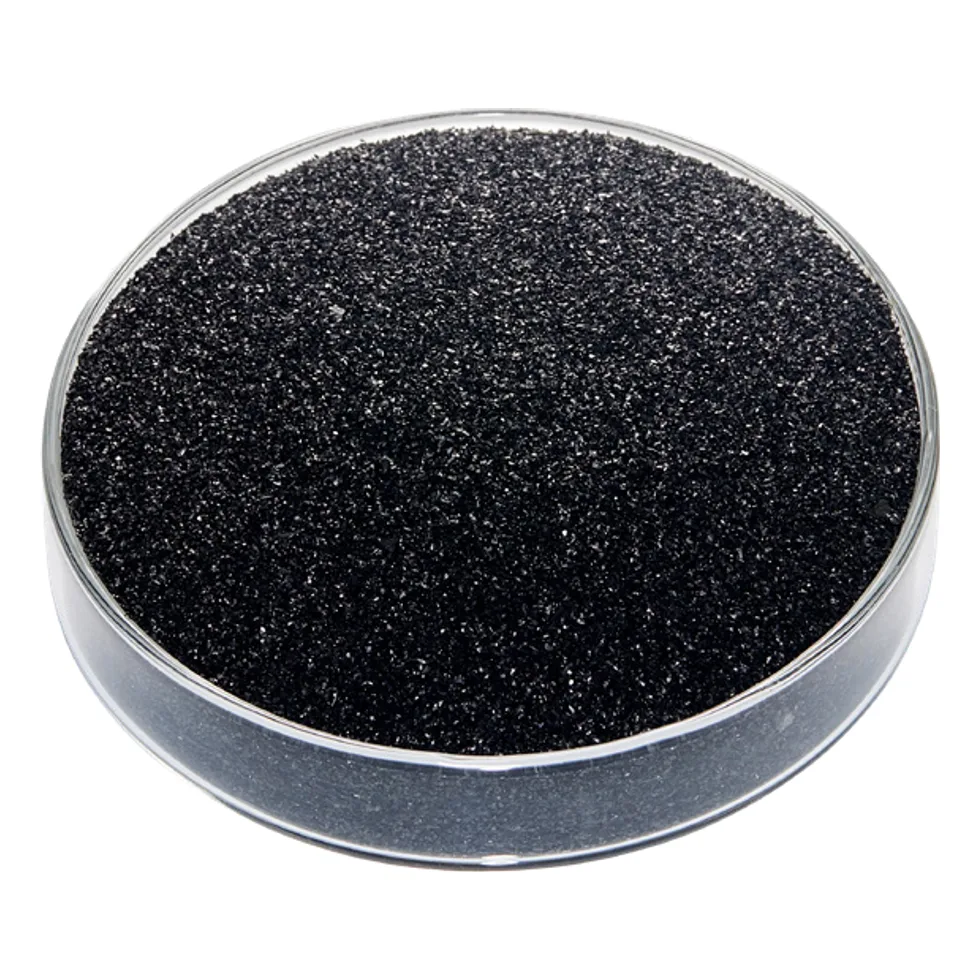
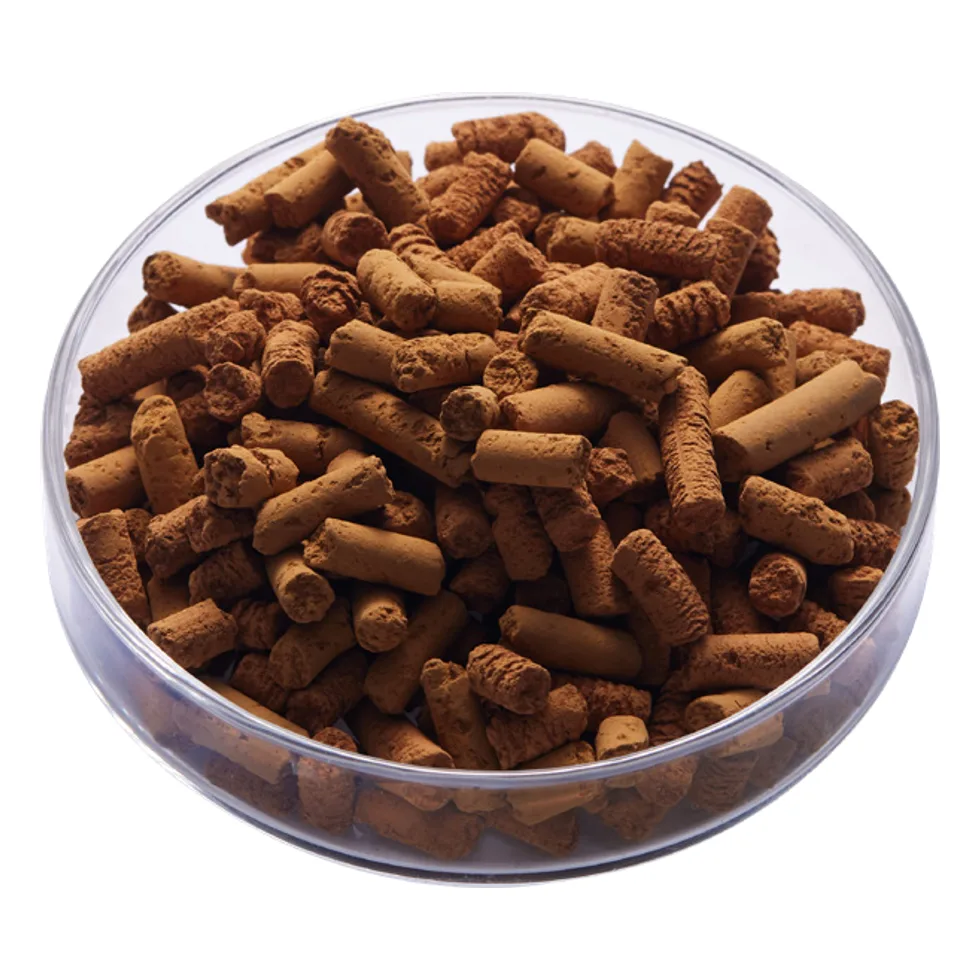
Blended chemical media is a composite media that mixes two or three chemical media in a fixed volume ratio within one bed: permanganate-impregnated alumina spheres oxidize hydrogen sulfide, nitrogen oxides, formaldehyde and ethylene; pelletized activated carbon handles VOCs, ozone and hydrocarbons; and KOH-impregnated activated carbon handles sulfur oxides, sulfur compounds and organic acids. A single bed can treat air carrying several gases at once, with no need to install separate stages of different media.
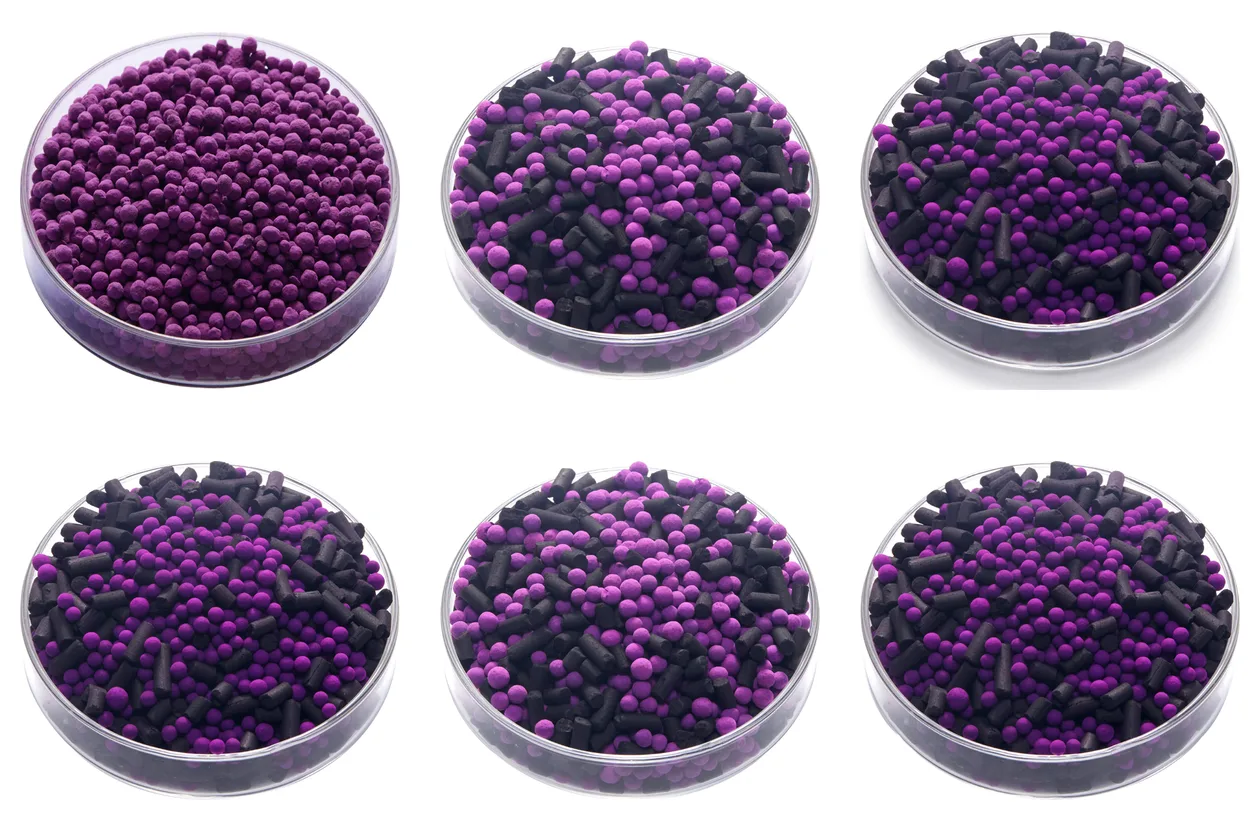
Baisheng blended media comes in three series: the C series (permanganate alumina + pelletized activated carbon), the K series (permanganate alumina + KOH-impregnated activated carbon) and the three-component BS-BLD-TRI. In matching chemical filtration equipment under design conditions, the initial removal efficiency is ≥ 99.5%.
Which blended chemical media grades are available?
In the C series, the number in the model is the permanganate content of the alumina spheres: the higher it is, the greater the capacity for nitrogen oxides and sulfur dioxide. The K series replaces the activated carbon with KOH-impregnated activated carbon and focuses on acidic, corrosive gases. | Model | Composition (by volume) | Permanganate content | Main target gases |
|---|
| BS-BLD-4C | BS-PMA4K + BS-EAC460 50:50 | ≥ 4% | Mercaptans, hydrocarbons, hydrogen sulfide, sulfur and nitrogen oxides |
| BS-BLD-8C | BS-PMA8K + BS-EAC460 50:50 | ≥ 8% | As above, higher capacity |
| BS-BLD-12C | BS-PMA12N + BS-EAC460 50:50 | ≥ 12% (sodium permanganate) | As above, highest capacity in the C series |
| BS-BLD-8K | BS-PMA8K + KOH-impregnated activated carbon 50:50 | ≥ 8% | Corrosive gases in pulp, paper, petrochemical and refining |
| BS-BLD-12K | BS-PMA12N + KOH-impregnated activated carbon 50:50 | ≥ 12% (sodium permanganate) | As above, highest capacity in the K series |
| BS-BLD-TRI | BS-PMA8K : KOH-impregnated activated carbon : BS-EAC460 50:25:25 | ≥ 8% | Mixed pollution such as combustion exhaust, organic acids, ozone and VOCs |
Removal capacity of each grade (by weight)
Capacity is the minimum kilograms of gas removed per 100 kg of media; BS-BLD-12K, for example, removes at least 12.0 kg of hydrogen sulfide. All five grades have a formaldehyde capacity of 1.4%.| Model | Hydrogen sulfide | Sulfur dioxide | Nitric oxide | Nitrogen dioxide | Formaldehyde |
|---|
| BS-BLD-4C | 4% | 4.7% | 2.8% | 9.5% | 1.4% |
| BS-BLD-8C | 8% | 6.9% | 2.5% | 15.6% | 1.4% |
| BS-BLD-12C | 8% | 8.2% | 2.5% | 22.4% | 1.4% |
| BS-BLD-8K | 8.0% | 3.5% | 2.5% | 1.0% | 1.4% |
| BS-BLD-12K | 12.0% | 10.5% | 3.6% | 23.5% | 1.4% |
Which gases does the three-component BS-BLD-TRI remove?
BS-BLD-TRI mixes permanganate alumina spheres, KOH-impregnated activated carbon and pelletized activated carbon at 50:25:25: the KOH-impregnated carbon removes sulfur oxides, reactive sulfur compounds and organic acids, the alumina spheres remove nitrogen oxides and formaldehyde, and the activated carbon takes care of the remaining ozone, VOCs and hydrocarbons. It suits air carrying several pollutants together, such as exhaust from burning fossil fuels.| Target gas | Removal capacity (by weight) |
|---|
| Sulfur dioxide | 7.24% |
| Nitric oxide | 4.54% |
| Nitrogen dioxide | 16.32% |
| Ozone | 10.44% |
| Formaldehyde | 4.5% |
| Organic acids (acetic acid) | 19.01% |
| VOCs / hydrocarbons | 11.88% |
Which media for which gas? A chemical media selection table
The table lists the media choice for 15 common gases: ● is the primary choice and ○ a secondary choice. Pick the blend that contains the components a row calls for; for example, where formaldehyde and toluene occur together, choose a C-series grade, which contains both BS-PMA and BS-EAC460.| Gas | BS-PMA permanganate alumina | BS-EAC460 pelletized activated carbon | BS-IAC-NH ammonia-removal impregnated carbon | BS-IAC-K8 / K10 KOH-impregnated carbon |
|---|
| Formaldehyde | ● | — | — | — |
| Acetaldehyde | ● | ○ | — | — |
| Acetic acid | ● | — | — | ○ |
| Acetone | ● | — | — | — |
| Isopropyl alcohol (IPA) | ○ | ● | — | — |
| Toluene | — | ● | — | — |
| Xylene | — | ● | — | — |
| Ethylene | ● | — | — | — |
| Ozone | ○ | ● | — | — |
| Ammonia | — | — | ● | — |
| Hydrogen sulfide | ● | — | — | ● |
| Methyl mercaptan | ● | — | — | — |
| Sulfur dioxide | ● | — | — | ● |
| Nitrogen dioxide | ● | — | — | ○ |
| Chlorine | — | — | — | ● |
How to choose between the C series and the K series
The C series leans toward organic and oxidizable gases, the K series toward acidic, corrosive gases; both contain permanganate alumina spheres, so both handle hydrogen sulfide and sulfur dioxide. Ammonia is not a main target of any blend and needs a separate ammonia-removal media.| Series | Second component | Main target gases | Typical locations |
|---|
| C series (4C / 8C / 12C) | BS-EAC460 pelletized activated carbon | Formaldehyde, ethylene, hydrocarbons, VOCs, ozone, sulfur oxides | Broad-spectrum control of odorous and corrosive gases |
| K series (8K / 12K) | KOH-impregnated activated carbon | Hydrogen sulfide, sulfur oxides, nitrogen oxides, hydrogen chloride, hydrogen fluoride, sulfuric acid mist, chlorine | Pulp, paper, petrochemical, refining |
| Three-component TRI | KOH-impregnated activated carbon + BS-EAC460 | Sulfur oxides, nitrogen oxides, ozone, formaldehyde, organic acids, VOCs | Air affected by fossil-fuel combustion exhaust |
How long a residence time does a chemical media bed need?
Residence time is the time air takes to pass through the depth of the media bed (bed depth ÷ face velocity). For granular media of 3.35–4.75 mm (4–6 mesh), the half-life before a gas molecule reaches the media surface is about 0.01 s, so every additional 0.01 s of residence time halves the fraction that has not touched the media; systems with a bed depth of 1.0 in (about 25 mm) or more should be designed for at least 0.06–0.07 s.| Residence time (s) | Fraction not contacted 2^(−100n) | Contact efficiency |
|---|
| 0.01 | 0.500 | 50% |
| 0.02 | 0.250 | 75.0% |
| 0.03 | 0.125 | 87.5% |
| 0.04 | 0.0625 | 93.75% |
| 0.05 | 0.03125 | 96.88% |
| 0.06 | 0.01562 | 98.44% |
| 0.07 | 0.00781 | 99.22% |
| 0.20 | 0.00000095 | 99.9999% |
| 0.40 | 0.000000000000909 | 99.9999999999% |
Contact efficiency is not removal efficiency: it only means the gas molecules have a chance to touch the media, and once the media is saturated it no longer removes them. With good design, installation and maintenance, modular systems can achieve ≥ 99.5% removal efficiency and deep-bed systems ≥ 99.95%.
Operating conditions, packaging and safety
All six grades share the conditions below. The media is a microporous adsorbent that takes up oxygen from the air, so check the oxygen level and follow confined-space procedures before anyone enters a closed vessel containing media to take samples.| Item | Condition |
|---|
| Operating temperature | −20 to 51°C |
| Relative humidity | 10–95% |
| Air velocity | 0.30–2.54 m/s |
| Packaging | 1.0 ft³ (about 28 L) cartons or drums; 6.0 ft³ and 20 ft³ bulk bags |
Remaining-life analysis of used media is available.