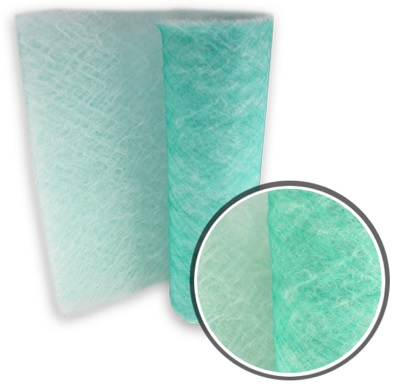
Green/White Fiberglass Filter (Paint Arrester)
Product Overview
Key Specifications
- Filter Media
- Glass fiber



Specifications
- Filter Media
- Glass fiber
Detailed Description
Why is one face green and the other white?
The colors tell you which way round it goes: green faces the incoming air (upstream), white faces the outlet (downstream). The fibers are more open on the green side, so larger paint droplets are caught there first; the fibers get denser toward the white face, where finer mist is stopped. Paint is spread through the whole thickness instead of caking on the surface. Installed backwards, the paint clogs the densest face first and the thickness of the media is wasted.Where does it go in a spray booth, and how does it work with the ceiling filter?
A common layout supplies air from above and exhausts it below: the ceiling filter in the roof sends clean air downward so dust does not settle on the wet paint, and the overspray is carried by the airflow to the floor, where the paint arrestor in the floor or exhaust opening catches it before the air is exhausted.Spray booth airflow: ceiling filter supplies, paint arrestor catches mist
Cross-section (supply from top, exhaust from bottom)
Schematic, not to scale. The paint arrestor can also be fitted at the exhaust opening; efficiency, pressure drop and paint-holding capacity are provided per selection.
What forms and sizes are available?
You can buy whole rolls and cut them yourself, buy cut pads, buy finished paper-frame filters, or use a removable metal frame that stays in place while only the dirty media is replaced. These are the specifications we have made:| Form | Size | Notes |
|---|---|---|
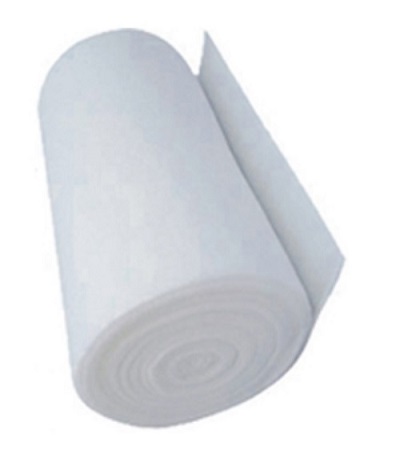
| Roll | 1 m × 20 m × 50 mm | Width × length × thickness, cut to size yourself |
| Roll (60 mm thick) | 0.7 m / 1 m wide × 20 m × 60 mm | Two widths available |
| Small roll | 1 m × 3 m × 50 mm | For small quantities |
| Cut pads | 550×550×50, 500×550 | 500×550 comes 50 pads per box |
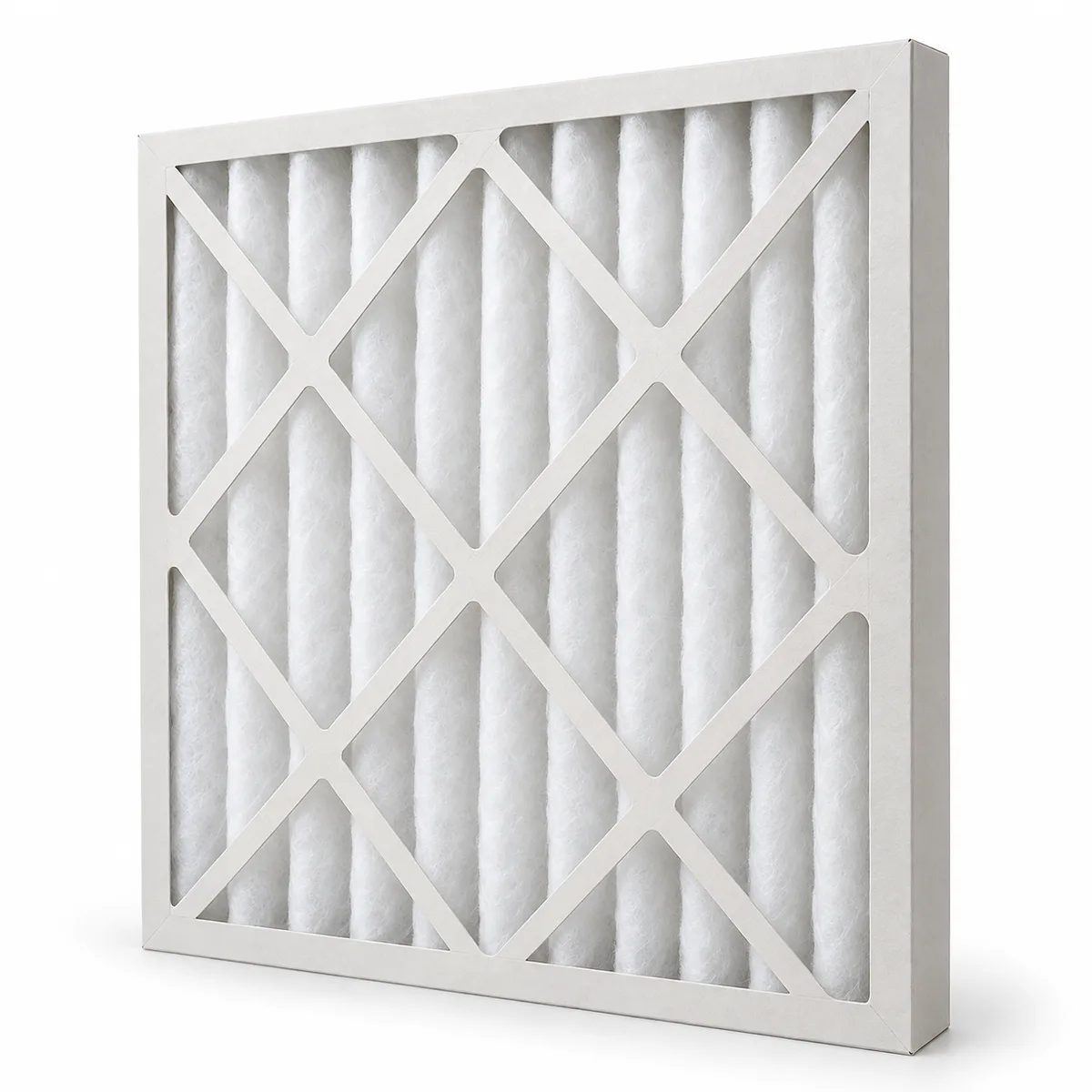
| Paper frame | 16×20×2″, 533×330×45, 912×535×45 | Replaced as a whole unit |
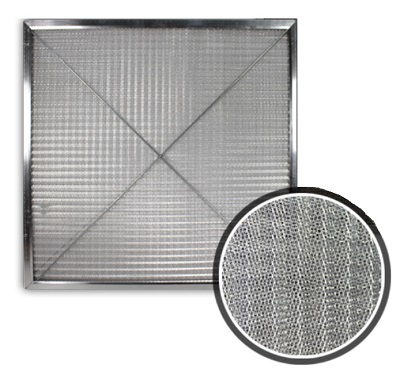
| Galvanized frame (removable) | 595×595×45 | 0.4 mm sheet, 1 or 2 layers of media |
| Stainless frame (removable) | 900×900×50 | 0.5 mm sheet, frame with a center crossbar, 2 layers of media |
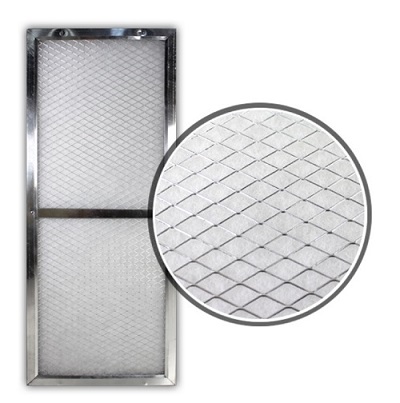
| Center-crossbar frame (removable) | 1160×745×22 | One extra crossbar across the middle of the frame |
| Large frame (removable) | 1200×1200×50 | Joined with L-shaped plates |
| Clip-in frame | 480×480×45 | Media held inside the frame |
Specifications
- Media: glass fiber, green on one face and white on the other, open to dense - Roll thickness: 50 mm, 60 mm - Supply forms: roll, small roll, cut pads, paper frame, removable metal frame, clip-in frame - Installation direction: green face toward the incoming air, white face toward the outlet - Efficiency, pressure drop, paint-holding capacity, temperature limit: provided per selectionDisposing of used media, and regulatory requirements
Do not leave paint-loaded media lying in piles: handled improperly, it can be a fire risk. Collect and dispose of it according to your plant's waste and fire-safety rules. On the regulatory side, the US rule 40 CFR 63.11173(e)(2)(i) requires the filters used in certain spray-coating operations to capture 98% or more of paint overspray, tested by ASHRAE 52.2 or EPA Method 319. We do not currently have test reports of this kind; if your project must meet such a requirement, please tell us when you ask for a quote.Frequently Asked Questions
Which face goes toward the incoming air, green or white?
Green faces the incoming air (the direction the paint mist comes from), white faces the outlet. The fibers go from open on the green face to dense on the white face, so larger droplets are caught on the green side and finer mist on the white side, putting the whole thickness to use. Laid under a floor grating, that means green side up; installed backwards, the paint clogs the dense white face first and the thickness of the media is wasted.
Can it be made with a frame so only the media is replaced?
Yes. Removable metal frames come in galvanized steel (0.4 mm sheet, 595×595×45, holding 1 or 2 layers of media) and stainless steel (0.5 mm sheet, 900×900×50 with a center crossbar, holding 2 layers). We have also made a 1160×745×22 center-crossbar frame, a 1200×1200×50 large frame joined with L-shaped plates, and a 480×480×45 clip-in frame. The frame stays in place and only the dirty media is replaced. Customers have also asked about using it in dusty locations rather than paint booths — tell us the size, number of layers and operating environment.
What roll widths and thicknesses are available?
The standard roll is 1 m wide × 20 m long × 50 mm thick; the 60 mm thick roll comes in 0.7 m and 1 m widths, also 20 m long; for small quantities there is a 1 m × 3 m × 50 mm small roll. If you would rather not cut it yourself, there are also cut pads such as 550×550×50 and 500×550, and finished paper-frame filters.
What is the difference between a paint arrestor and a ceiling filter?
They sit in different places and do different jobs. The ceiling filter is in the roof of the spray booth and filters the incoming supply air so dust does not settle on the paint; the paint arrestor is in the floor or exhaust opening and catches the paint mist in the air being exhausted. One cannot replace the other, and spray booths commonly use both together.
Selection References
Before ordering, verify the efficiency grade, media type, and whether the operating environment fits your requirements.