Activated Carbon Chemical Filters
Alkali-Impregnated Coconut Shell Activated Carbon BS-GAC1400KN
Product Overview
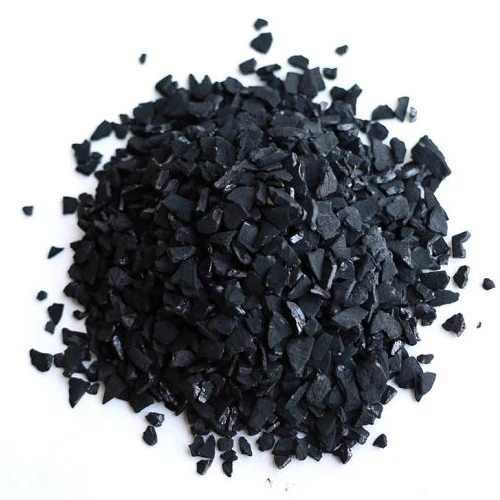
Alkali-impregnated activated carbon built on a high-grade coconut shell base carbon (iodine number 1400–1500 mg/g, CTC 80–90%) and treated with potassium iodide and sodium hydroxide. At a contact pH of 11–13 it removes hydrogen sulphide, sulphur dioxide and hydrogen chloride by neutralisation, far outperforming physical adsorption alone. Controlled particle size distribution, supplied in bulk at 500 kg per bag.
Features & Specifications
| Item | Unit | Specification | Test Method |
|---|---|---|---|
| Particle Size | mesh | 30×60 | ASTM D2862 |
| Iodine Number (base carbon) | mg/g | 1400–1500 | ASTM D4607 |
| CTC Adsorption (base carbon) | % | 80–90 | ASTM D3467 |
| Apparent Density | g/cc | Reported | ASTM D2854 |
| Moisture Content (as packed) | % | 8–15 | ASTM D2867 |
| Ash Content (base carbon) | % | ≤ 5 | ASTM D2866 |
| pH (contact) | — | 11–13 | ASTM D6851 |
| KI Content | % | 4–6 | In-house method |
| NaOH Content | % | 6.8–8.0 | In-house method |
Particle Size Distribution (ASTM D2862)
| Item | Unit | Specification |
|---|---|---|
| > 30 mesh (0.600 mm) | % | ≤ 5 |
| 30×60 mesh (0.600–0.250 mm) | % | ≥ 90 |
| < 60 mesh (0.250 mm) | % | ≤ 5 |



Detailed Description
Key Features
- Alkaline impregnation (KI + NaOH): the coconut shell base carbon is impregnated with potassium iodide and sodium hydroxide to a contact pH of 11–13. On top of ordinary physical adsorption it adds a neutralisation reaction with acid gases, giving far greater capacity for H₂S and SO₂ than plain carbon - High-grade base carbon: base-carbon iodine number 1400–1500 mg/g and CTC 80–90%, roughly 30% more pore volume than a standard 1100-grade coconut carbon. Impregnant occupies part of the pore structure, so only a high-grade base leaves enough physical adsorption capacity in reserve after treatment - Controlled particle size distribution: ≥ 90% within 30×60 mesh, with oversize and fines each held to ≤ 5%. Bed pressure drop and flow distribution stay predictable, with no local blinding from excess fines - Every parameter tied to a standard test method: iodine ASTM D4607, CTC ASTM D3467, ash ASTM D2866, pH ASTM D6851, particle size distribution ASTM D2862 — the data is traceableApplications
- Odour control at wastewater plants, pumping stations and sewers, where H₂S is the dominant odourant - Acid-AMC removal stages in make-up air units (MAU) at semiconductor and display fabs - Acid exhaust from pulp, petrochemical and metal-finishing processes - Corrosion protection filtration for data centres and equipment cabinets — H₂S and SO₂ attack silver and copper contacts and drive creep corrosion - Mixed ammonia and sulphide odours from composting, livestock and food processingHandling Notes
- Moisture of 8–15% is normal — do not dry the carbon. The impregnant needs water to carry out the neutralisation reaction; deliberate drying lowers performance - Contact pH 11–13 is strongly alkaline. Wear gloves and eye protection when handling and filling, and avoid skin and eye contact - Chemisorption is irreversible. Unlike physically adsorbing carbon it cannot be reactivated once spent, so the bed is replaced as a whole - Apparent density is a reported value with no set limits; calculate actual fill weight from each shipment's batch report - At high H₂S concentrations the neutralisation reaction is exothermic. Allow for heat dissipation in sealed storage and in large bed designsPackaging & Chemical Registration
| Item | Details |
|---|---|
| Packaging | 500 kg per bag |
| Chemical Name | Activated Carbon |
| CAS No. | 7440-44-0 |
| HS Code | 3802.10.00 |
Selection References
Before ordering, verify the efficiency grade, media type, and whether the operating environment fits your requirements.