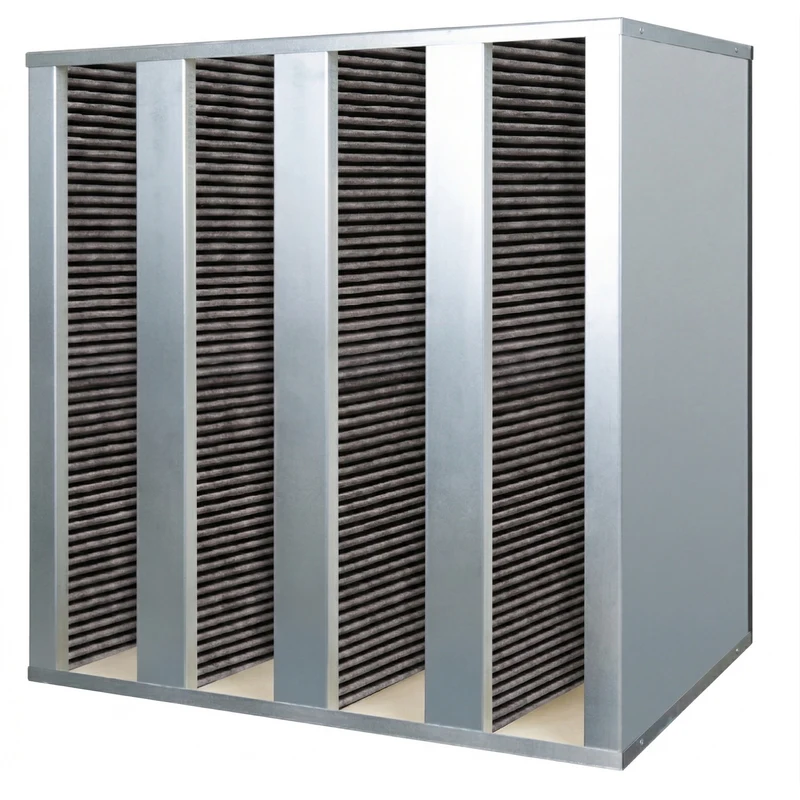
V-Type Chemical Filter
Product Overview
Key Specifications
- Adsorbent Weight
- 800 g/m² ±10%
- Air Permeability
- > 100 cc/cm²/sec(ASTM D737)
- Max. Operating Temperature
- ≤ 40°C
- Max. Relative Humidity
- ≤ 70% RH



Specifications
- Adsorbent
- High-performance activated carbon
- Frame
- Galvanized steel or plastic frame
- Adsorbent Weight
- 800 g/m² ±10%
- Basis Weight
- 1,400 g/m² ±10%
- Air Permeability
- > 100 cc/cm²/sec(ASTM D737)
- Max. Operating Temperature
- ≤ 40°C
- Max. Relative Humidity
- ≤ 70% RH
Detailed Description
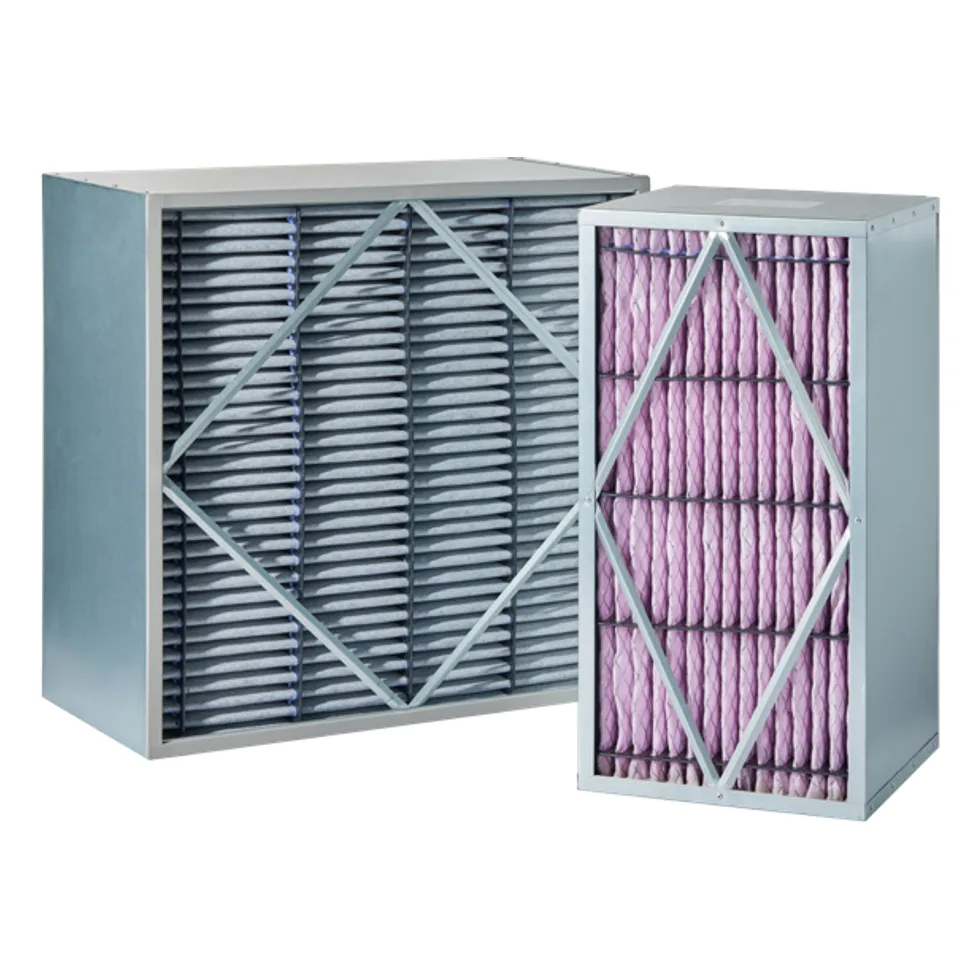
V-type chemical filter specifications
Standard depth is 292 mm (12 in), in three face sizes. The V frame is rigid enough to carry up to 12 kg of media, and frames can be stacked to save space.| Nominal size (in) | Actual size (mm) | Media area | Rated airflow | Rated velocity | Initial resistance | Packed weight |
|---|---|---|---|---|---|---|
| 12×12×12 | 287×287×292 (2V) | 2.0 m² | 850 m³/h | 1.25 m/s | 52 Pa | 3.5 kg |
| 12×24×12 | 287×592×292 (4V) | 3.8 m² | 1700 m³/h | 2.5 m/s | 80 Pa | 6.5 kg |
| 24×24×12 | 592×592×292 (4V) | 7.0 m² | 3400 m³/h | 2.5 m/s | 80 Pa | 12 kg |
Media grades: how to choose for acids, alkalis or VOCs
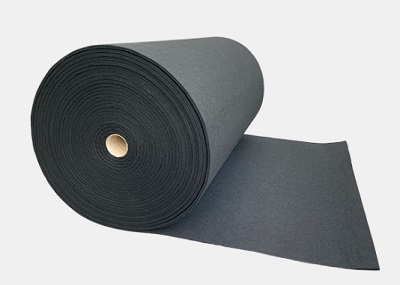
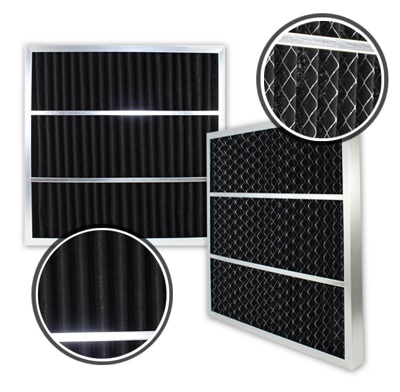
Choose the media grade by the gas to be removed; all three have the same thickness and carbon content and differ in impregnation.| Media grade | Thickness | Carbon content | Gases and odours removed |
|---|---|---|---|
| BSV800A | 2.5 mm | 800 g/m² | Acid gases: hydrochloric acid, hydrogen sulphide, sulphur dioxide, nitrogen dioxide, sulphuric acid |
| BSV800B | 2.5 mm | 800 g/m² | Alkaline gases: ammonia, amines |
| BSV800C | 2.5 mm | 800 g/m² | VOCs, tobacco smoke, hydrocarbons, cooking and food odours, diesel exhaust, ozone, industrial waste oil odours, outdoor pollution |
Why does the V design have a low pressure drop?
Folding the packs into a V gives a media area many times the face area, so air passes through the media more slowly, pressure drop is lower and the fan works less. The 24×24×12 in filter has a face of only 592×592 mm but 7.0 m² of media; the small 12×12×12 in size is a 2V design with an initial resistance of only 52 Pa at 1.25 m/s.Where is it used?
It is designed for HVAC systems, to solve odour and gas problems caused by specific contaminants: semiconductor, microelectronics and pharmaceutical plants, TFT-LCD display fabs, food processing plants, hospitals, museums, archives and airport control towers. Maximum operating temperature is 40°C and relative humidity 70%; the frame is high-impact polystyrene, and spent filters are disposed of by incineration.Replacement and safety
Pressure drop hardly rises as chemical media saturate, so decide when to replace from outlet gas concentration or media sample analysis rather than a differential pressure gauge. Activated carbon adsorbs oxygen from the air, so watch for low-oxygen hazards when staff enter closed housings holding chemical media or sample and work in poorly ventilated spaces.Frequently Asked Questions
How much airflow can one 24×24×12 in V-type chemical filter handle?
It handles 3400 m³/h at the rated velocity of 2.5 m/s, with an initial resistance of 80 Pa; the 12×24×12 in size handles 1700 m³/h at 80 Pa. For more airflow, install several side by side.
I have both acid gases and VOCs. How should I configure it?
BSV800A treats acid gases and BSV800C treats VOCs and odours; install the two in series in the same filter section. If there is room for only one stage, send us the gas types and concentrations and we will select by the main contaminant.
Where is the small 12×12×12 in size used?
It is a 2V design rated at 850 m³/h, with an initial resistance of 52 Pa at 1.25 m/s, suited to small AHUs or to filling edges where a large cross-section cannot be covered by 24 in positions.
How heavy is a V-type chemical filter, and can the frame take it?
The 24×24×12 in size has a packed weight of 12 kg and the 12×24×12 in size 6.5 kg. The V frame carries up to 12 kg of media, the packs are sealed into the frame with polyurethane, and frames can be stacked.
Selection References
Before ordering, verify the efficiency grade, media type, and whether the operating environment fits your requirements.