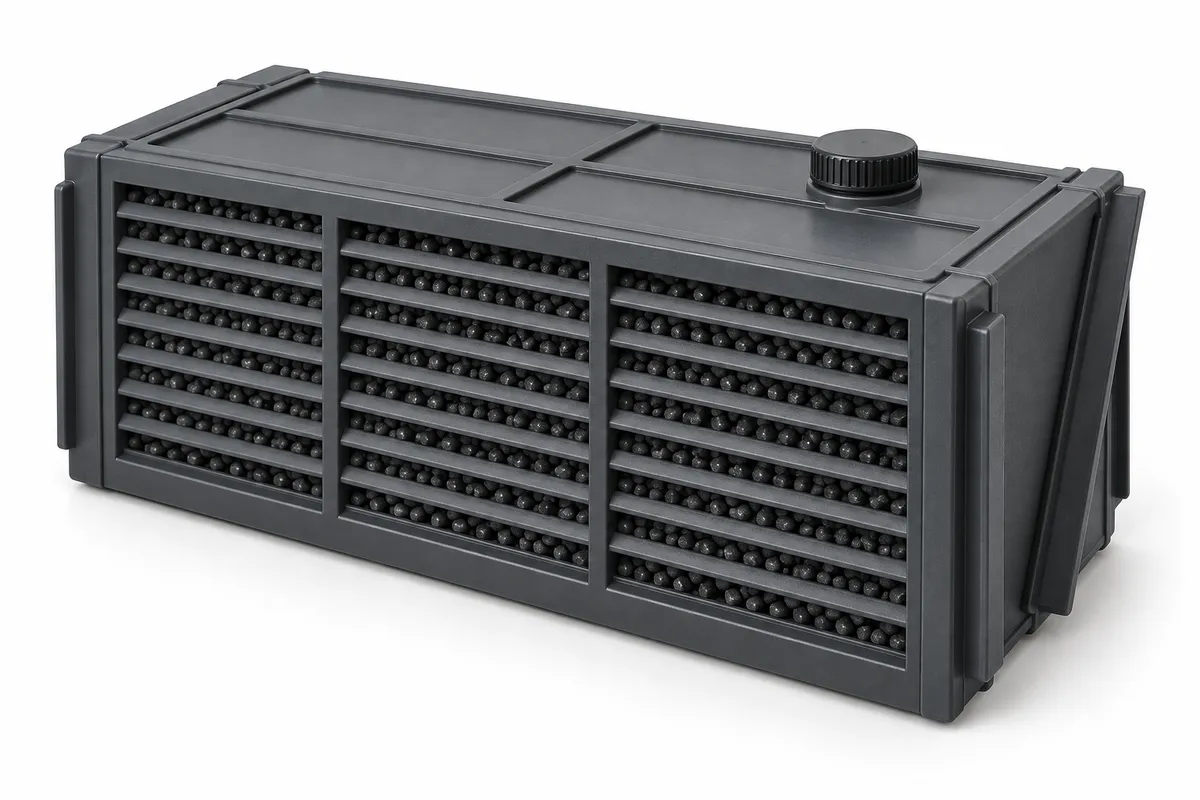
Side-Access Chemical Media Module (24×12×12 / 24×6×18 in)
Product Overview
Features & Specifications



Detailed Description
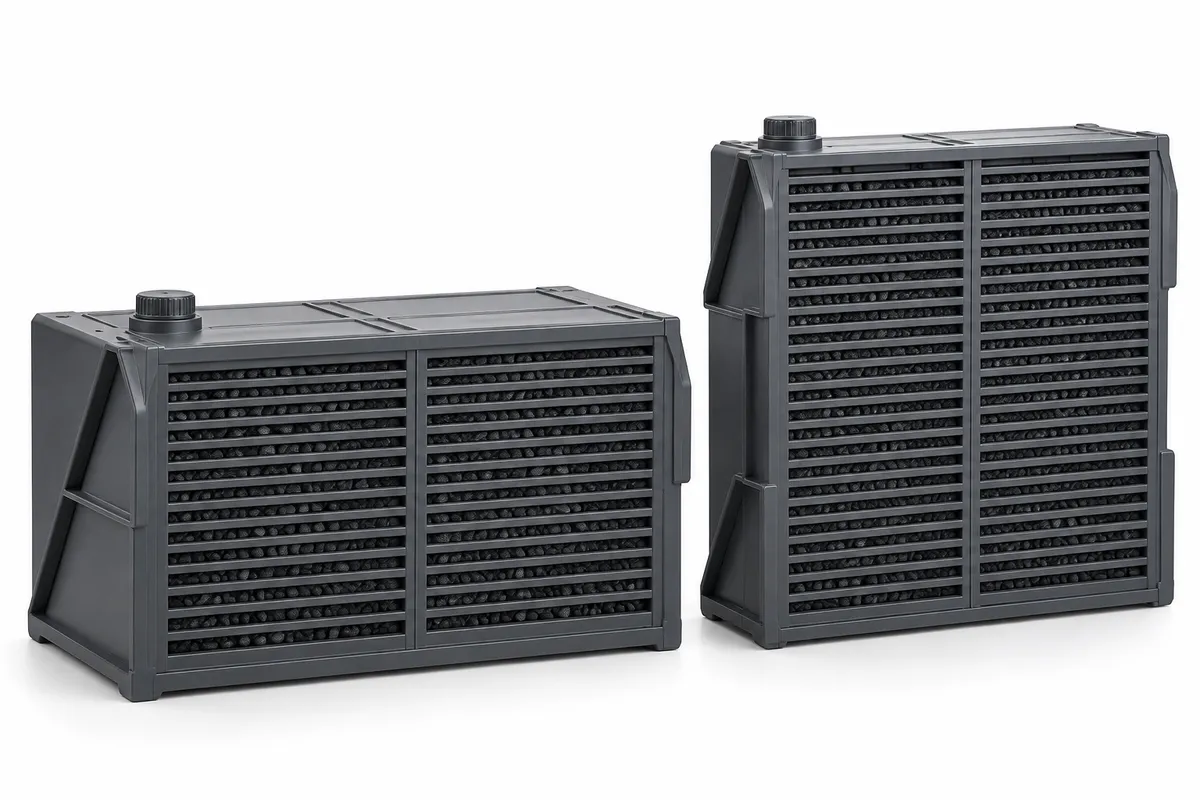
What is the difference between the two sizes?
BS-CMP-1212 is the deep-bed version: 76 mm bed, about 28 L of media, more media and longer residence time, suited to higher concentrations or where service life matters. BS-CMP-2418 is the thin-bed version: 25 mm bed, about 14 L of media, large face area and low pressure drop, suited to high-volume, low-concentration recirculated air. Both are 610 mm wide; choose by the depth of the housing slot.| Model | Dimensions mm (in) | Bed depth | Media volume | Rated face velocity | Airflow per module |
|---|---|---|---|---|---|
| BS-CMP-1212 | 610×305×305 (24×12×12) | 76 mm | about 28 L | 1.27 m/s | about 850 m³/h |
| BS-CMP-2418 | 610×152×457 (24×6×18) | 25 mm | about 14 L | 2.5 m/s | about 2,550 m³/h |
Pressure drop and fan reserve
The deep-bed version holds more media, and a same-class module typically has an initial pressure drop of about 300 Pa at 1.27 m/s; the thin-bed version is about 100 Pa at 2.5 m/s. The chemical stage usually sits between a prefilter and a final particulate filter, so size the fan for all three stages together; measured values for this product are given in the shipping data sheet.Which media can be specified?
Choose the media by target gas; one housing can run two stages of different media in series, removing acid gases first and VOCs second. The usual operating envelope for dry chemical media is ≤ 50°C and ≤ 90% RH (non-condensing).| Media option | Target gases | Typical locations |
|---|---|---|
| Impregnated activated carbon | Acid gases such as H₂S, SO₂, Cl₂ | Control rooms near pulp and paper, petrochemical and wastewater plants |
| KMnO₄ alumina | H₂S, SO₂, NO₂, formaldehyde, ethylene | Data centre outdoor air, produce cold storage, museums |
| Plain activated carbon | VOCs, ozone, odours | Offices, hospitals, laboratory exhaust |
| Blended bed | Mixed gases | Semiconductor facility AMC, general indoor air quality |
Which housings does it fit?
It fits our BS-SAH side-access chemical filter housing (see the AMC chemical filtration housing) or an existing customer housing with 24-inch-wide angled tracks. Each slot in the housing takes one module: add slots side by side for more airflow, and add a second stage in series to treat several gases. A common configuration is outdoor-air and recirculated-air treatment for data centres and control rooms, with the aim of holding corrosive gases to ISA-71.04-2013 class G1.How does it differ from a packed activated carbon filter?
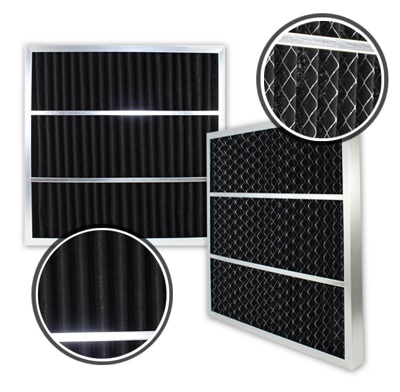
A packed activated carbon filter is a refillable flat panel with a metal frame and perforated plates on both faces, used in ordinary AHU filter tracks; the side-access module is a plastic cassette that self-seals on angled tracks and is replaced as a whole, used in side-access chemical housings. If the existing equipment has filter tracks, choose the packed panel; if it has angled-track housings, choose the module; for a low-pressure-drop chemical stage that drops into a 2-inch or 4-inch filter track, see the extruded honeycomb block chemical filter.Frequently Asked Questions
My side-access housing is from an overseas brand. Can I switch to these modules directly?
BS-CMP-1212 and BS-CMP-2418 use the common 24×12×12 in and 24×6×18 in outer dimensions, and their angled rails match typical sloped-track side-access housings. Send us the dimensions of your existing module and a photo of its rail position, and we will confirm compatibility before shipping.
Can the module be emptied and refilled once spent?
This product is designed for whole-module replacement, and opening the shell to refill on site is not recommended; spent media can be sent for recycling. If you need a refillable version, use the metal-framed packed activated carbon filter instead.
How many modules does one housing need?
It depends on airflow and concentration. BS-CMP-1212 is rated at about 850 m³/h per module and BS-CMP-2418 at about 2,550 m³/h; divide the housing airflow by the per-module figure to get the number of slots side by side, and add a second stage of different media in series to treat acid gases and VOCs together.
How do I know when to replace a module?
Modules with the optional sampling port allow a small media sample to be drawn periodically and tested for remaining capacity; data centres often pair them with corrosion coupons or a real-time corrosion monitor and replace when copper and silver corrosion rates approach the G1 limit. Pressure drop does not rise as the media saturates, so it cannot be used as the replacement indicator.
Selection References
Before ordering, verify the efficiency grade, media type, and whether the operating environment fits your requirements.