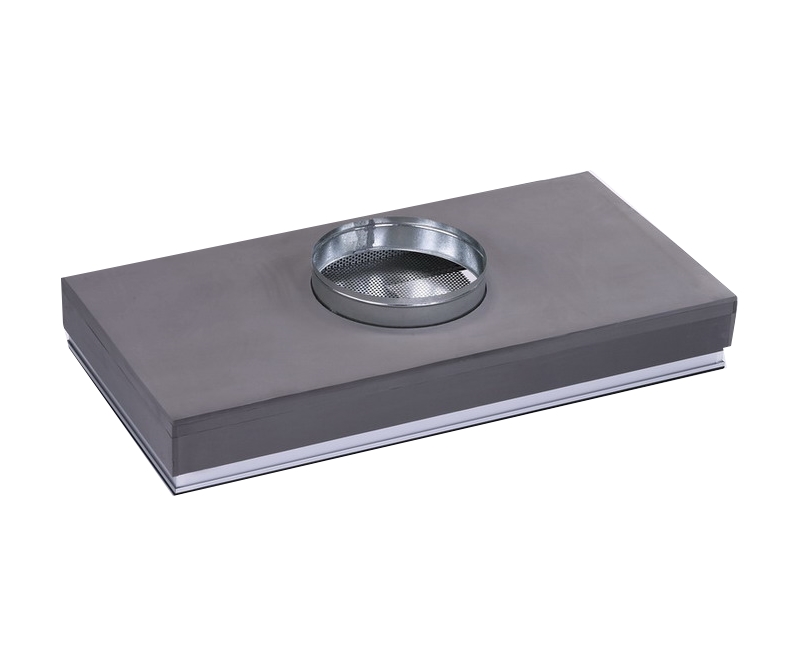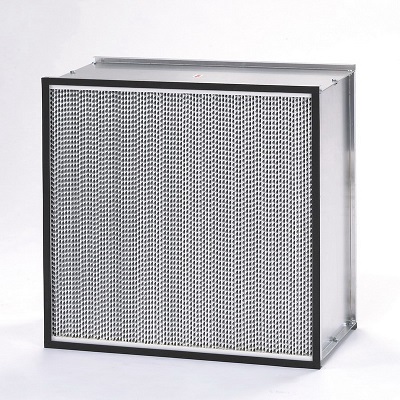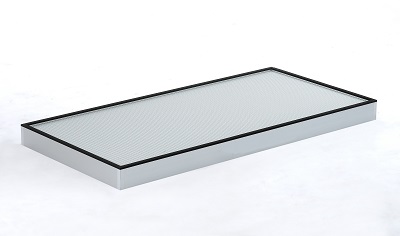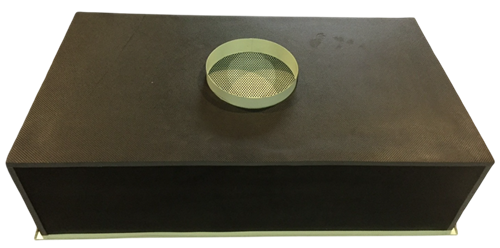
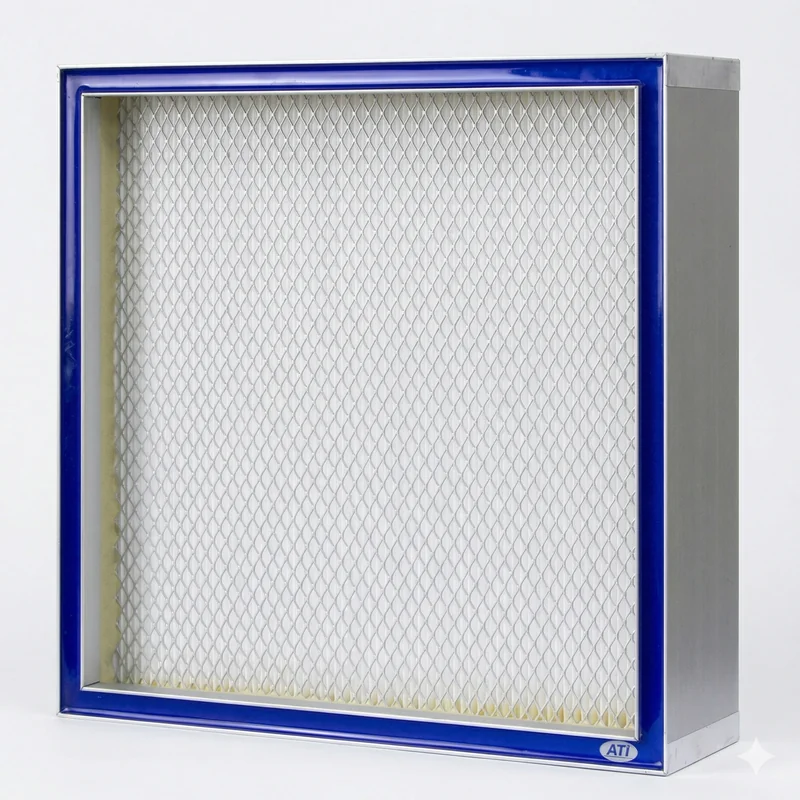
Gel-Seal HEPA Filter
Product Overview
Key Specifications
- Efficiency Class
- H14 / H13 / E12
- Filtration Efficiency
- ≥99.97% @ 0.3μm
- Depth
- 68 mm / 85 mm
- Max. Operating Temperature
- 60°C



Specifications
- Filter Media
- Glass fiber / PTFE
- Frame
- Anodized aluminum / galvanized steel / stainless steel
- Sealant
- Gel seal
- Test Standard
- EN 1822:2009、IEST RP-CC-001.5:2009
- Efficiency Class
- H14 / H13 / E12
- Filtration Efficiency
- ≥99.97% @ 0.3μm
- Depth
- 68 mm / 85 mm
- Max. Operating Temperature
- 60°C
- Max. Relative Humidity
- 100% RH (non-condensing)
- Certification
- ISO 9001、FM、EN 1822 / IEST RP-CC001.5
Model Reference
| Model | Description | Size |
|---|---|---|
| MH99-610-1220-85-B | HEPA FILTER 99.99% gel-seal filter 610X1220X85mm aluminum frame 0.45m/s | 610 × 1220 × 85 mm |
| MH99-570-570-75-GEL | MINI HEPA gel-seal 99.99% 570X570X75mm aluminum frame, double gasket, upstream gel seal | 570 × 570 × 75 mm |
| MH99-570-1170-75-GEL | MINI HEPA gel-seal 99.99% 570X1170X75mm aluminum frame, double gasket, upstream gel seal | 570 × 1170 × 75 mm |
| MH99-565-565-78-GEL | MINI HEPA gel-seal 99.99% 565X565X78mm aluminum frame, double mesh guard, upstream gel seal | 565 × 565 × 78 mm |
| MH99-570-300-75-GEL | MINI HEPA gel-seal 99.99% 570X300X75mm aluminum frame, double gasket, upstream gel seal | 570 × 300 × 75 mm |
| MH99-365-565-75-GEL | MINI HEPA gel-seal 99.99% 365X565X75mm aluminum frame, double gasket, upstream gel seal | 365 × 565 × 75 mm |
| MH99-365-765-75-GEL | MINI HEPA gel-seal 99.99% 765X365X75mm aluminum frame, double gasket, upstream gel seal | 765 × 365 × 75 mm |
| MH99-665-765-75-GEL | MINI HEPA gel-seal 99.99% 665X765X75mm aluminum frame, double mesh guard, upstream gel seal | 665 × 765 × 75 mm |
Common sizes are listed above. Other sizes, frame materials and efficiency grades can be made to order — please quote the model or size when requesting a quotation.
Detailed Description
Product Features
- Gel sealing technology: Anti-gravity, self-healing sealant effectively prevents leakage - Customizable frame depth: Options of 68mm and 85mm - High temperature and humidity resistance: Operates at 60°C, 100% RH - Cleanroom compatible: Suitable for ISO Class 1 to Class 1000 - Multiple filter media options: Glass fiber or PTFE - Multiple frame material options: Anodized aluminum, galvanized steel, stainless steelApplications
- Semiconductor manufacturing - Pharmaceutical and biotech industries - Hospitals and medical facilities - Commercial and residential HVAC systemsProduct Advantages
- Easy filter replacement indoors, reducing maintenance costs - Equipped with filter protection mesh to prevent accidental damageDimension Diagram
Air Flow and Pressure Drop Characteristics
HEPA H13 / H14
Air Flow and Pressure Drop Characteristics
ULPA U15 / U16
Frequently Asked Questions
How does gel sealing compare with a conventional gasket, and is the extra cost worth it?
A gasket seals by compression, so uneven clamping or a slightly deformed frame leaves a bypass path, and the gasket takes a permanent set after a few changeouts, losing sealing force. Gel sealing works by pressing a knife edge into a filled channel, which tolerates far more frame irregularity and does not degrade with repeated changeouts. The deciding factor is cleanliness class: at ISO Class 5 and above — or wherever PAO scan testing is judged strictly — bypass leakage is usually what fails the test, and the rework a gel seal avoids costs far more than the price difference. For general ventilation or ISO Class 7 and below, a gasket is sufficient.
What does "100% RH (non-condensing)" mean — can it be installed where condensation occurs?
No. "Non-condensing" is the binding constraint: the filter can run indefinitely in air at near-saturation relative humidity, but it is not rated once that moisture condenses into liquid water on the media. The reason is that a water film blocks the pores and drives pressure drop up sharply, and wet glass fiber loses structural strength — in bad cases the media collapses and opens a breach. In practice, avoid locations where temperature drops abruptly: outdoor air hitting a cold surface, or a housing cooling down after shutdown. If condensation cannot be avoided at the installation point, add upstream dehumidification or pre-heating rather than expecting the filter to absorb it.
Selection References
Before ordering, verify the efficiency grade, media type, and whether the operating environment fits your requirements.