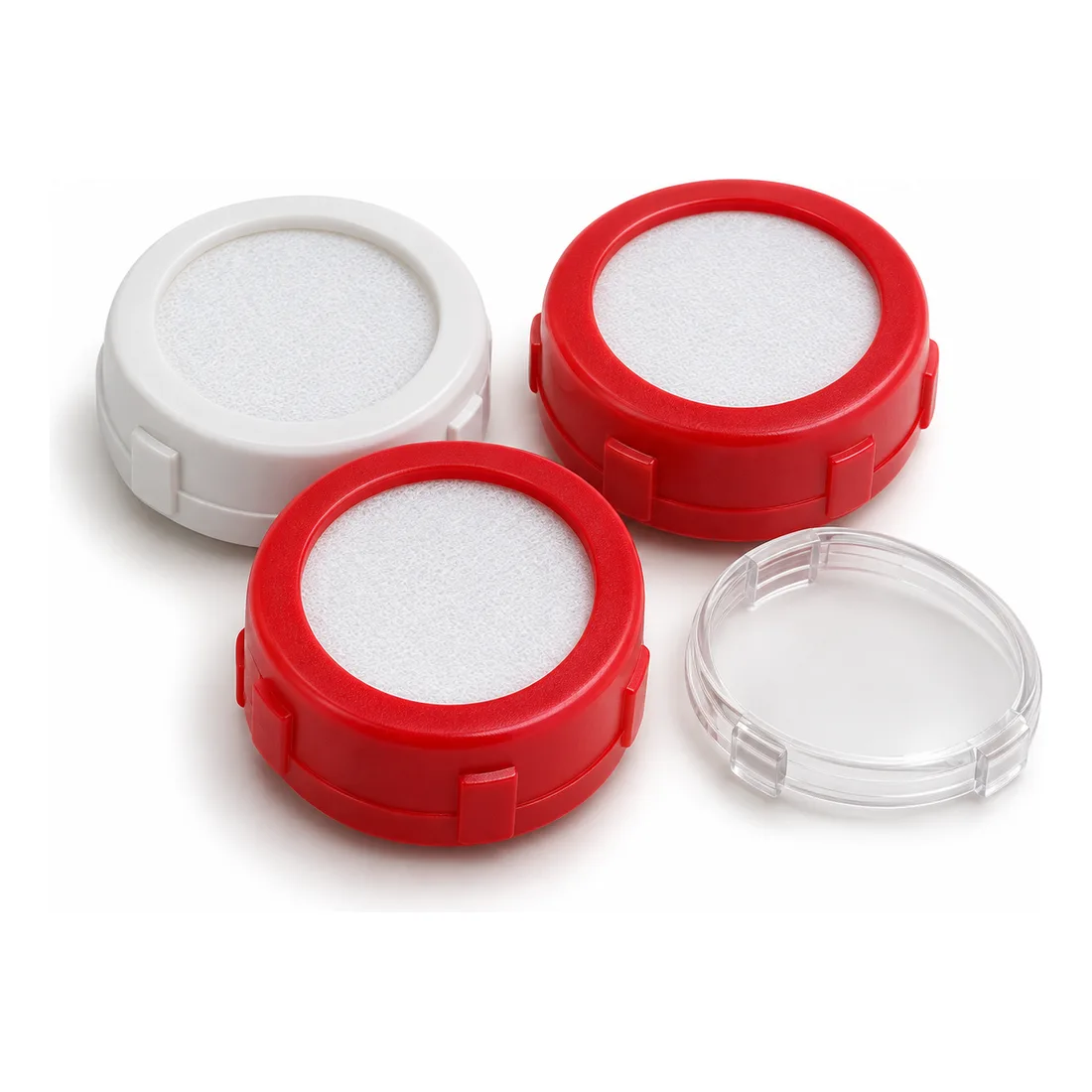
Passive Diffusion Sampler and Diffusion Tube
Product Overview
Features & Specifications



Detailed Description
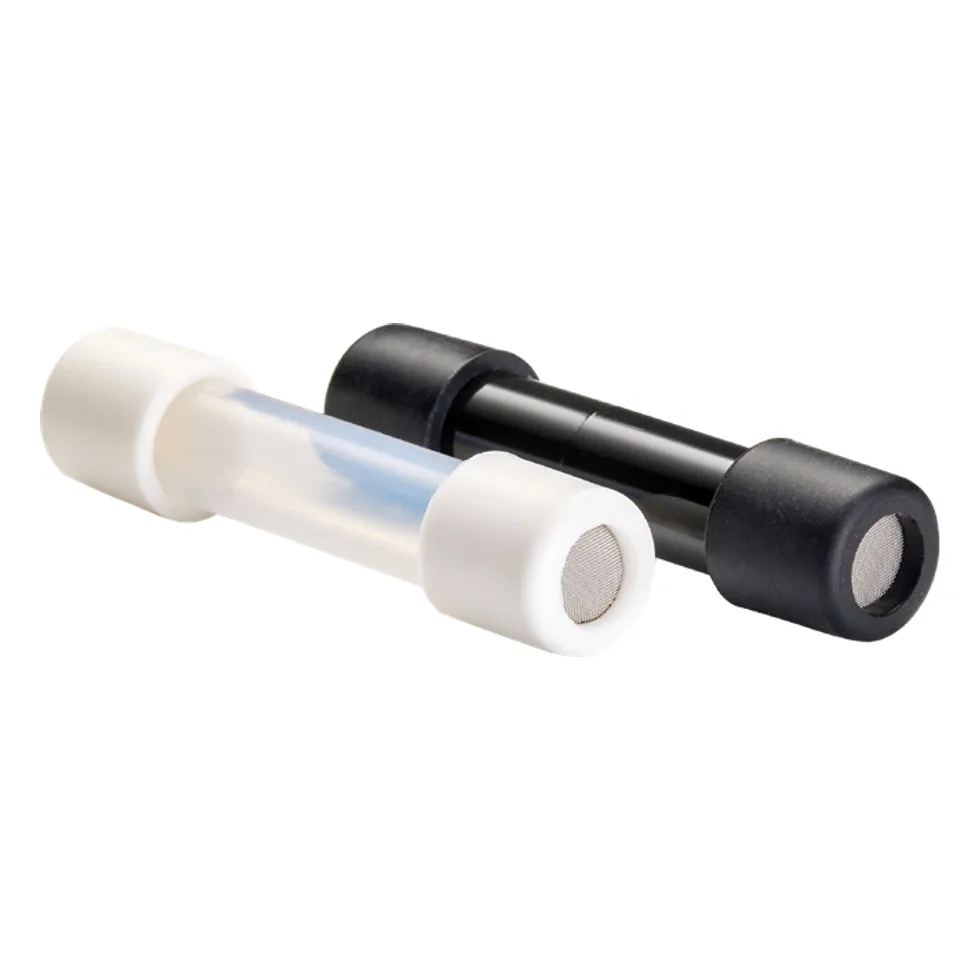
Passive sampler BS-PDS or diffusion tube BS-PDT: which to choose?
Choose BS-PDS for results within a short time or for personal sampling, and BS-PDT for the long-term average concentration over several weeks. BS-PDS samples more efficiently than a diffusion tube, which is why its sampling period can be cut to 1 hour to 7 days.| Item | BS-PDS passive diffusion sampler | BS-PDT passive diffusion tube |
|---|---|---|
| Form | Round, badge-type, contains an adsorbent | Diffusion tube |
| Sampling period | 1 hour to 7 days | 2–4 weeks |
| Key feature | Samples more efficiently than a diffusion tube, shorter period | Long-term monitoring, detection limits usually in the low ppb range |
| Best for | Short surveys, occupational personal sampling, indoor and outdoor | Long-term average concentrations, indoor and outdoor air quality |
Which gases can passive sampling measure?
Both samplers cover the same analytes, spanning acid gases, alkaline gases, ozone and organic compounds. Please state the target compounds when ordering so that the adsorbent and analysis method can be matched.| Category | Analytes |
|---|---|
| Acid gases | Nitrogen dioxide (NO₂), hydrogen sulphide (H₂S), sulphur dioxide (SO₂) and other acid gases |
| Alkaline gases | Ammonia (NH₃) |
| Oxidising gases | Ozone (O₃) |
| Organic compounds | VOC, formaldehyde (HCHO), BTEX (benzene, toluene, ethylbenzene, xylene) |
Where is air sampling used?
The catalogue lists settings ranging from city streets and factories to heritage stores, grouped by category below. What they share is the need to know the average pollutant concentration at one location over one period.| Category | Settings |
|---|---|
| Environment and transport | Urban air pollution, major transport hubs, boundary monitoring, refuse stations, wastewater treatment plants, sewage pumping stations |
| Indoor and public spaces | Pollution from fit-outs, shopping malls, hotels, schools, kindergartens, healthcare, automation control rooms |
| Electronics and energy | Electronics and semiconductor manufacturing, battery manufacturing, solar photovoltaics, data centres |
| Chemicals and manufacturing | Petrochemicals, metallurgy and foundries, rubber and tyres, industrial coating, printing and dyeing, automotive production, pulp and paper, biopharmaceuticals |
| Heritage and preservation | Storage of artefacts and documents, transport of artworks, heritage conservation surveys |
| Food and agriculture | Commercial kitchens and food plants, fresh produce transport and storage, speciality crop growing |
How are diffusion tubes stored, mounted and returned?
A tube placed in the wrong spot or stored badly gives low or unreliable results. The table below covers BS-PDT from delivery to report.| Stage | What to do |
|---|---|
| Shelf life | Usually 6–12 weeks, shipped monthly as needed |
| On delivery | If not used at once, keep frozen until exposure, without large temperature swings |
| Mounting | Where air circulates freely, away from fixed surfaces that adsorb gases; never directly against an object |
| Places to avoid | Do not mount the bracket in a recess (stagnant air) or in a building corner (higher turbulence) |
| Retrieval | Retrieve as soon as exposure ends and place in a clean, sealed container |
| Report | Analysed in a laboratory, with test results and an assessment report usually within two weeks |
Frequently Asked Questions
How does passive sampling differ from Summa canister sampling?
The analysis methods are the same (GC-MS, IC or UV-VIS); the difference is how the sample is taken. A Summa canister captures a canful of air at one moment and is bulky and needs rigorous cleaning; a passive sampler collects by slow diffusion and gives the average concentration over the sampling period, and it is small and needs no power, so many points can be sampled at once.
The tubes arrived but I am not using them yet. How should I store them?
If BS-PDT will not be used at once, keep it frozen until exposure and avoid large temperature swings. Shelf life is usually 6–12 weeks, so we ship monthly as needed and do not recommend stocking up in bulk.
Where should a tube be hung to get reliable results?
Hang it where air circulates freely, away from walls, partitions and other surfaces that adsorb gases, and never directly against an object; also avoid recesses and building corners, since the first has stagnant air and the second too much turbulence, and both skew the result.
How soon do I get results?
Retrieve the samplers as soon as exposure ends, place them in a clean, sealed container and send them back; the laboratory usually provides test results and an assessment report within two weeks.
Can it be used for occupational personal sampling?
Yes, with BS-PDS. It can be worn by a worker as a personal sampler, with a sampling period of 1 hour to 7 days, which suits occupational health surveys and safety monitoring in the workplace.
Selection References
Before ordering, verify the efficiency grade, media type, and whether the operating environment fits your requirements.