Atmospheric Corrosion Monitor (Online)
Product Overview
Features & Specifications



Detailed Description
How does an electrical resistance (ER) probe measure corrosion?
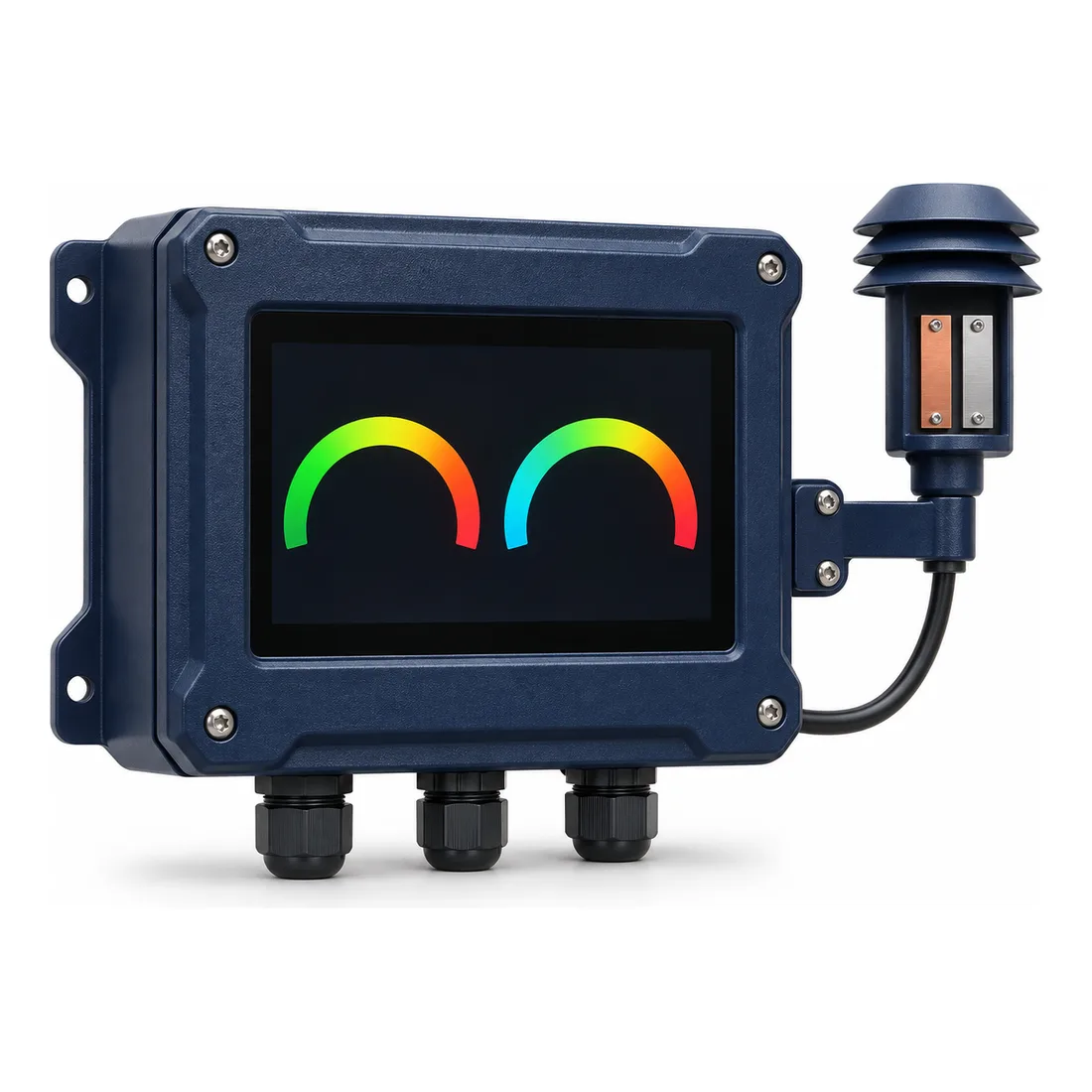
The sensing element is a very thin layer of copper or silver; as the air corrodes it, the metal gets thinner and its resistance rises, and the instrument converts that change into the thickness lost (Å). It measures the real effect of contaminants on metal rather than estimating gas concentrations. A sensor can take a cumulative corrosion of 5,000 Å, after which it is replaced.BS-ACM corrosion monitor specifications
The main unit has a 7-inch touch screen for reading values on site, and its Ethernet and 4–20 mA outputs connect to server-room or facility monitoring systems.| Item | Specification |
|---|---|
| Corrosion severity classes | G1–GX (per ANSI/ISA-71.04-2013) |
| Sensors | Copper and silver ER probes |
| Sensor life | 5,000 Å |
| Relative humidity range | 10%–95% RH |
| Temperature range | 0–50 °C (32–122 °F) |
| Differential pressure range | 0–0.5 in. water column (converted, about 0–124 Pa) |
| Display | 7-inch 800×400 colour LCD, ten-point capacitive touch |
| Communications | Ethernet, 4–20 mA analogue output |
| Power | 24 V DC or less, terminal block wiring |
| Protection and certification | Main unit IP67, CE |
Where is server-room corrosion monitoring used?
The catalogue lists data centres, semiconductors, oil refining and petrochemicals, pulp and paper, and museums and archives. Real-time monitoring of corrosion rate at critical points lowers maintenance costs, reduces unplanned downtime and confirms that a controlled environment stays at its target class.How do an online monitor and corrosion coupons work together?
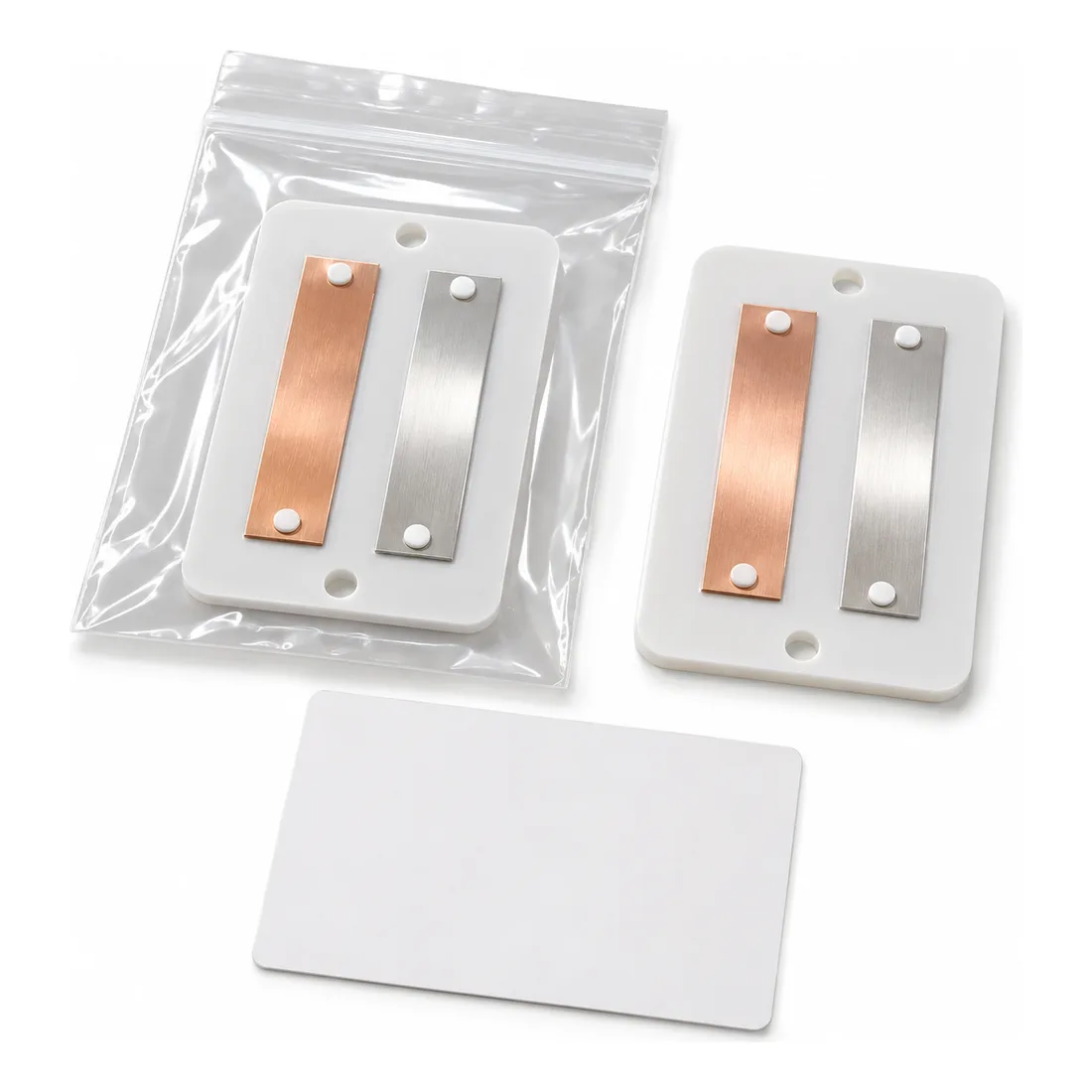
The two are often used together: coupons survey many points and identify the kind of gas, while the monitor guards the most critical point with real-time alarms.| Item | Atmospheric corrosion monitor BS-ACM | Corrosion classification coupon BS-CCC |
|---|---|---|
| Data obtained | Real-time corrosion rate, temperature, relative humidity, differential pressure | Cumulative corrosion over 30–90 days and film composition |
| Power | 24 V DC or less | None needed |
| How results are read | Live on the unit display, output over Ethernet or 4–20 mA | Retrieved, analysed in a laboratory and reported |
| Best for | Critical points that need real-time alarms | Periodic surveys, multi-point comparison, display cases |
Frequently Asked Questions
How often does the sensor need replacing?
A sensor can take a cumulative corrosion of 5,000 Å, so its life depends on how corrosive the site is: the closer to G1, the longer it lasts, and the more aggressive the air, the sooner it is used up. Once installed, the corrosion rate over the first few months lets you estimate when a replacement will be due and order a spare in good time.
Can it connect to the data centre DCIM or the facility BMS?
Yes. BS-ACM has Ethernet and a 4–20 mA analogue output, so corrosion rate, temperature, relative humidity and differential pressure can be sent to the existing monitoring system and alarmed there.
Why does a corrosion monitor also measure differential pressure?
Server rooms and control rooms are usually kept at positive pressure so that outside air carrying corrosive gases cannot get in. BS-ACM measures differential pressure from 0–0.5 in. water column, so when pressure drops while the corrosion rate rises, outdoor air infiltration is quickly identified as the cause.
If I have a monitor, do I still need corrosion coupons?
We recommend using both. The monitor tells you when and how fast corrosion is happening, while the laboratory report on a coupon gives the film composition, in other words which kind of gas, and coupons can be placed at many points for comparison, which helps decide which chemical media to choose.
Selection References
Before ordering, verify the efficiency grade, media type, and whether the operating environment fits your requirements.