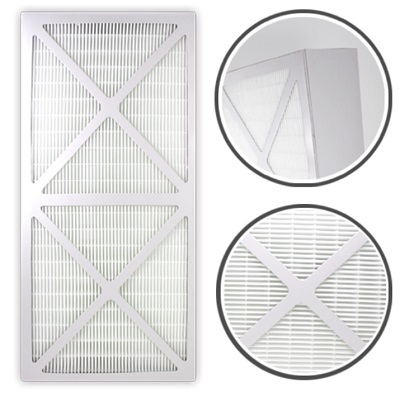
MINI PLEAT Filter
Product Overview
Key Specifications
- Filtration Efficiency
- 65 / 80 / 85 / 95%
- Depth
- Mostly 4″ (95–102 mm); 25–150 mm; V type 290 / 292 mm
- Filter Media
- Glass fiber filter paper
- Frame
- Aluminum, cardboard or galvanized steel frame; ABS frame for the V type



Specifications
- Filter Media
- Glass fiber filter paper
- Frame
- Aluminum, cardboard or galvanized steel frame; ABS frame for the V type
- Filtration Efficiency
- 65 / 80 / 85 / 95%
- Depth
- Mostly 4″ (95–102 mm); 25–150 mm; V type 290 / 292 mm
Model Reference
| Model | Description | Size |
|---|---|---|
| MM65-12-24-4-P | Mini-pleat medium efficiency 65% filter 12X24X4" paper frame | 12 × 24 × 4″ |
| MM-290-595-95-GA | Mini-pleat medium efficiency 95% filter 290X595X95mm galvanized frame | 290 × 595 × 95 mm |
| MM65-24-24-4-P | Mini-pleat medium efficiency 65% filter 24X24X4" paper frame | 24 × 24 × 4″ |
| MM85-595-595-95-P | Mini-pleat medium efficiency 85% filter 595X595X95mm paper frame, glass fiber | 595 × 595 × 95 mm |
| MM85-600-300-75 | Mini-pleat medium efficiency 85% filter 600X300X75mm aluminum frame, double mesh guard, double gasket | 600 × 300 × 75 mm |
| MM85-600-600-75 | Mini-pleat medium efficiency 85% filter 600X600X75mm aluminum frame, double mesh guard, double gasket | 600 × 600 × 75 mm |
| MM85-457-457-150 | Mini-pleat medium efficiency filter 85% 457X457X150mm aluminum frame | 457 × 457 × 150 mm |
Common sizes are listed above. Other sizes, frame materials and efficiency grades can be made to order — please quote the model or size when requesting a quotation.
Detailed Description
How is it different from a standard pleated filter?
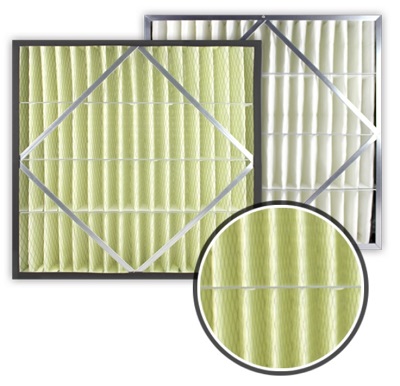
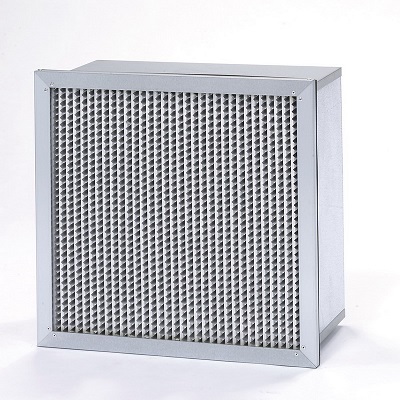
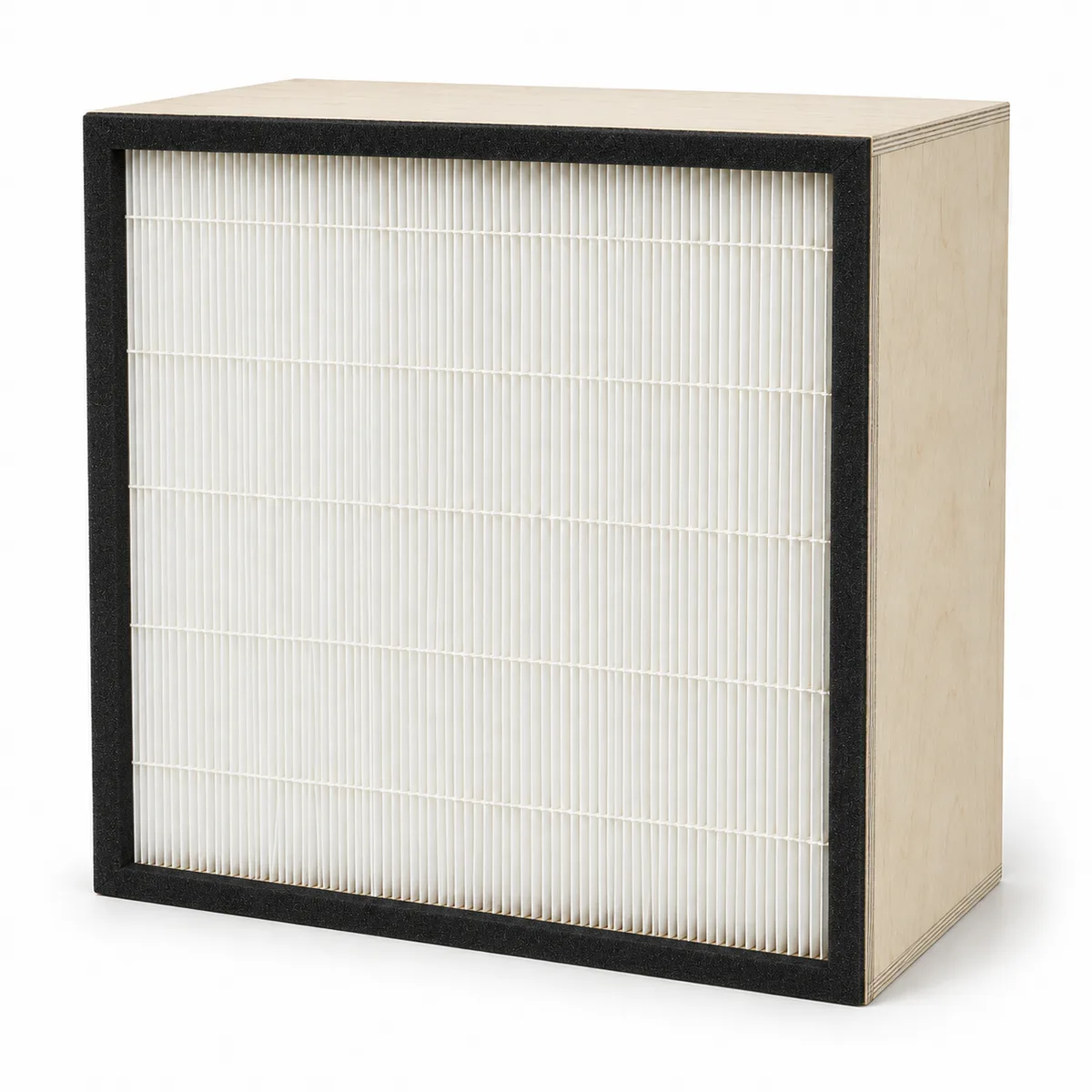
The difference is how tightly it is pleated. Both are flat panels, but a mini-pleat filter has fine, dense pleats, so far more media fits into the same opening. Here are actual pleat counts:| Size | Type | Pleats |
|---|---|---|
| 24×24×4″ | Mini-pleat 85% | 116 |
| 12×24×4″ | Mini-pleat | 56 |
| 16×20×2″ | Standard pleated | 30 |
How deep is it for the same 595×595 opening?
A mini-pleat filter is most often about 95 mm deep; for the same 595×595 mm opening, a separator filter needs 290 mm and a bag filter 360 mm. If the slot is only about 100 mm deep and you still need medium efficiency, a slim filter like the mini-pleat is what fits.Same 595×595 opening: how deep is each filter?
All are 595×595 mm models we have made (depth in mm)
Dark bars are the mini-pleat on this page. Bag depth is the bag length; each type also comes in other depths — one model of each is shown.
What depths and frames are available?
Of our 39 mini-pleat models, about 20 are 4″ (95–102 mm), the main version. When replacing, ordering the same depth as the old filter is the safest choice.| Depth | Models |
|---|---|
| 95–102 mm (4″) | about 20 |
| 70–75 mm | 8 |
| 45–50 mm | 5 |
| 25 mm | 1 |
| 150 mm | 1 |
| 290/292 mm (V-type) | 3 |
How do 65–95% relate to ISO 16890 ePM1, F7 and MERV 13?
They cannot be converted directly. The 65/80/85/95% in our model names is a traditional percentage efficiency; ISO 16890 ePM1, EN 779 F7 and ASHRAE 52.2 MERV 13 are each different standards with different test methods. Whichever one a specification calls for, you need a test report to that standard. - ISO 16890 replaced EN 779 in 2018 and is the current international standard. It measures efficiency over three particle-size ranges: ePM1 (0.3–1 μm), ePM2.5 (0.3–2.5 μm) and ePM10 (0.3–10 μm) - A filter goes into the ePM1 group only if its minimum ePM1 efficiency is 50% or more; the value is rounded down in 5% steps, for example "ISO ePM1 55%" - A specification that says "ePM1 ≥ 50%" means the filter must at least make the ePM1 group - F7 is an old EN 779 class and MERV 13 is a US ASHRAE 52.2 class; many specifications list several of these side by side We have received specifications that call for ePM1 ≥ 50%, F7 and MERV 13 together; we select the filter to the specification and check the test report for the matching standard.How are airflow and pressure drop set?
They are provided per selection, with no one-size-fits-all table. The rated airflow and pressure drop of a mini-pleat filter change with depth, efficiency and pleat count, so we select to the airflow and maximum pressure drop you specify. For example, one customer specified 595×595×95 mm, 85%, aluminum frame, no mesh, gasket on the outlet face, 2900 m³/h airflow and a pressure drop of no more than 100 Pa. That is a face velocity of about 2.28 m/s (2900 ÷ 3600 ÷ (0.595 × 0.595)). Please include the airflow and maximum pressure drop with your inquiry; pressure drop curves, dust-holding capacity and weight are also provided per selection.Specifications
- Efficiency: 65%, 80%, 85%, 95% - Depth: mainly 4″ (95–102 mm); also 25, 45–50, 70–75 and 150 mm; V-type 290/292 mm - Frame: aluminum, paper or galvanized steel; ABS plastic for the V-type - Media: glass-fiber filter paper - Guard mesh and gaskets: both faces, none, outlet face only, etc., to suit the mounting frame - Sizes: inch (24×24×4″, 12×24×4″) and metric (595×595×95, 600×600×75 mm, etc.); custom sizes available - Rated airflow, pressure drop curve, dust-holding capacity, weight: provided per selectionFrequently Asked Questions
A medium mini-pleat and a HEPA mini-pleat look alike. What is the difference?
The construction is the same — densely pleated filter paper — but the paper grade and efficiency differ. This page is medium efficiency: 65–95%, catching ordinary fine dust and often installed in front of a HEPA filter to protect it. A HEPA mini-pleat uses a higher grade of paper, generally 99.97% or more at 0.3 μm, and is used at the final stage in cleanrooms and operating rooms. If the specification says HEPA, H13 or H14, see the HEPA mini-pleat page; one cannot stand in for the other.
Mini-pleat and medium separator filters are both rigid medium filters. How do I choose?
Start with how deep the filter slot is. A separator filter holds deep pleats open with aluminum separators and needs 290 mm for a 595×595 mm opening; a mini-pleat filter is densely pleated, usually with hot-melt glue lines as spacers in industry practice, and is most often only about 95 mm deep. If the slot is only about 100 mm, choose the mini-pleat; if there is 290 mm of space, you can choose a separator filter or a V-type mini-pleat.
The specification says ISO 16890 ePM1 ≥ 50%, F7 or MERV 13. Can you supply that?
Yes, we select to the specification. These are classes from three different standards and cannot be converted directly from the 65–95% in our model names. Please send the specification or the required standard with your inquiry, together with size, airflow and maximum pressure drop, and we will select the filter and check the test report for that standard. We have handled specifications that require ePM1 ≥ 50%, F7 and MERV 13 together.
Do you have a V-type (4V) mini-pleat?
Yes. A V-type arranges several mini-pleat packs in a V shape inside a deep frame, 290/292 mm deep; we have 3 models, for example 595×595×290 mm, 95%, ABS plastic frame. The model name states 130 Pa but no matching airflow, so the actual pressure drop has to be confirmed for your airflow. It suits slots that can take 290 mm where you want more media in the same opening.
Selection References
Before ordering, verify the efficiency grade, media type, and whether the operating environment fits your requirements.