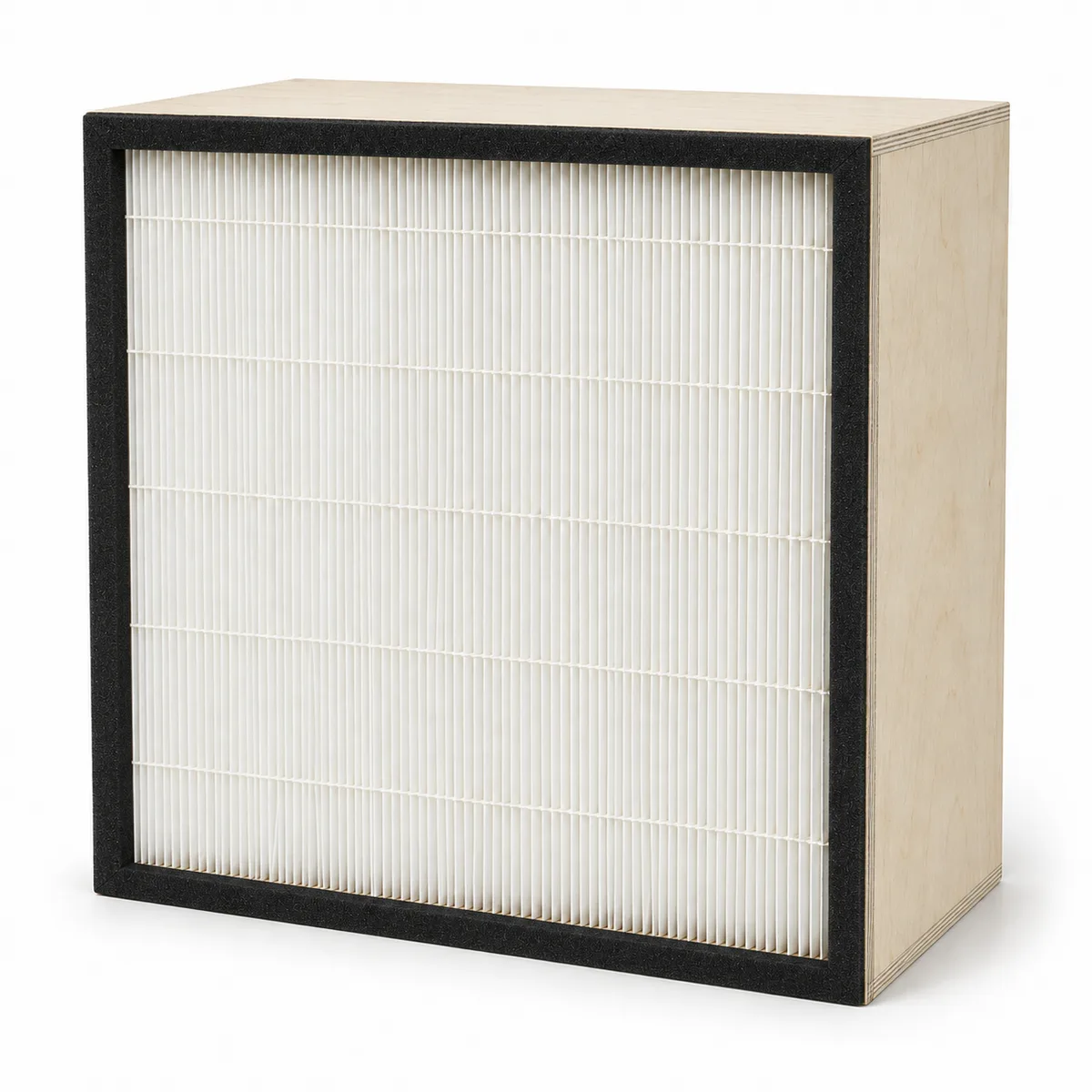
Salt Air Filter for Coastal HVAC (Salt-Resistant Media)
Product Overview
Key Specifications
- Filtration Efficiency
- 95% / 65%
- Filter Media
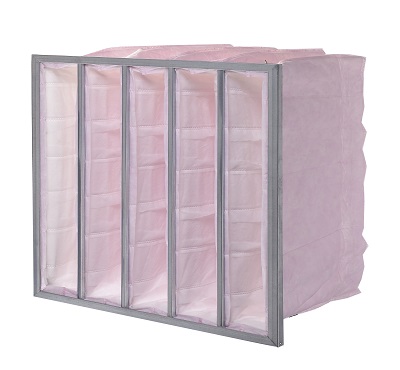
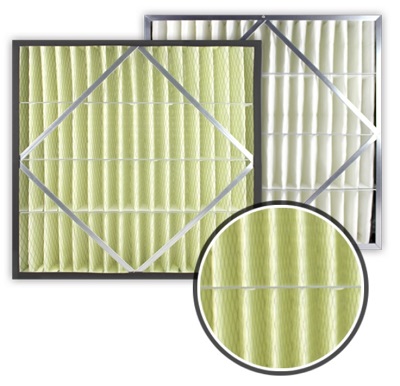
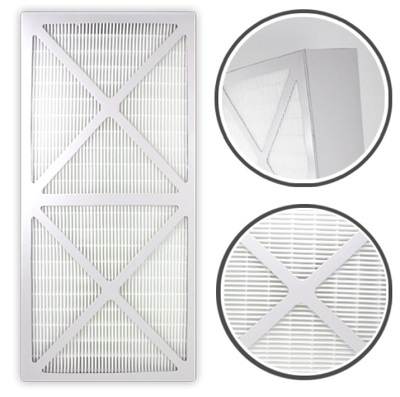
- Mini-pleat media, no guard
- Frame
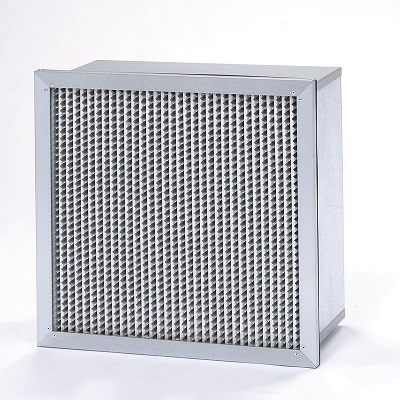
- Wood or stainless steel frame
- Depth
- 290 / 150 / 40 mm



Specifications
- Filter Media
- Mini-pleat media, no guard
- Frame
- Wood or stainless steel frame
- Gasket
- Gaskets on both faces
- Filtration Efficiency
- 95% / 65%
- Depth
- 290 / 150 / 40 mm
Detailed Description
Why a filter alone is not enough: salt changes form
Sea salt is mostly sodium chloride, which behaves in a particular way: below about 75% relative humidity it stays as small dry particles that a filter can capture; above about 75% it absorbs water from the air and turns into brine droplets. Brine droplets wet the filter media, raise its resistance, and may be carried through.When is salt dry, and when does it become brine?
Sodium chloride deliquesces at about 75% relative humidity
Measured value 75.7 ± 2.5% (varies with temperature, particle size and composition). Coastal air is often more humid than this, so droplets and dry salt particles are handled in two stages.
Outdoor Air Intake Path: Five Stages, in Order
Water droplets have to be removed before the filters, or the filter stages cannot hold the line on particles
The division of labour matters: a rain louver blocks droplets that would splash straight in, while a droplet separator catches the fine droplets and salt mist carried by the airflow — the first works by blade angle, the second by inertia, and neither substitutes for the other. Once a filter gets wet its pressure drop climbs, its wet media strength drops, and standing water breeds mould, so water must be dealt with upstream of the filters.
Specifications and sizes
| Frame size (mm) | Depth | Efficiency | Frame |
|---|---|---|---|
| 610×610 | 290 mm | 95% | Wood |
| 595×595 | 290 mm | 95% | Wood |
| 595×290 | 290 mm | 95% | Wood |
| 500×500 | 290 mm | 95% | Wood |
| 300×360 | 150 mm | 95% | Stainless steel |
| 450×210 | 40 mm | 95% | Stainless steel |
| 260×260 | 150 mm | 65% | Wood |
Where it is used
- Behind the intake louvers of pump rooms, water tanks and other equipment at harbors and coastal plants - Fan intakes of energy storage and equipment cabinets, for example 305×610×150 mm - An extra purification stage in front of home energy recovery ventilators, in small sizes - Salt-mist removal systems for island and coastal buildings, together with a droplet separatorFrequently Asked Questions
I already have a droplet separator. Do I still need a salt air filter?
Usually, yes. A droplet separator uses changes in airflow direction and inertia to throw out the larger water and brine droplets; dry salt particles and fine particles follow the airflow through and need a filter to capture them. An island salt-mist removal system we supplied uses both: a droplet separator first inside a stainless housing, then the filter.
Can it be fitted on equipment cabinets or fan intakes? Will it reduce airflow?
Yes — we have made sizes such as 305×610×150 mm for energy storage and equipment cabinet fans. A filter always adds resistance; how much the fan airflow drops can only be worked out by checking the filter's pressure drop at that velocity against the fan's performance curve. Please send the fan model or curve and the opening size, and we will provide the pressure drop per selection and evaluate it with you.
How do I choose between 150 mm and 290 mm thickness?
If there is room, choose 290 mm: the media is pleated taller, so more media fits in the same opening. Where space is limited, use the thin 150 mm version — for example, behind the intake louvers of harbor equipment we switched to 150 mm because the space was too shallow. When replacing, order the same thickness as before.
What frames are available? Can you make the holding frame too?
Frames come in wood or stainless steel; at the coast or where the filter may get wet, stainless steel is recommended. We can also make a stainless steel holding frame — for example, a 625×625×330 mm stainless holding frame for a 610×610×290 mm filter. Public works projects often require the filter and holding frame to be submitted for approval together, so please send the specification as well.
Selection References
Before ordering, verify the efficiency grade, media type, and whether the operating environment fits your requirements.