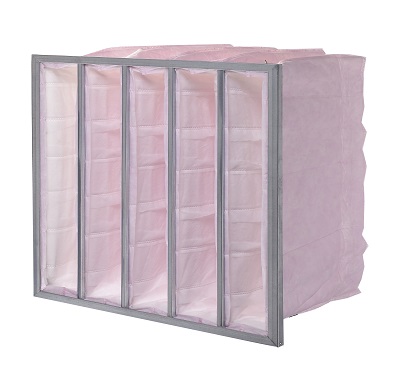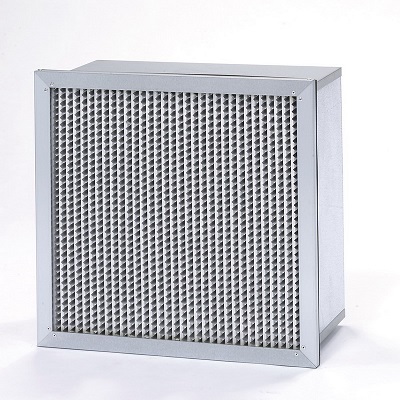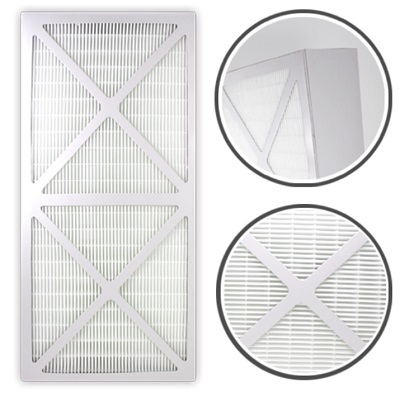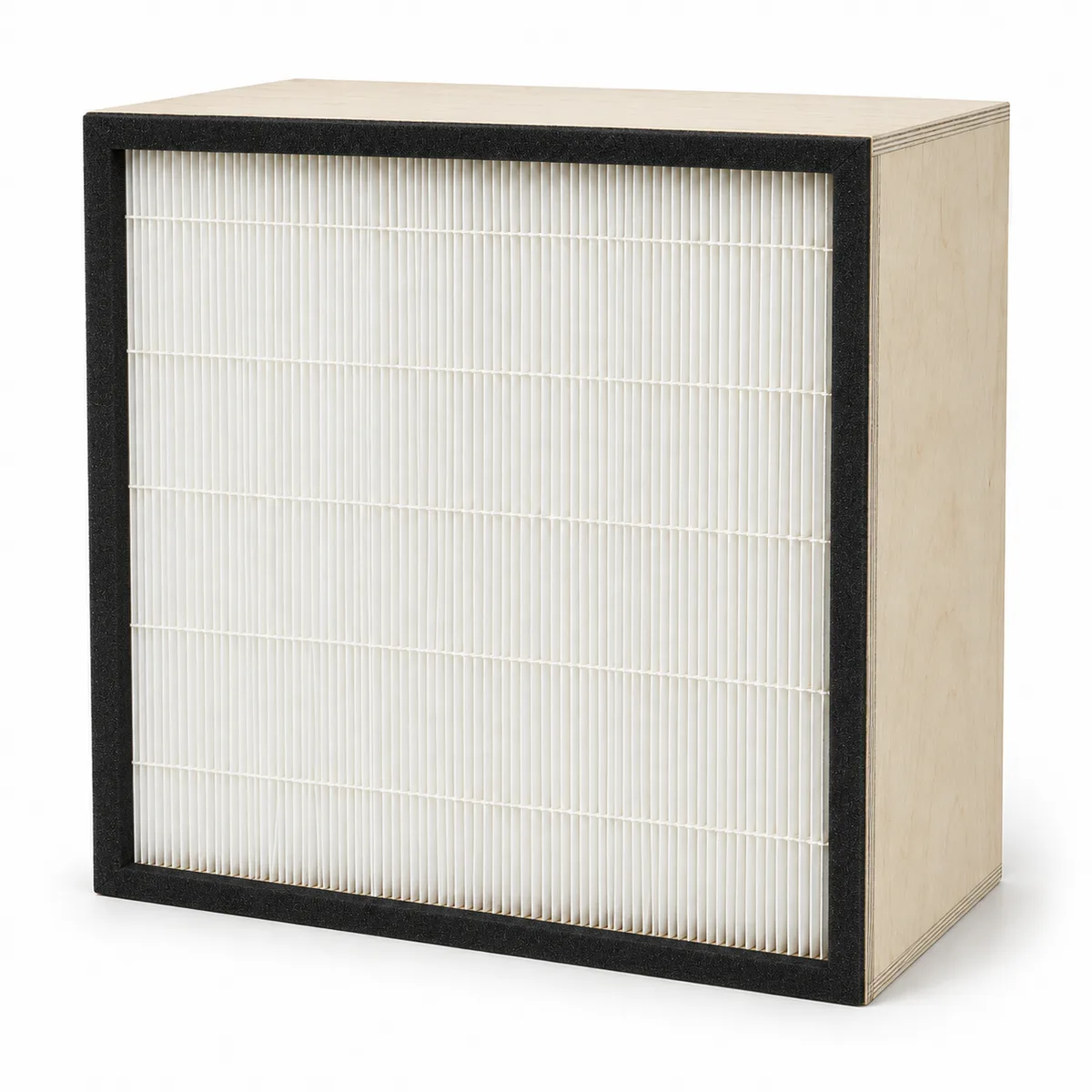
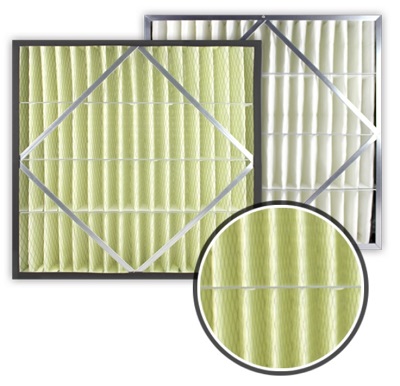
Medium-Efficiency Pleated Filter (Cardboard / Metal Frame)
Product Overview
Key Specifications
- Filtration Efficiency
- Dust-spot efficiency 45 / 65 / 85 / 95%
- Filter Media
- Synthetic fiber
- Frame
- Cardboard, galvanized steel, aluminum or stainless steel frame
- Depth
- 1″ / 2″ / 4″ / 6″ / 12″



Specifications
- Filter Media
- Synthetic fiber
- Frame
- Cardboard, galvanized steel, aluminum or stainless steel frame
- Separator
- Galvanized expanded metal on both faces
- Filtration Efficiency
- Dust-spot efficiency 45 / 65 / 85 / 95%
- Depth
- 1″ / 2″ / 4″ / 6″ / 12″
Detailed Description
Which MERV is a 65% or 85% dust-spot filter?
Dust-spot efficiency and MERV come from two different test methods (MERV is defined in ASHRAE 52.2), so there is no one-to-one conversion — only a rough match. The table below is a comparison compiled by manufacturers, not text from a standard:| Dust-spot efficiency | Roughly equivalent MERV |
|---|---|
| 40–45% | MERV 9 |
| 60–65% | MERV 11 |
| 80–85% | MERV 13 |
| 90–95% | MERV 14 |
How to choose the frame and thickness
Check how deep the filter slot in the air handling unit is; when replacing, ordering the same frame and thickness as the old filter is the safest choice. 1″, 2″ and 4″ come in both paper and galvanized frames; 6″ is a galvanized single-flange frame; 12″ is mostly a box type, available in galvanized steel as well as aluminum and stainless steel.156 medium pleated models: efficiency and frame × thickness
Number of models we have made (from our model list)
≈ means approximate. There are also about 11 aluminum-frame models, not broken down by thickness; all 6″ are single-flange and most 12″ are box type. Excludes aluminum-separator, mini-pleat, high-temperature and activated carbon models.
Go by the label and product name, not the color
A 35% paper-frame pre-filter and a 65% paper-frame medium filter look almost identical, and customers often ask us to "confirm the % and the color" before ordering. But media color is not consistent from one model to another — some 65% filters are green, for example — so color cannot tell you the efficiency. Go by the efficiency on the frame label or in the product name; if unsure, send us a photo of the label on the old filter.Often replaced together with pre-filters and bag filters
During air handling unit maintenance, medium pleated filters are often replaced together with the pre-filters in front and the bag filters behind. One maintenance job ordered all three stages at once: 35% paper-frame 2″ pre-filters, 65% paper-frame 2″ medium filters, and 8-pocket 22″ bag filters at 85%/95%. Another used 35% paper-frame 2″, 85% medium 4″ and 15″ bag filters. When ordering a full set, please list the size, efficiency and quantity for all three stages.Media and specifications
The standard media is synthetic fiber faced on both sides with galvanized expanded mesh; for example, a 16×20×1 in 85% filter has 30 pleats. The media is inspected before it leaves the mill. For example, the synthetic media used for 65% filters: basis weight 76 g/m², and an initial flat-sheet efficiency of 61.6% measured with 0.26 μm NaCl (specification ≥ 45%). This is flat-sheet media data from a different test method and is not the same as the dust-spot efficiency of a finished filter. - Media: synthetic fiber, galvanized expanded mesh on both faces - Frame: paper, galvanized steel, aluminum or stainless steel - Thickness: 1″, 2″, 4″, 6″, 12″ - Efficiency: dust-spot 45%, 65%, 85%, 95% - Pressure drop, dust-holding capacity and service life: provided per selectionFrequently Asked Questions
The 35% and 65% paper-frame filters look alike. Can I tell them apart by color?
We do not recommend it. A 35% paper-frame pre-filter and a 65% paper-frame medium filter look very similar, and media color is not consistent between models — some 65% filters are green, for example. Check the efficiency on the frame label or in the product name; we also confirm the % with you before you order. If unsure, send us a photo of the label on the old filter.
Do the pre-filter, medium filter and bag filter have to be replaced together?
Not necessarily — each stage follows its own pressure drop and maintenance schedule. In practice, though, they are often replaced as one batch, for example 35% paper-frame 2″ pre-filters + 65% paper-frame 2″ medium filters + 8-pocket 22″ bag filters, or 35% paper-frame 2″ + 85% medium 4″ + 15″ bag filters. When ordering a full set, please give us the size, efficiency and quantity for all three stages.
Can you provide proof of efficiency?
The media is inspected before it leaves the mill. For example, the synthetic media used for 65% filters: basis weight 76 g/m², initial flat-sheet efficiency 61.6% with 0.26 μm NaCl (specification ≥ 45%). This is flat-sheet media data and not the same as the dust-spot efficiency of a finished filter. Efficiency test reports for finished filters are discussed per project — please tell us which kind of report you need when you inquire.
Thickness ranges from 1″ to 12″. How do I choose?
Measure how deep the filter slot is and order the same thickness as the old filter. 1″, 2″ and 4″ come in both paper and galvanized frames, with 2″ the most common paper-frame size; 6″ is a galvanized single-flange frame; 12″ is mostly a box type — about 27 galvanized models, plus aluminum and stainless steel. A thicker filter has deeper pleats and more media, as long as the slot can take it.
What MERV is a 65% or 85% dust-spot filter?
Only a rough match: 40–45% is about MERV 9, 60–65% about MERV 11, 80–85% about MERV 13 and 90–95% about MERV 14. This is a comparison table compiled by manufacturers, not text from a standard; the two test methods differ and there is no one-to-one conversion. If a specification calls for a MERV grade, please state it in your inquiry.
Selection References
Before ordering, verify the efficiency grade, media type, and whether the operating environment fits your requirements.