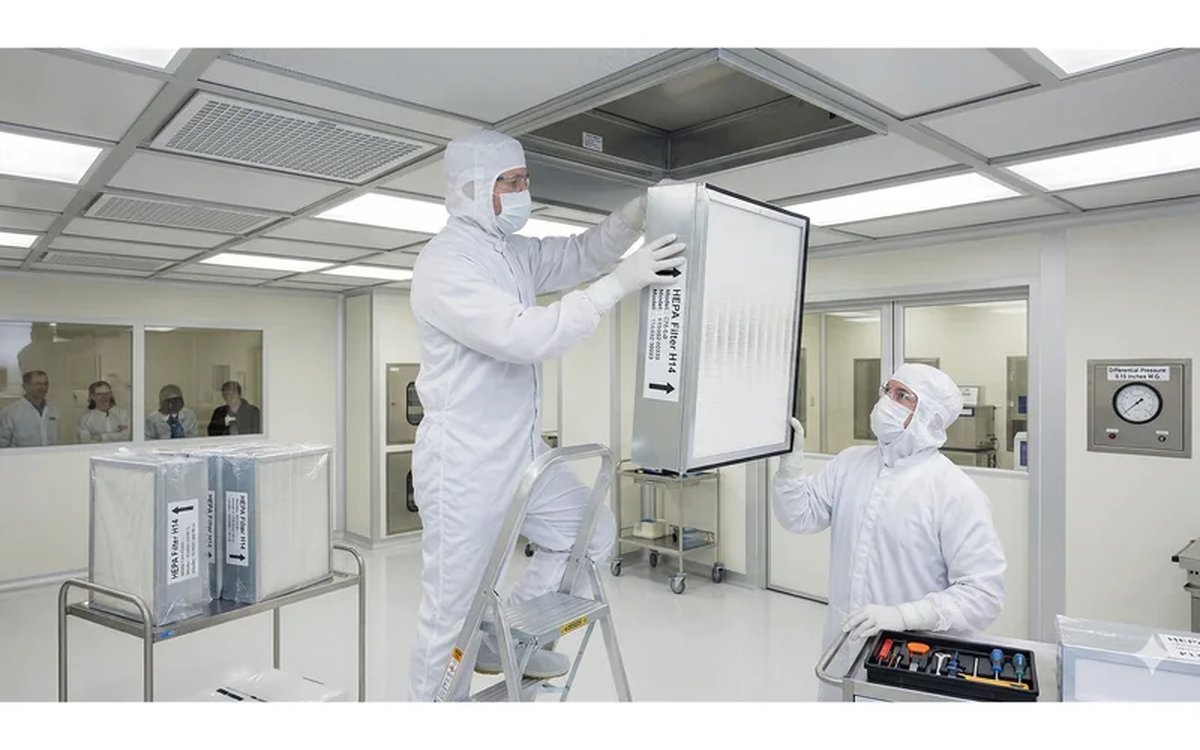
99,95 % và 99,995 % nghe chỉ chênh 0,045 %. Nhưng — số hạt xuyên qua màng lọc chênh 10 lần.
"Thêm một số 9" là đắt thêm một bậc độ lớn
Theo tiêu chuẩn quốc tế EN 1822 / ISO 29463, màng lọc hiệu suất cao chia thành năm cấp:
Biểu đồ 1: Thang hiệu suất HEPA / ULPA (EN 1822 / ISO 29463)
Mỗi cấp tăng làm giảm số hạt lọt qua 10 lần — nghiêm ngặt hơn 10 lần cấp trước
| Cấp | Hiệu suất (@MPPS) | Số hạt lọt / triệu |
|---|---|---|
| H13 | 99.95 % | ≤ 500 hạt / triệu |
| H14 | 99.995 % | ≤ 50 hạt / triệu |
| U15 | 99.9995 % | ≤ 5 hạt / triệu |
| U16 | 99.99995 % | ≤ 0.5 hạt / triệu |
| U17 | 99.999995 % | ≤ 0.05 hạt / triệu |
Hiệu suất đo tại MPPS (kích thước hạt xuyên thấu nhất, ~0.1–0.3 μm) theo EN 1822 / ISO 29463. "Lọt qua" = số hạt xuyên qua lưới trên mỗi 1.000.000 hạt thử.
Mỗi khi lên một bậc, "tỷ lệ xuyên thấu" giảm một bậc độ lớn. Nói cách khác:
- ▸H13 (≥99,95 %) — cứ 1 triệu hạt thử thách thì tối đa 500 hạt xuyên qua
- ▸H14 (≥99,995 %) — tối đa 50 hạt
- ▸U15 (≥99,9995 %) — tối đa 5 hạt
- ▸U16 (≥99,99995 %) — tối đa 0,5 hạt
- ▸U17 (≥99,999995 %) — tối đa 0,05 hạt
Hiệu suất từ H13 tới U17 chênh nhau 10.000 lần. Đó chính là ý nghĩa thực sự của việc "thêm một số 9".
MPPS: điểm yếu nhất của màng lọc
Bạn có thể nghĩ hạt càng nhỏ thì màng lọc càng khó chặn. Sai.
Màng lọc bắt giữ hạt nhờ ba cơ chế phối hợp: va chạm quán tính (hạt lớn), chặn giữ (hạt trung bình), khuếch tán Brown (hạt nhỏ). Ở dải trung gian 0,1–0,3 μm, cả ba cơ chế đều không đạt cực đại — đó chính là MPPS (Most Penetrating Particle Size, cỡ hạt xuyên thấu mạnh nhất).
Mọi nhãn hiệu suất theo EN 1822 / ISO 29463 đều đo tại MPPS. Không phải đo ở một cỡ hạt tùy tiện rồi chọn con số đẹp mắt để ghi lên — mà là đo ở đúng điểm yếu nhất của màng lọc.
Ý nghĩa thực sự của "H14 ≥99,995%" là: ngay cả với loại hạt khó chặn nhất, cũng chỉ cho 50 ppm lọt qua.
Trả thêm 27% tổn thất áp, mua được gì?
Cùng kích thước (Baisheng Technology 610 × 610 × 292 mm), cùng lưu lượng (1.000 CMH):
Biểu đồ 2: So sánh tổn thất áp suất ban đầu — H14 HEPA vs U15 ULPA
Lọc Baisheng 610 × 610 × 292 mm, đo tại lưu lượng định mức 1.000 CMH
Mỗi 60 Pa tổn thất áp tăng làm công suất quạt tăng ~10–15%, tiêu thụ thêm 200–400 kWh mỗi FFU mỗi năm. Nâng cấp ULPA quá mức làm tăng cả chi phí đầu tư lẫn chi phí vận hành.
U15 cao hơn H14 60 Pa — tổn thất áp tăng khoảng 27 %.
60 Pa này không phải cho không. Nó có nghĩa là:
- ▸Quạt cần thêm 10–15 % công suất mới đẩy nổi không khí
- ▸Một FFU mỗi năm tốn thêm 200–400 kWh (tùy số giờ vận hành)
- ▸Một nhà máy wafer với 1.000 FFU sẽ đốt thêm hàng trăm nghìn Đài tệ tiền điện mỗi năm
Cứ thêm một số 9 thì tổn thất áp và mức tiêu thụ điện đều đi lên. Cái nào đáng chi thì chi, cái nào không đáng thì đừng.
Nên chọn HEPA hay ULPA? Nhìn ISO Class của bạn
Chọn HEPA / ULPA không phải "càng cao càng tốt" — mà quay về yêu cầu độ sạch theo ISO 14644-1:
Biểu đồ 3: Ánh xạ ISO Class ↔ cấp lọc
Cấp lọc và kiểu dòng khí đề xuất cho mỗi cấp sạch ISO 14644-1
| ISO Class | Lọc đề xuất | Ứng dụng điển hình | Dòng khí |
|---|---|---|---|
| Class 3 (↓) | U15 / U16 ULPA | Bán dẫn tiên tiến, quang học EUV | Lớp |
| Class 4–5 | H14 HEPA | Bán dẫn, OLED, dược vô trùng | Lớp |
| Class 6–7 | H13 HEPA | Lắp ráp điện tử, kiểm quang, dược C/D | Rối được |
| Class 8–9 | Trung / cao hiệu | Đóng gói thực phẩm, ngoại vi phòng mổ | Rối được |
Hướng dẫn kỹ thuật tổng quát. ISO Class 1–2 ngoài phạm vi bảng này.
Một số đối chiếu trực tiếp:
- ▸Quang khắc bán dẫn tiên tiến / EUV (ISO Class 3 trở xuống) — bắt buộc dùng ULPA U15 hoặc U16
- ▸Bán dẫn thông thường, OLED, chế phẩm vô trùng (ISO Class 4–5) — HEPA H14 là đủ
- ▸Lắp ráp điện tử, kiểm tra quang học, dược phẩm cấp C/D (ISO Class 6–7) — HEPA H13 đã đủ
- ▸Đóng gói thực phẩm, khu vực quanh phòng mổ (ISO Class 8–9) — màng lọc trung/cao hiệu là được
Cố lắp U16 vào khu chiết rót vô trùng ISO Class 5, ngoài việc đốt tiền thì không có ý nghĩa kỹ thuật nào. Ngược lại, tiết kiệm bằng cách dùng H14 ở khu quang học EUV thì một tấm mặt nạ quang hỏng đã có thể mất vài triệu.
Ba cái bẫy chọn loại trong thực tế
Bẫy 1: mù quáng chạy theo cấp cao nhất
Thừa quy cách sẽ đồng thời đẩy cao chi phí mua ban đầu và chi phí vận hành bảo trì dài hạn (tổn thất áp cao hơn = tiền điện nhiều hơn). Xác định ISO Class trước, rồi mới chọn màng lọc, đừng làm ngược lại.
Bẫy 2: chỉ nhìn hiệu suất trung bình, không nhìn Scan Test từng tấm
"Hiệu suất trung bình cả tấm màng lọc đạt H14" không có nghĩa là cục bộ không có lỗ kim rò rỉ. EN 1822-4 quy định màng lọc từ H14 / U15 trở lên bắt buộc phải làm thử nghiệm quét từng tấm (Scan Test) — dùng đầu dò di động quét khắp tấm màng lọc, xác nhận tỷ lệ xuyên thấu cục bộ tại mọi điểm đều không vượt ngưỡng.
Khi nhập hàng nhất định phải yêu cầu nhà sản xuất cung cấp báo cáo Scan Test của chính tấm màng lọc đó. Không có Scan Test thì chỉ là một tờ chứng nhận hiệu suất trung bình, rò rỉ cục bộ nó không phát hiện ra được.
Bẫy 3: quên thiết lập "tổn thất áp kết thúc" = thời điểm thay màng lọc
Màng lọc không giữ mãi tổn thất áp ban đầu. Khi bụi tích tụ, tổn thất áp sẽ liên tục tăng. Khuyến nghị thực hành kỹ thuật: đặt tổn thất áp kết thúc bằng 2–2,5 lần tổn thất áp ban đầu làm thời điểm thay thế.
Lấy HEPA H14 làm ví dụ: tổn thất áp ban đầu 220 Pa → tổn thất áp kết thúc đặt 440–550 Pa. Tới ngưỡng là thay, đừng để quạt phải kéo theo tổn thất áp cao, cả tiền điện lẫn tuổi thọ đều phải trả giá.
Kết luận: màng lọc không phải càng cao cấp càng tốt, mà "vừa đủ" là tốt nhất
Chọn HEPA / ULPA, câu hỏi thực sự cần đặt ra không phải "cái nào lợi hại nhất", mà là:
- 1ISO Class của tôi yêu cầu tới đâu?
- 2Hiệu suất tại MPPS đã được kiểm chứng thực tế chưa? (cần Scan Test)
- 3Tổn thất áp và tiêu thụ điện có khớp với đường đặc tính quạt của tôi không?
- 4Bao giờ tới tổn thất áp kết thúc? Cần chuẩn bị ngân sách cho mấy lần thay?
Chọn đúng cấp quan trọng hơn chọn cấp đắt.