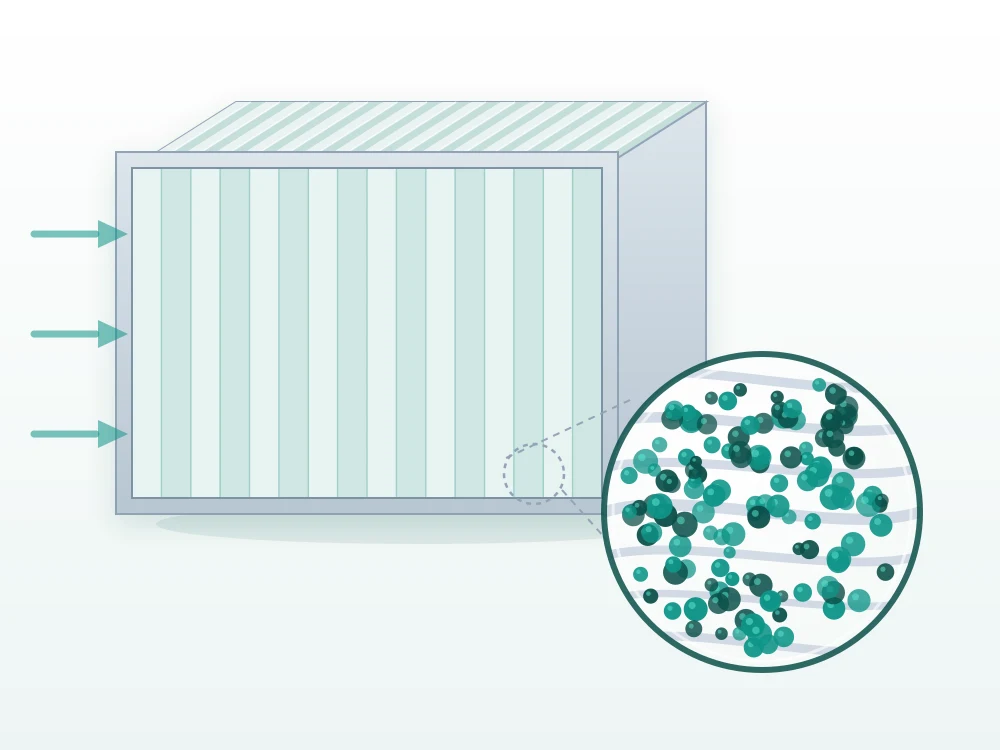
แผ่นกรองเคมีแลกเปลี่ยนไอออนกำจัด AMC ที่เป็นกรด
รายละเอียดสินค้า
สเปกสำคัญ
- ก๊าซเป้าหมาย
- กรดแรง: HF, HCl, HNO₃, HBr, H₂SO₄, SO₂ กรดอ่อน: อะซิติก ฟอร์มิก และ HNO₂ จงใจไม่จัดการ: แอมโมเนียและเอมีน NOx VOC และเอสเทอร์ โอโซน คลอรีน และสารเจือฟอสฟอรัสอินทรีย์
- ประสิทธิภาพการกำจัด
- ประสิทธิภาพกำจัด SO₂ เริ่มต้น: แบบพับคอมโพสิต 128 มม. และแบบโฟม 97.4% แบบพับคอมโพสิต 68 มม. ≥95%
- รูปแบบโครงสร้าง
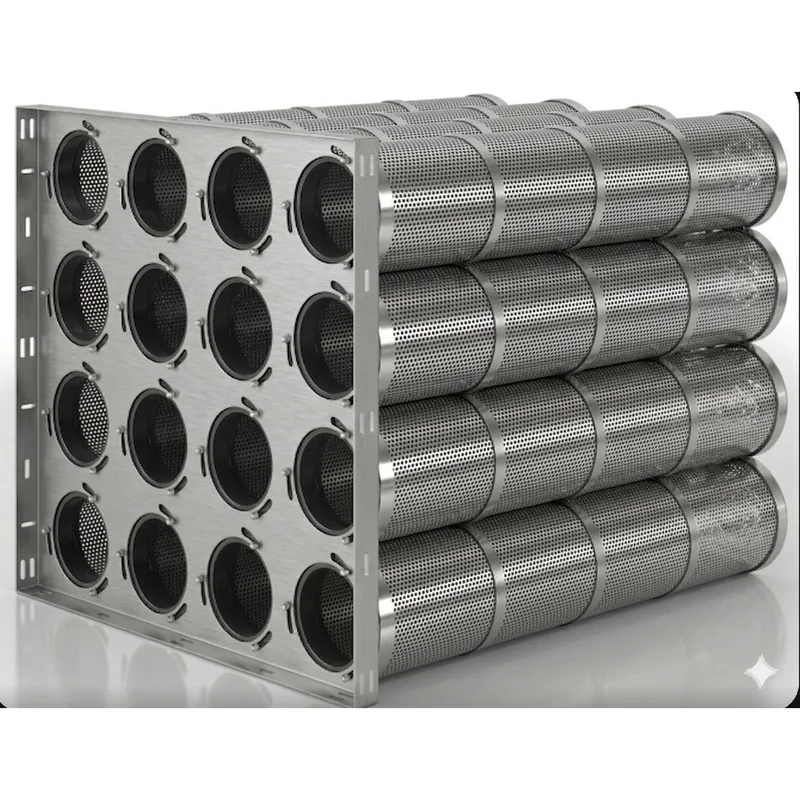
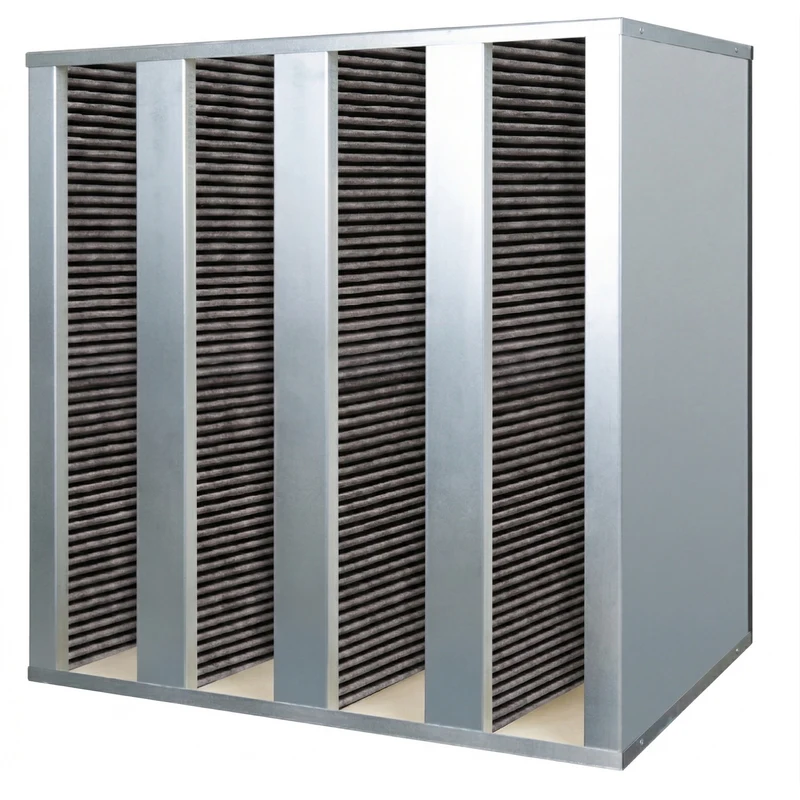
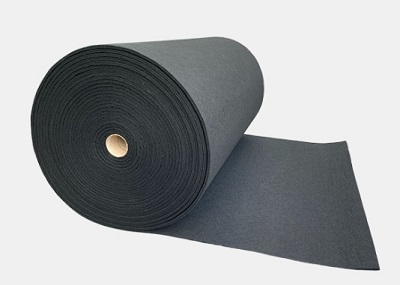
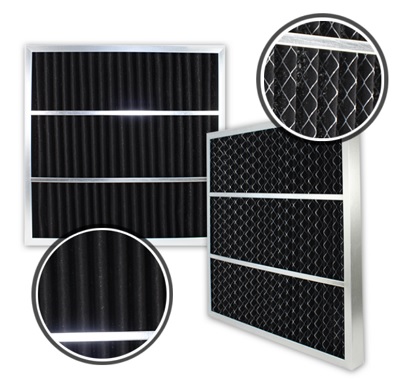
- แบบพับคอมโพสิต (เม็ดเรซินฝังในโครงสร้างเส้นใยแล้วพับ) หรือแบบโฟม (เม็ดเรซินยึดในโฟมพอลิยูรีเทนเซลล์เปิด)
- อุณหภูมิใช้งานสูงสุด
- อุณหภูมิใช้งานแนะนำ ≤ 40°C



ตารางสเปก
- สารดูดซับ
- พอลิเมอร์พรุนพอลิสไตรีน/ไดไวนิลเบนซีน ปลายสายมีหมู่ฟังก์ชันแอนไอออน โครงสร้างเฉื่อย ไม่มีรูดูดซับ และไม่ชุบกรดในน้ำ
- รูปแบบโครงสร้าง
- แบบพับคอมโพสิต (เม็ดเรซินฝังในโครงสร้างเส้นใยแล้วพับ) หรือแบบโฟม (เม็ดเรซินยึดในโฟมพอลิยูรีเทนเซลล์เปิด)
- กรอบ
- อะลูมิเนียมอโนไดซ์
- ก๊าซเป้าหมาย
- กรดแรง: HF, HCl, HNO₃, HBr, H₂SO₄, SO₂ กรดอ่อน: อะซิติก ฟอร์มิก และ HNO₂ จงใจไม่จัดการ: แอมโมเนียและเอมีน NOx VOC และเอสเทอร์ โอโซน คลอรีน และสารเจือฟอสฟอรัสอินทรีย์
- ปริมาณบรรจุ
- ความจุแลกเปลี่ยนเชิงปริมาตรราว 4 เท่าของคาร์บอนกัมมันต์ชุบสาร (eq/L)
- ประสิทธิภาพการกำจัด
- ประสิทธิภาพกำจัด SO₂ เริ่มต้น: แบบพับคอมโพสิต 128 มม. และแบบโฟม 97.4% แบบพับคอมโพสิต 68 มม. ≥95%
- อุณหภูมิใช้งานสูงสุด
- อุณหภูมิใช้งานแนะนำ ≤ 40°C
- ความชื้นสัมพัทธ์สูงสุด
- ความชื้นสัมพัทธ์แนะนำ 30–60%
- การรับรอง
- ไม่มีการปล่อยทุติยภูมิ ไม่สะสม NOx ไม่ปล่อยกรดอ่อนเมื่อ pH ลด และไม่ปล่อยกรดอะซิติกจากการแตกตัวของเอสเทอร์
สเปกแบบพับคอมโพสิต
| 厚度 | กรอบ สูง×กว้าง | พื้นที่กรอง | น้ำหนักสารดูดซับ | น้ำหนักรวม | อัตราลมพิกัด | ความดันตกพิกัด |
|---|---|---|---|---|---|---|
| 68 mm | 800×485 mm | 4.75 m² | 2.68 kg | 4.16 kg | 1,000 m³/h | 12.9 Pa |
| 68 mm | 742×742 mm | 7.04 m² | 3.77 kg | 5.85 kg | 1,420 m³/h | 12.9 Pa |
| 68 mm | 800×690 mm | 7.04 m² | 3.77 kg | 5.85 kg | 1,420 m³/h | 12.9 Pa |
| 128 mm | 800×485 mm | 9.51 m² | 5.25 kg | 8.23 kg | 1,000 m³/h | 19.8 Pa |
| 128 mm | 742×742 mm | 13.98 m² | 7.53 kg | 11.69 kg | 1,420 m³/h | 19.8 Pa |
| 128 mm | 800×690 mm | 13.98 m² | 7.53 kg | 11.69 kg | 1,420 m³/h | 19.8 Pa |
สเปกแบบโฟม
| 厚度 | กรอบ สูง×กว้าง | น้ำหนักสารดูดซับ | น้ำหนักรวม | อัตราลมพิกัด | ความดันตกพิกัด |
|---|---|---|---|---|---|
| 48 mm | 800×690 mm | 3.37 kg | 5.06 kg | 1,420 m³/h | 20.8 Pa |
| 48 mm | 800×485 mm | 2.38 kg | 3.57 kg | 1,000 m³/h | 20.8 Pa |
| 68 mm | 800×690 mm | 4.96 kg | 7.53 kg | 1,420 m³/h | 31.6 Pa |
| 68 mm | 800×485 mm | 3.47 kg | 5.35 kg | 1,000 m³/h | 31.6 Pa |
| 88 mm | 800×690 mm | 6.64 kg | 12.00 kg | 1,420 m³/h | 42.5 Pa |
| 88 mm | 800×485 mm | 4.66 kg | 8.43 kg | 1,000 m³/h | 42.5 Pa |
อัตราลมพิกัดทั้งหมดสอดคล้องกับความเร็วลมหน้ากรอง 0.71 m/s ขนาดและความหนานอกมาตรฐานผลิตตามเงื่อนไขหน้างาน
คำอธิบายโดยละเอียด
ทำไม AMC ที่เป็นกรดจึงต้องแยกจัดการจากถ่านกัมมันต์
กรดเกือบทุกชนิดที่ทำให้เกิดข้อบกพร่องในการผลิตเซมิคอนดักเตอร์ล้วนเป็นกรดชนิด H-X ที่ให้โปรตอน ส่วนกรดลิวอิสนั้นในทางปฏิบัติมองข้ามได้ สิ่งที่กรดเหล่านี้มีร่วมกันคือมีความว่องไวต่อปฏิกิริยา กัดกร่อน ทำปฏิกิริยากับด่างเกิดผลึกเกลือ และมีค่าคงที่การแตกตัวต่ำ นั่นคือมีความเป็นกรดสูง ตัวที่ยุ่งยากคือสารตั้งต้นของกรด ซึ่งตัวมันเองไม่ใช่กรด แต่เมื่อดูดความชื้นแล้วจะกลายเป็นกรดบนพื้นผิว - ซัลเฟอร์ไดออกไซด์ ทำปฏิกิริยากับน้ำเกิดกรดซัลฟิวรัส แล้วถูกออกซิไดซ์ต่อเป็นกรดซัลฟิวริก ปฏิกิริยาเร็วและเป็นกรดแรง จัดเป็นสารตั้งต้นที่ว่องไวที่สุดในกลุ่ม - ไนโตรเจนไดออกไซด์ ทำปฏิกิริยากับน้ำเกิดกรดไนตรัสและกรดไนตริก ประสิทธิภาพต่ำกว่าแต่เกิดขึ้นอย่างต่อเนื่อง - PGMEA ตัวทำละลายที่ใช้มากที่สุดในพื้นที่ลิโธกราฟี เกิดไฮโดรลิซิสได้ PGME และกรดอะซิติก จัดเป็นสารตั้งต้นแฝง ซึ่งอาจแสดงผลก็ต่อเมื่ออยู่ภายในแผ่นกรองแล้ว ข้อควรระวังคือไฮโดรเจนซัลไฟด์และออกไซด์ของไนโตรเจนนั้นไม่ใช่กรดในตัวเอง การนับรวมเข้าไปในตัวเลข "กรดรวม" จะทำให้ประเด็นพร่าเลือน คำถามที่ควรถามคือกระบวนการนี้ เครื่องจักรตัวนี้ กลัวกรดตัวไหน ไม่ใช่ว่าในอิมพินเจอร์ตรวจพบแอนไอออนได้กี่ชนิด แหล่งกำเนิดก็มักถูกเข้าใจผิดเช่นกัน อากาศภายนอกมีความเข้มข้นของกรดต่ำมาก และความเข้มข้นของสารตั้งต้นโดยรวมมีแนวโน้มลดลง (ยกเว้นภูเขาไฟระเบิดและการเผาชีวมวล) พื้นที่รอบโรงงานอาจสูงขึ้นจากไอเสียปล่องข้างเคียง แต่แหล่งกำเนิดหลักอยู่ภายในโรงงานเอง ได้แก่ ไฮโดรเจนเฮไลด์จากการกัดแบบเปียก สารประกอบไนโตรเจนจากการกัดแบบแห้ง และตัวทำละลายเอสเทอร์จากพื้นที่ลิโธกราฟีกลไกที่ต่างกันของวัสดุกรองสองชนิด
ถ่านกัมมันต์ เป็นวัสดุคาร์บอนที่มีรูพรุนขนาดเล็ก วัตถุดิบส่วนใหญ่มาจากสารอินทรีย์ธรรมชาติหรือถ่านหิน และไม่ใช่โครงสร้างกราไฟต์ที่สะอาดและเฉื่อย ในชนิดเคลือบสารเคมี รูพรุนทำหน้าที่เป็นเพียงตัวพาสารเคมีเท่านั้น จากตรงนี้จึงเกิดผลข้างเคียงสามข้ออย่างหลีกเลี่ยงไม่ได้ - การดูดซับเชิงกายภาพเกิดขึ้นเสมอ สารอินทรีย์ระเหยง่ายและเอสเทอร์จึงถูกดูดเข้าไปแน่นอน - ปฏิกิริยารีดอกซ์เกิดขึ้นบนพื้นผิวเสมอ ออกไซด์ของไนโตรเจนจึงถูกเปลี่ยนรูปและกักเก็บไว้ - การดูดซับเป็นแบบผันกลับได้ กรดแก่ที่เข้ามาจึงไปแทนที่กรดอ่อนที่ดูดซับไว้ก่อนแล้วปล่อยออกมา เห็นชัดที่สุดเมื่อ pH ลดลง เรซินแลกเปลี่ยนไอออน เป็นพอลิเมอร์พรุนพอลิสไตรีน/ไดไวนิลเบนซีน มีหมู่ฟังก์ชันแอนไอออนที่ปลายสาย โครงสร้างหลักสะอาดและเฉื่อย หมู่ฟังก์ชันกระจายตัวสม่ำเสมอ ต่างจากถ่านชนิดเคลือบที่สารเคมีถูกทาไว้บนผนังรูพรุนและความเข้มข้นเปลี่ยนไปตามขนาดรูพรุน คุณสมบัติจึงกลับด้านกันพอดี - ไม่มีรูพรุนสำหรับดูดซับ จึงไม่ดูดซับเอสเทอร์และสารอินทรีย์ระเหยง่ายเชิงกายภาพ - ไม่เกิดปฏิกิริยารีดอกซ์ภายในระบบรูพรุนและการดูดซับ จึงไม่กักเก็บออกไซด์ของไนโตรเจน - กรดยึดกับหมู่ฟังก์ชันด้วยพันธะเคมี จึงไม่ถูกปล่อยกลับสู่กระแสลมเมื่อสภาวะเปลี่ยนแปลงความจำเพาะให้อะไรกลับมา
How each protection target shifts on ion exchange media
Relative performance (0–100) of the same targets on two media types
Acid targets move up while every non-target drops to the floor — by design, not by defect. Activated carbon pores take in everything, so capacity is shared with organics and nitrogen oxides; on ion exchange resin only the anionic functional groups react, leaving the whole capacity for acids. The trade-off is that ammonia, chlorine, ozone and organophosphate dopants are not addressed at all, so sites that must control those still need carbon alongside.
อายุการใช้งานจริงในหน้างาน
Strong-acid removal efficiency across 60 months in service
FFU-mounted ion exchange filter, tested with a strong-acid mixture
Efficiency falls only 8.5 percentage points over five years, and the reason is what the medium refuses to take in. Over the same period an activated carbon bed has already given most of its capacity to organics and nitrogen oxides, leaving little for acids. In the field this translates to hydrogen fluoride held below a third of the cleanroom target, with boron from the BF₃ by-product at half the target value.
โครงสร้างวัสดุกรอง: เลือกแบบพับจีบคอมโพสิตหรือแบบโฟม
เรซินเป็นตัวเดียวกัน แต่ตัวพาไม่เหมือนกัน และโครงสร้างของตัวพาผลักความดันตกคร่อมกับอายุการใช้งานไปคนละทิศ สองแผนภาพในหัวข้อนี้ต้องอ่านคู่กัน ดูอย่างเดียวจะเลือกผิด ความดันตกคร่อม: การพับจีบคลี่วัสดุออกเป็นพื้นที่ใช้งานหลายตารางเมตร อากาศจึงไหลผ่านเนื้อวัสดุช้ากว่าความเร็วลมหน้าแผ่นมาก ส่วนแบบโฟมเป็นแผ่นแบน พื้นที่รับลมก็คือพื้นที่กรอบนั่นเองInitial pressure drop across the five media configurations
One face-velocity scale, three operating points: 0.5 / 0.71 (rated) / 1.0 m/s
At the same 68 mm depth, the pleated composite runs at four tenths the pressure drop of the foam — pleating spreads the media out to 7.1 m², whereas foam is a flat panel whose frontal area is simply the frame area. Depth alone therefore says nothing about pressure drop; it has to be read together with construction. What the foam buys in return is more sorbent per unit volume and a longer life: two ends of the same trade-off. A 40% rise in face velocity costs roughly 60% more pressure drop, so bringing face velocity down by moving up a frame size often saves more fan power than changing media.
Service life of the five media configurations, expressed as cumulative dose
Horizontal axis is cumulative SO₂ dose; the two constructions were tested at different concentrations, so only dose is comparable
Converting days into dose — concentration multiplied by time — is what puts the two constructions on the same ruler. It is also the IRDS position on AMC: there is no critical concentration, only a dose. Translated back to a site at 10 ppbv, the 128 mm pleated composite lasts around 871 days and the 88 mm foam around 1,290. Read alongside the pressure chart, the trade-off is complete: at the same 68 mm, the pleated composite costs four tenths the pressure drop but delivers half the life, because foam packs more sorbent into the same volume. Choose pleated when fan power is tight, foam when change-out labour is expensive.
กรณีที่หนึ่ง: FFU ระบบลำเลียงเวเฟอร์ 28 เดือน
โรงงานเดียวกัน กระแสลมเดียวกัน ติดตั้งวัสดุทั้งสองชนิดคู่ขนานกัน แล้วถอดออกมาหลัง 28 เดือน เพื่อวิเคราะห์วัสดุกรองและทดสอบประสิทธิภาพซ้ำWhat the media had accumulated after 28 months
Wafer transport FFU filters, post-removal analysis, grams
On the carbon filter 87% of what was captured has nothing to do with acids — organics and nitrogen oxides fill the pores first, leaving just 26 g of capacity actually spent on acids. Ion exchange resin has no adsorption pores; only the anionic functional groups react, so total load is a tenth as large and three quarters of it is acid. That is where the service-life gap comes from at identical size and airflow: not from capturing more, but from not spending capacity on things it was never meant to capture.
Efficiency loss across a concentration spike
Filters already 28 months in service, sulphur dioxide inlet at 20 ppbv
Spikes are the real test for a chemical filter — a process leak, a neighbouring stack, a seasonal shift in outdoor air can raise concentration by an order of magnitude within hours. Activated carbon loses 18.8 percentage points because stronger acids displace what the pores already held, so efficiency bleeds from both ends. Ion exchange binds chemically and has no displacement mechanism, losing only 13.5 points — its post-spike 66.3% is almost level with where the carbon filter stood before the spike, at 70.2%.
กรณีที่สอง: ทางเข้าเครื่องเคลือบและล้างภาพ ห้าปี
After five years, is the filter absorbing acetic acid or releasing it?
Coater/developer temperature-humidity inlet filter, acetic acid inlet at 4 ppbv
Activated carbon draws the process solvent PGMEA into its pores, where prolonged heat and humidity hydrolyse it, splitting off acetic acid that is then released downstream — the filter turns from a barrier into a source, measured at a net emission of 4.14 ppbv that attacks the chiller heat exchanger directly. Five hours of clean-air purging only brings the release down to 0.51 ppbv, which means the acetic acid is not surface residue but is still being generated. Ion exchange resin has no adsorption pores and does not take up esters, so there is nothing stored to cleave; after five years it is still removing.
กรณีที่สาม: ตู้เก็บเรติเคิลและเรติเคิลเปลือย
Acid headroom in reticle stockers, and what is left after six years
Top: concentrations in a bare-reticle stocker at 3 years. Bottom: efficiency of a pod stocker at 6 years
A bare reticle has no pod to protect it, so any ammonium sulphate or acetate crystal forming on the surface affects imaging directly — the control limit sits at the 200 pptv level. Downstream of the filter the reading falls below the limit of quantification, meaning the headroom is not "just inside spec" but unmeasurable. A second stocker filter at six years still delivers 88.1% on sulphur dioxide and 78.2% on acetic acid: weak acids decaying faster than strong ones is expected, because their bond to the functional group is weaker and later-arriving strong acids displace them. Change-out intervals should therefore be set by the weak-acid figure.
กรณีที่สี่: ซัลเฟอร์ไดออกไซด์ฤดูหนาวที่ชุดปรับอากาศภายนอก
Make-up air unit filters: what they collected, and how long they lasted
Top: load composition after removal. Bottom: remaining efficiency against years already in service
The ion exchange filter is at 49.4% after eight years, which looks worse than 90.2% for carbon at six months — except that is sixteen times the duration. The top row explains why: 43–46% of the carbon load is organics, so capacity was consumed by construction-phase diesel fumes and ambient volatile compounds long before winter sulphur dioxide arrived. Ion exchange takes up no organics at all; almost the entire load is acid salts, so capacity went into acids from day one through year eight. The selection question is whether efficiency holds across your change-out interval, not who is higher when new. Conversely, a site that must also control organics and nitrogen oxides cannot rely on ion exchange alone.
เมื่อใดควรเลือกถ่านกัมมันต์แทนการแลกเปลี่ยนไอออน
นี่คือสิ่งแรกที่ต้องยืนยันตอนเลือกรุ่น เพราะถ้าเลือกผิดไม่ใช่แค่ประสิทธิภาพด้อยลงเล็กน้อย แต่คือไม่ได้ผลเลย - คลอรีน โอโซน และสารออกซิไดซ์อื่น — การแลกเปลี่ยนไอออนไม่มีกลไกรองรับ ต้องใช้ถ่านกัมมันต์ - แอมโมเนียและเอมีน — หมู่ฟังก์ชันแอนไอออนไม่ทำปฏิกิริยากับด่าง การกำจัดด่างต้องใช้เรซินชนิดแคทไอออนหรือถ่านเคลือบกรด - สารอินทรีย์ระเหยง่าย เอสเทอร์ และสารที่ควบแน่นได้ — ต้องอาศัยการดูดซับเชิงกายภาพ ซึ่งมีแต่ถ่านกัมมันต์เท่านั้นที่ทำได้ - แหล่งโบรอนแบบแพร่กระจายที่ไม่มีไฮโดรเจนฟลูออไรด์ร่วมด้วย เช่น โบเรน เอสเทอร์ของบอเรต — การแลกเปลี่ยนไอออนได้ผลจำกัด - สารเจือออร์แกโนฟอสเฟต — เช่นเดียวกับข้างต้น ในทางปฏิบัติ โรงงานส่วนใหญ่ใช้ทั้งสองอย่างร่วมกันโดยแบ่งตามโซนและตามขั้น ถ่านกัมมันต์อยู่ที่ส่วนอากาศภายนอกและส่วนระบายอากาศเพื่อจัดการสารอินทรีย์และสารออกซิไดซ์ ส่วนการแลกเปลี่ยนไอออนอยู่ใกล้กระบวนการ ทั้ง FFU ทางเข้าเครื่องจักร และตู้เก็บของ ทำหน้าที่เป็นแนวป้องกันกรดด่านสุดท้าย ใช้อย่างใดอย่างหนึ่งเพียงลำพังย่อมมีช่องโหว่เสมอข้อควรทราบในการเลือกและบำรุงรักษา
การเลือก - การป้องกันไม่ให้กรดถูกปล่อยหรือเกิดขึ้นตั้งแต่ต้นทาง สำคัญกว่าการไปกำจัดทีหลัง การซึมผ่านท่อและกรดที่เกิดจากวัสดุกรองเสื่อมสภาพล้วนเป็นปัญหาที่ต้นทาง เปลี่ยนแผ่นกรองแก้ไม่ได้ - กำหนดก่อนว่าต้องควบคุมกรดตัวใดบ้างและความเข้มข้นเป้าหมายเท่าไร อย่าเขียนสเปกโดยอิงกับ "กรดรวม" - กรดอ่อนเสื่อมเร็วกว่ากรดแก่ เพราะพันธะอ่อนกว่าและถูกกรดแก่ที่มาทีหลังแทนที่ ให้ใช้ตัวเลขของกรดอ่อนเป็นเกณฑ์กำหนดรอบเปลี่ยนวัสดุ - หากหน้างานมีปัญหาสารอินทรีย์หรือแอมโมเนียร่วมด้วย ต้องจัดการแลกเปลี่ยนไอออนเป็นขั้นควบคู่กับถ่านกัมมันต์ อย่าคาดหวังว่าขั้นเดียวจะแก้ได้ทั้งหมด การบำรุงรักษา - เกจวัดความดันแตกต่างอ่านได้เพียงการอุดตันจากอนุภาค บอกไม่ได้ว่าวัสดุเคมีอิ่มตัวไปแค่ไหน จุดนี้คือสิ่งที่ตีความผิดกันบ่อยที่สุด ความดันตกคร่อมที่ไม่ขยับไม่ได้แปลว่ายังมีความจุเหลือ - อายุของวัสดุเคมีขึ้นกับความเข้มข้นขาเข้าและอัตราลม ไม่สามารถประมาณจากปฏิทินได้ หากต้องการกำหนดจังหวะเปลี่ยนอย่างแม่นยำ ให้เก็บตัวอย่างความเข้มข้นทางออกเป็นระยะ หรือส่งวัสดุไปทดสอบความจุคงเหลือ - แผ่นกรองอนุภาคด้านหน้าและด้านหลังละไม่ได้ ถ้าขาดตัวหน้า ฝุ่นจะไปปิดผิววัสดุกรอง ถ้าขาดตัวหลัง ผงละเอียดที่สึกจากวัสดุจะเข้าห้องสะอาดโดยตรง - วัสดุแลกเปลี่ยนไอออนไม่เกิดการปล่อยทุติยภูมิ ดังนั้น "ความเข้มข้นทางออกสูงขึ้นกะทันหัน" ย่อมมาจากการอิ่มตัวหรือการรั่วลัดวงจรเสมอ ไม่ใช่วัสดุคายสิ่งที่เก็บไว้ออกมา ซึ่งทำให้การไล่หาสาเหตุง่ายขึ้นมากข้อมูลอ้างอิงสำหรับการเลือกใช้
ก่อนสั่งซื้อ โปรดตรวจสอบระดับประสิทธิภาพ ชนิดของวัสดุกรอง และสภาพแวดล้อมการใช้งานว่าตรงกับความต้องการของคุณหรือไม่