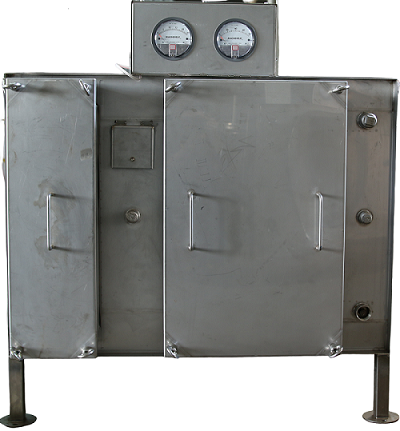
ตัวเรือนแผ่นกรองเคมี AMC
รายละเอียดสินค้า
สเปกสำคัญ
- ก๊าซเป้าหมาย
- กรด (HCl, HF, SOx, NOx) ด่าง (NH₃, เอมีน) สารควบแน่น (BHT, NMP, DOP) สารเจือ (AsH₃, B₂H₆, BF₃) และ VOC ทั่วไป
- อัตราลมพิกัด
- 170 – 68,000 CMH
- การจัดวางแผ่นกรอง
- ชั้นวัสดุ: คาร์บอนกัมมันต์ชุบสาร อะลูมินาปรับสภาพด้วย KMnO₄ หรือเบดผสม ต่ออนุกรมหรือซ้อนชั้นได้ แผ่นกรองอนุภาค: กรองต้น G4 / MERV 6 และกรองท้าย F8 / MERV 14 อัปเกรดเป็น HEPA H13 / H14 ได้
- วัสดุตัวเครื่อง
- เหล็กชุบสังกะสี / SUS304 / SUS316 รอยต่อเชื่อมเต็ม ไม่มีเกลียวโผล่ภายใน



ตารางสเปก
- วัสดุตัวเครื่อง
- เหล็กชุบสังกะสี / SUS304 / SUS316 รอยต่อเชื่อมเต็ม ไม่มีเกลียวโผล่ภายใน
- ก๊าซเป้าหมาย
- กรด (HCl, HF, SOx, NOx) ด่าง (NH₃, เอมีน) สารควบแน่น (BHT, NMP, DOP) สารเจือ (AsH₃, B₂H₆, BF₃) และ VOC ทั่วไป
- การจัดวางแผ่นกรอง
- ชั้นวัสดุ: คาร์บอนกัมมันต์ชุบสาร อะลูมินาปรับสภาพด้วย KMnO₄ หรือเบดผสม ต่ออนุกรมหรือซ้อนชั้นได้ แผ่นกรองอนุภาค: กรองต้น G4 / MERV 6 และกรองท้าย F8 / MERV 14 อัปเกรดเป็น HEPA H13 / H14 ได้
- อัตราลมพิกัด
- 170 – 68,000 CMH
- แหล่งจ่ายไฟ
- 380 / 460 V สามเฟส (BS-DS: 380 V / 3Ø / 50 Hz)
- ทิศทางการติดตั้ง
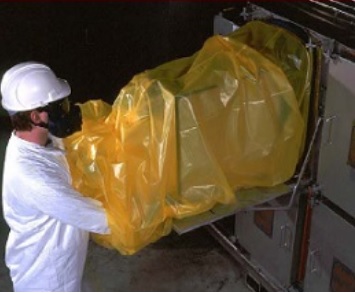
- เปลี่ยนวัสดุกรองผ่านประตูด้านข้างโดยไม่ต้องถอดท่อลม มีเกจวัดความดันต่างคร่อมชั้นเคมีเป็นมาตรฐาน
ตารางเทียบรุ่น
| ซีรีส์ | ชื่อเรียก | รูปแบบการไหลของอากาศ | ช่วงอัตราลม (CMH) |
|---|---|---|---|
| BS-APS | 循環式淨化機組 | 室內內循環 | 850 – 6,800 |
| BS-PPS | 正壓補氣機組 | 外氣單向送入 | 850 – 6,860 |
| BS-SAH | 側抽式過濾箱 | 風管中繼段 | 850 – 68,000 |
| BS-DBS | 深床洗滌器 | 風管或排氣端 | 510 – 18,350 |
| BS-HDBS | 高效深床洗滌器 | 排氣端 | 476 – 8,840 |
| BS-DS | 桶式洗滌器 | 點源局部抽取 | 170 – 1,700 |
คำอธิบายโดยละเอียด
Inside a Chemical Filter Housing: Three Stages
Air passes the pre-filter, then the chemical media, then the after-filter, before the fan pushes it out
The chemical media stage is the only one that trades time for efficiency — particulate filters intercept, chemical media adsorbs, and a molecule has to stay inside the pore long enough to be captured. The parameter to lock down during selection is therefore residence time, not media weight.
Airflow, Residence Time and Typical Application
Cut first on where the air comes from and where it goes, then on airflow — those two cuts usually leave one or two options
| Model | Airflow arrangement | Airflow range | Media depth / residence time | Clean total ΔP | Typical application |
|---|---|---|---|---|---|
BS-APS Recirculating air purifier | Indoor recirculation | 850–6,800 CMH (500–4,000 CFM) | 2 passes in series / 0.24 s | approx. 1,120 Pa | Lower AMC inside the cleanroom; retrofit into existing plants |
BS-PPS Positive pressurization unit | Once-through outside air | 850–6,860 CMH (500–4,040 CFM) | 2 passes in series / 0.24 s | approx. 1,120 Pa | Hold room positive pressure; scrub outside air before it enters |
BS-SAH Side access housing | In-duct section | 850–68,000 CMH (500–40,000 CFM) | 12″/18″ modules / 0.06–0.19 s | 350–780 Pa | Mounted on MAU/AHU ducting; high airflow, low concentration |
BS-DBS Deep bed scrubber | In-duct or exhaust side | 510–18,350 CMH (300–10,800 CFM) | 12″ deep bed ×1–3 / 0.8–2.4 s | 850–2,025 Pa (1–2 beds) | Process exhaust, high acid/base loading, high removal required |
BS-HDBS High deep bed scrubber | Exhaust side | 476–8,840 CMH (280–5,200 CFM) | Extended bed height / deepest configuration | 2,100–2,500 Pa | Single high-concentration point needing one-pass treatment |
BS-DS Drum scrubber | Local point extraction | 170–1,700 CMH (100–1,000 CFM) | 0.14–1.10 m³ media drum | Depends on media | Chemical baths, local exhaust points, temporary treatment |
Residence time is the column most often skipped and the one that most decides removal efficiency. At the same 3,400 CMH, a side-access panel module gives only 0.06 s while a single-bed deep bed scrubber gives 0.8 s — more than tenfold apart, covering completely different concentration ranges. Low concentration with high airflow goes to modules; high concentration with low airflow goes to deep beds.
Four Selection Steps — In This Order
Arrangement → airflow → media and residence time → pressure drop and fan; each step feeds the next
The usual derailment is jumping from step 2 to step 4: the model gets picked to suit existing ducting, and only then does it turn out residence time is short. Deepening the media is the only fix, pressure drop climbs, and now the fan has to be reselected and the power feed re-run. Get the residence time in step 3 right and the fan in step 4 is chosen correctly the first time.
Contaminant Class → Media Configuration → Suggested Model
Split by the four SEMI F21 classes; each adsorbs by a different mechanism, so the media are not interchangeable
| Class | Common species | Media configuration | Adsorption mechanism | Suggested model |
|---|---|---|---|---|
| Acids MA | HCl, HF, H₂SO₄, NOx, SOx | Alkali-impregnated carbon (KOH / K₂CO₃) | Chemisorption: neutralised, then fixed on the carbon surface | BS-APS / BS-PPS / BS-SAH |
| Bases MB | NH₃, amines, NMP | Acid-impregnated carbon (H₃PO₄ / citric acid) | Chemisorption: forms a salt with the acidic functional group | BS-APS / BS-PPS / BS-SAH |
| Condensables MC | BHT, NMP, DOP (boiling point >150°C) | High surface area coconut shell carbon | Physisorption: pore structure and van der Waals forces | BS-SAH / BS-DBS |
| Dopants MD | AsH₃, B₂H₆, BF₃, TEP | KMnO₄-treated alumina + blended bed | Oxidation: oxidised first, then fixed — irreversible | BS-DBS / BS-HDBS |
| General VOC | Toluene, acetone, IPA, ethyl acetate | Non-impregnated carbon (granular or honeycomb) | Physisorption: recovery worth considering at high concentration | BS-SAH / BS-DBS / BS-DS |
Real plants almost never have just one class of contaminant, so the chemical stage is usually built as a blended bed (different media layered) or several stages in series. Watch out for one constraint: acidic and alkaline media placed in the same layer neutralise each other and both go dead, so they must be separated into different layers or stages — the limitation most often overlooked when configuring.
Face Velocity, Residence Time and ΔP: Change One and All Three Move
At the same airflow, raising face velocity shrinks the housing — at the cost of shorter residence time and lower removal
| Configuration | Media depth | Face velocity | Residence time | Clean ΔP | Suited concentration | Relative residence time |
|---|---|---|---|---|---|---|
| BS-SAH PM-18 | 18″ (457 mm) | 2.50 m/s (500 FPM) | 0.06 s | 450 Pa | Low concentration, high airflow | |
| BS-SAH PM-12 | 12″ (305 mm) | 1.25 m/s (250 FPM) | 0.12 s | 777 Pa | Low concentration | |
| BS-SAH CCF-18/24 | 18″/24″ canister | 2.50 m/s (500 FPM) | 0.192 s | 350–400 Pa | Low to medium concentration | |
| BS-APS / BS-PPS | 2 passes in series | 1.27 m/s (250 FPM) | 0.24 s | approx. 1,120 Pa | Medium concentration, indoor recirculation | |
| BS-DBS single bed | 12″ deep bed ×1 | 0.38 m/s (75 FPM) | 0.8 s | 850–1,275 Pa | High concentration | |
| BS-DBS triple bed | 12″ deep bed ×3 | 0.38 m/s (75 FPM) | 2.4 s | over 2,025 Pa | Very high concentration, process exhaust |
For deep beds, residence time = bed depth ÷ face velocity (a 12″ bed at 0.381 m/s gives 0.8 s). For panel and canister modules, what counts is the actual media thickness rather than module depth, so a 12″ module has far less residence time than a 12″ deep bed. There are only two ways to lengthen residence time: deepen the bed (bigger housing, higher ΔP) or lower the face velocity (more face area at the same airflow, so again a bigger housing). No chemical filter housing is simultaneously small, deep and low-ΔP — selection is picking an acceptable trade among the three.
ตารางข้อกำหนด
BS-APS ชุดฟอกอากาศแบบหมุนเวียน
| รุ่น | อัตราลม CMH | อัตราลม CFM | มอเตอร์ kW (HP) | ขนาดภายนอก สูง×กว้าง×ลึก มม. | น้ำหนักสุทธิ kg |
|---|---|---|---|---|---|
| BS-APS-500H | 850 | 500 | 0.75 (1.0) | 719 × 602 × 2,438 | 272 |
| BS-APS-1000H | 1,699 | 1,000 | 0.75 (1.0) | 719 × 602 × 2,438 | 295 |
| BS-APS-2000H | 3,398 | 2,000 | 1.5 (2.0) | 719 × 1,204 × 2,438 | 544 |
| BS-APS-4000H | 6,796 | 4,000 | 3.7 (5.0) | 1,321 × 1,204 × 2,794 | 1,043 |
| BS-APS-500V | 850 | 500 | 0.75 (1.0) | 2,159 × 686 × 686 | 272 |
| BS-APS-1000V | 1,699 | 1,000 | 0.75 (1.0) | 2,159 × 686 × 686 | 363 |
| BS-APS-2000V | 3,398 | 2,000 | 1.5 (2.0) | 2,159 × 1,397 × 686 | 590 |
| BS-APS-4000V | 6,796 | 4,000 | 3.7 (5.0) | 2,667 × 1,397 × 1,206 | 782 |
BS-PPS ชุดเติมอากาศความดันบวก
| รุ่น | อัตราลม CMH | อัตราลม CFM | มอเตอร์ kW (HP) | ขนาดภายนอก สูง×กว้าง×ลึก มม. | น้ำหนักสุทธิ kg |
|---|---|---|---|---|---|
| BS-PPS-250H | 850 | 500 | 0.75 (1.0) | 719 × 602 × 2,616 | 227 |
| BS-PPS-500H | 1,741 | 1,025 | 0.75 (1.0) | 719 × 602 × 2,616 | 238 |
| BS-PPS-1000H | 3,500 | 2,060 | 1.5 (2.0) | 719 × 1,203 × 2,616 | 365 |
| BS-PPS-2000H | 6,864 | 4,040 | 3.7 (5.0) | 1,321 × 1,203 × 3,048 | 500 |
| BS-PPS-250V | 850 | 500 | 0.75 (1.0) | 2,159 × 686 × 686 | 227 |
| BS-PPS-500V | 1,741 | 1,025 | 0.75 (1.0) | 2,159 × 686 × 686 | 238 |
| BS-PPS-1000V | 3,500 | 2,060 | 1.5 (2.0) | 2,159 × 1,397 × 686 | 365 |
| BS-PPS-2000V | 6,864 | 4,040 | 3.7 (5.0) | 2,667 × 1,397 × 1,206 | 455 |
BS-SAH กล่องกรองแบบดึงออกด้านข้าง (ตามการจัดวางโมดูล)
| การจัดวางโมดูล | ช่วงอัตราลม CMH | ความเร็วลมที่หน้าแผ่น | เวลาสัมผัส | ความดันตกคร่อมรวมตอนสะอาด | ช่วงมอเตอร์ kW |
|---|---|---|---|---|---|
| PM-12 (แบบแผ่น 12″) | 850 – 34,000 | 1.25 m/s | 0.12 วินาที | 777 Pa | 0.75 – 22 |
| PM-18 (แบบแผ่น 18″) | 1,700 – 68,000 | 2.50 m/s | 0.06 วินาที | 450 Pa | 0.75 – 37 |
| CCF-18 (แบบกระป๋อง 18″) | 1,700 – 68,000 | 2.50 m/s | 0.192 วินาที | 400 Pa | 0.75 – 37 |
| CCF-24 (แบบกระป๋อง 24″) | 1,700 – 68,000 | 2.50 m/s | 0.192 วินาที | 350 Pa | 0.75 – 37 |
BS-DBS สครับเบอร์เบดลึก
| รายการ | ข้อกำหนด |
|---|---|
| ช่วงรุ่น | BS-DBS-202 ~ BS-DBS-1212 |
| ช่วงอัตราลม | 510 – 18,351 CMH (300 – 10,800 CFM) |
| ปริมาตรวัสดุกรอง | 142 – 4,248 L (เบดลึก 12″ ชั้นเดียว) |
| ความเร็วลมที่หน้าแผ่น | 0.381 m/s (75 FPM) |
| เวลาสัมผัส | เบดลึก 12″ ชั้นละ 0.8 วินาที ซ้อนได้ 1 – 3 ชั้น |
| ความดันตกคร่อมรวมตอนสะอาด | ชั้นเดียว 850 – 1,275 Pa;สองชั้น 1,175 – 2,025 Pa |
| แผ่นกรองอนุภาค | กรองหน้า MERV 6/G4、กรองกลาง MERV 6/G4、กรองปลาย MERV 14/F8 |
| ช่วงมอเตอร์ | 0.75 – 15 kW (1.0 – 20.0 HP) |
| ช่วงขนาดภายนอก | สูง 864 – 4,013、กว้าง 660 – 3,708、ยาว 2,642 – 3,785 มม. |
| ช่วงน้ำหนัก | 795 – 3,791 kg |
BS-HDBS สครับเบอร์เบดลึกประสิทธิภาพสูง
| รายการ | ข้อกำหนด |
|---|---|
| รหัสขนาด | 26 / 33 / 39 / 44 / 54 / 62 / 73 / 82 / 90 / 100 |
| ช่วงอัตราลม | 476 – 8,840 CMH (280 – 5,200 CFM) |
| ปริมาตรวัสดุกรอง | 0.39 – 5.88 ft³ (ตามขนาดตัวเรือน) |
| ความดันตกคร่อมของเครื่อง | ราว 2,100 – 2,500 Pa (8.5″ – 10.0″ WC) |
| ช่วงมอเตอร์ | 1.5 – 11 kW (2.0 – 15.0 HP) |
| ช่วงขนาดภายนอก | กว้าง 660 – 2,083、ยาว 1,422 – 4,829、สูง 1,778 – 2,540 มม. |
| ช่วงน้ำหนัก | 490 – 2,258 kg |
| รูปแบบลมออก | ลมออกแนวนอน/ลมออกแนวดิ่ง |
BS-DS ดรัมสครับเบอร์
| รุ่น | อัตราลม CMH | เส้นผ่านศูนย์กลางถัง มม. | ความสูงถัง มม. | ช่องรับอากาศ | ปริมาตรวัสดุกรอง m³ | มอเตอร์ kW |
|---|---|---|---|---|---|---|
| BS-DS-100 | 170 | 600 | 1,220 | DN140 | 0.14 | 0.37 |
| BS-DS-300 | 510 | 760 | 1,525 | DN160 | 0.28 | 1.50 |
| BS-DS-500 | 850 | 915 | 1,525 | DN200 | 0.48 | 1.50 |
| BS-DS-750 | 1,275 | 1,150 | 1,220 | DN200 | 0.76 | 1.50 |
| BS-DS-1000 | 1,700 | 1,320 | 1,525 | DN200 | 1.10 | 2.24 |
 บนบานประตูติดเกจวัดความดันต่างคร่อมขั้นวัสดุกรองเคมีและป้ายบอกทิศทางลม:
 รุ่นวางแนวตั้งใช้พื้นที่น้อย เหมาะกับการวางข้างเครื่องจักรหรือชิดผนัง รูปซ้ายเป็นหน้าแผงปุ่มกดมาตรฐาน รูปขวาเป็นหน้าแผงสัมผัสพร้อมจอแสดงความดันต่าง:
 เครื่องจริงของรุ่นวางแนวตั้งที่หน้างาน ด้านล่างมีล้อเลื่อนสำหรับเคลื่อนย้ายและจัดตำแหน่ง:
 ## ประเด็นสำคัญของการติดตั้งและบำรุงรักษา
การติดตั้ง
- รุ่นวางแนวตั้งต้องเว้นพื้นที่บำรุงรักษาไว้รอบด้าน:ด้านหน้าเว้นตั้งแต่ 800 มม. ขึ้นไปเพื่อเปิดประตูดึงด้านข้างได้สุด ส่วนด้านข้างและด้านหลังเว้นด้านละ 300 มม. ขึ้นไป
- รุ่นวางแนวนอนต้องเว้นท่อตรงไว้ทั้งก่อนและหลังจุดต่อท่อลม (แนะนำตั้งแต่ 1.5 เท่าของเส้นผ่านศูนย์กลางท่อขึ้นไป) เพื่อไม่ให้ข้องอที่ชิดเกินไปทำให้ลมไหลเบี่ยงจนวัสดุกรองอิ่มตัวเฉพาะจุดก่อน
- ระหว่างท่อลมกับตัวเรือนแนะนำให้ใส่ข้อต่ออ่อน (ข้อต่อผ้าใบ) เพื่อตัดการสั่นสะเทือนจากพัดลม
- รุ่นสำหรับด้านลมทิ้ง (BS-DBS/BS-HDBS) หากบำบัดก๊าซกรด ให้ยืนยันระดับการป้องกันการกัดกร่อนของท่อลมและช่องระบายไปพร้อมกัน อย่าทำเฉพาะตัวเรือน
การบำรุงรักษา
- เกจวัดความดันต่างเป็นเกณฑ์อ่านค่าประจำวันเพียงอย่างเดียว แต่สัญญาณความเสียหายสองแบบต่างกัน:ความดันตกคร่อมสูงขึ้น หมายถึงตัวกรองหน้าสะสมฝุ่นและถึงเวลาเปลี่ยน ส่วนความดันตกคร่อมนิ่งแต่ความเข้มข้นทางออกสูงขึ้น หมายถึงวัสดุกรองเคมีอิ่มตัวแล้ว —— การอิ่มตัวของวัสดุกรองเคมีไม่สะท้อนออกมาที่ความดันต่าง นี่คือจุดที่ตัดสินผิดได้ง่ายที่สุด
- อายุของวัสดุกรองเคมีประมาณจากตารางเวลาไม่ได้ เพราะขึ้นกับความเข้มข้นทางเข้าและอัตราลม หากต้องการจับจังหวะเปลี่ยนวัสดุให้แม่นยำ ต้องเก็บตัวอย่างวิเคราะห์ความเข้มข้นทางออกเป็นระยะ หรือส่งตรวจความจุการดูดซับที่เหลือของวัสดุกรอง
- ความถี่ในการเปลี่ยนตัวกรองหน้ามักสูงกว่าวัสดุกรองเคมีมาก (หลายเดือนต่อหลายปี) การยกระดับข้อกำหนดของตัวกรองหน้าให้สูงขึ้นกลับไม่คุ้ม —— หน้าที่ของตัวกรองหน้าคือถูกสละไปอย่างราคาถูก
- ตอนเปลี่ยนวัสดุกรองเคมีให้ระวังลำดับชั้น วัสดุกรองชนิดกรดกับชนิดด่างห้ามปนชั้นกัน เพราะจะสะเทินกันจนหมดฤทธิ์
## ประเด็นสำคัญของการติดตั้งและบำรุงรักษา
การติดตั้ง
- รุ่นวางแนวตั้งต้องเว้นพื้นที่บำรุงรักษาไว้รอบด้าน:ด้านหน้าเว้นตั้งแต่ 800 มม. ขึ้นไปเพื่อเปิดประตูดึงด้านข้างได้สุด ส่วนด้านข้างและด้านหลังเว้นด้านละ 300 มม. ขึ้นไป
- รุ่นวางแนวนอนต้องเว้นท่อตรงไว้ทั้งก่อนและหลังจุดต่อท่อลม (แนะนำตั้งแต่ 1.5 เท่าของเส้นผ่านศูนย์กลางท่อขึ้นไป) เพื่อไม่ให้ข้องอที่ชิดเกินไปทำให้ลมไหลเบี่ยงจนวัสดุกรองอิ่มตัวเฉพาะจุดก่อน
- ระหว่างท่อลมกับตัวเรือนแนะนำให้ใส่ข้อต่ออ่อน (ข้อต่อผ้าใบ) เพื่อตัดการสั่นสะเทือนจากพัดลม
- รุ่นสำหรับด้านลมทิ้ง (BS-DBS/BS-HDBS) หากบำบัดก๊าซกรด ให้ยืนยันระดับการป้องกันการกัดกร่อนของท่อลมและช่องระบายไปพร้อมกัน อย่าทำเฉพาะตัวเรือน
การบำรุงรักษา
- เกจวัดความดันต่างเป็นเกณฑ์อ่านค่าประจำวันเพียงอย่างเดียว แต่สัญญาณความเสียหายสองแบบต่างกัน:ความดันตกคร่อมสูงขึ้น หมายถึงตัวกรองหน้าสะสมฝุ่นและถึงเวลาเปลี่ยน ส่วนความดันตกคร่อมนิ่งแต่ความเข้มข้นทางออกสูงขึ้น หมายถึงวัสดุกรองเคมีอิ่มตัวแล้ว —— การอิ่มตัวของวัสดุกรองเคมีไม่สะท้อนออกมาที่ความดันต่าง นี่คือจุดที่ตัดสินผิดได้ง่ายที่สุด
- อายุของวัสดุกรองเคมีประมาณจากตารางเวลาไม่ได้ เพราะขึ้นกับความเข้มข้นทางเข้าและอัตราลม หากต้องการจับจังหวะเปลี่ยนวัสดุให้แม่นยำ ต้องเก็บตัวอย่างวิเคราะห์ความเข้มข้นทางออกเป็นระยะ หรือส่งตรวจความจุการดูดซับที่เหลือของวัสดุกรอง
- ความถี่ในการเปลี่ยนตัวกรองหน้ามักสูงกว่าวัสดุกรองเคมีมาก (หลายเดือนต่อหลายปี) การยกระดับข้อกำหนดของตัวกรองหน้าให้สูงขึ้นกลับไม่คุ้ม —— หน้าที่ของตัวกรองหน้าคือถูกสละไปอย่างราคาถูก
- ตอนเปลี่ยนวัสดุกรองเคมีให้ระวังลำดับชั้น วัสดุกรองชนิดกรดกับชนิดด่างห้ามปนชั้นกัน เพราะจะสะเทินกันจนหมดฤทธิ์ข้อมูลอ้างอิงสำหรับการเลือกใช้
ก่อนสั่งซื้อ โปรดตรวจสอบระดับประสิทธิภาพ ชนิดของวัสดุกรอง และสภาพแวดล้อมการใช้งานว่าตรงกับความต้องการของคุณหรือไม่