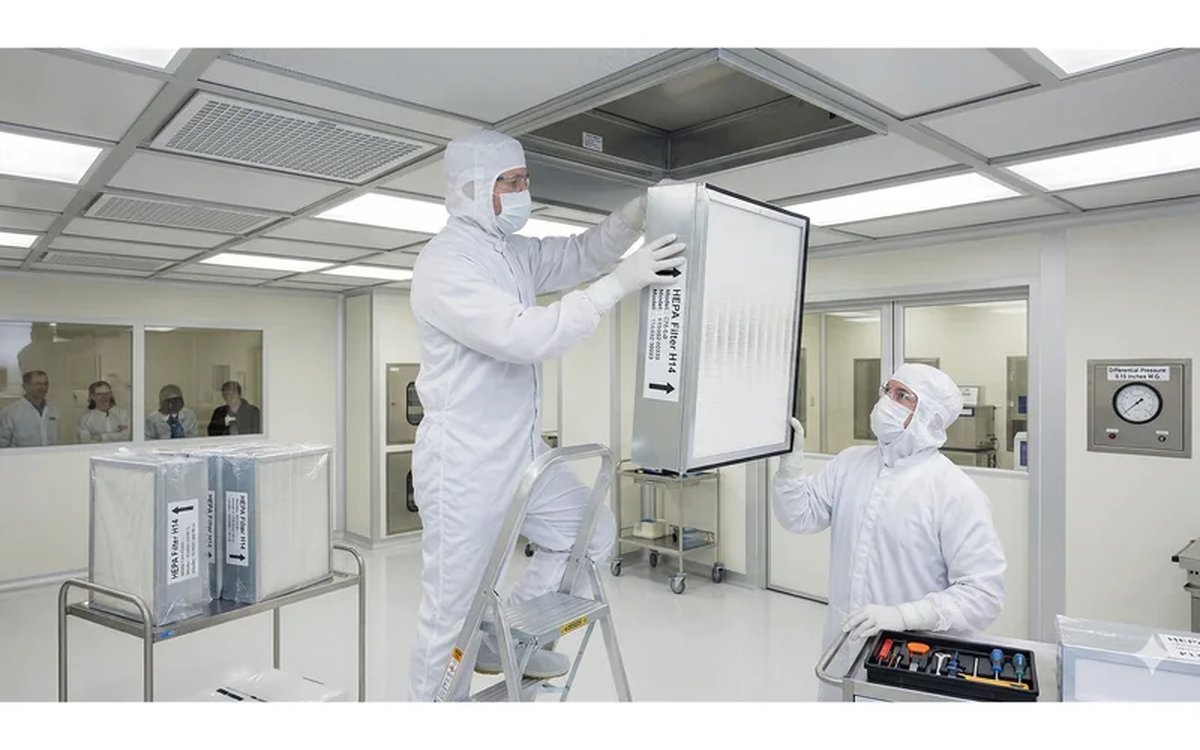
Quy chuẩn ghi "phòng duy trì áp dương +5 Pa". Bạn cầm đồng hồ chênh áp cầm tay đi đo, đọc được +2 Pa.
>
Là thiết bị hỏng? Thiết kế điều hòa sai? Hay là — vị trí, thời điểm, phương pháp đo của bạn đều sai hết?
Phần lớn các vấn đề "chênh áp không đúng" không phải vấn đề điều hòa, mà là vấn đề đo lường.
Vì sao vỏn vẹn 5 Pa lại khó đo đến vậy?
5 Pa tương đương áp động sinh ra khi một tờ giấy A4 rơi 2 mét. Nói cách khác:
- ▸Người mở đóng cửa → tức thời ±20 Pa
- ▸Ngay dưới FFU → luồng khí cục bộ tác động +3 tới +5 Pa
- ▸Gần miệng hút khí → lực hút cục bộ −2 tới −5 Pa
Tín hiệu mục tiêu của bạn (5 Pa) và nhiễu môi trường (cùng bậc độ lớn) là như nhau. Không cẩn thận kiểm soát thì căn bản không đo ra giá trị thật.
Đo chênh áp: làm đúng vs làm sai
Biểu đồ 1: Chọn điểm đo chênh áp — Đúng vs Sai
Sai 5 Pa thường do vị trí, không phải thiết bị
Nên ✓
- 📍Giữa phòng, cao 1.2 mĐại diện áp ổn định
- 🚪Đợi 5 phút sau đóng cửaΔP về giá trị thiết kế
- 🔄Trung bình 3 lầnLoại bỏ nhiễu
- 📏Chính xác ≤ ±1 PaKém hơn không xác minh 5 Pa được
Đừng ✗
- ⚠️Gần khe cửa/hútNhiễu ±3–5 Pa
- ⚠️Ngay dưới FFUDòng jet làm áp ảo cao
- ⚠️Ngay sau người quaΔP tụt 10–20 Pa tức thì
- ⚠️Manometer thường ±5 PaChính xác không đủ
Chênh áp mục tiêu ±5–15 Pa; chính xác thiết bị ≥ ±1 Pa.
Điều kiện tiên quyết trước khi đo
- 1Đóng toàn bộ cửa ra vào và cửa sổ hơn 5 phút — để chênh áp trở về giá trị thiết kế
- 2Điều hòa đã vận hành ổn định — số đọc khi đang khởi động hay đang điều tốc biến tần đều không chuẩn
- 3Trong phòng không có người đi lại — người di chuyển gây nhiễu luồng khí
Lựa chọn vị trí đo
Vị trí tốt:
- ▸Trung tâm hình học của phòng, cách sàn 1,2 m (chiều cao hô hấp của người)
- ▸Tránh khe cửa, miệng hút khí, ngay dưới FFU, ống xả của thiết bị
Vị trí không tốt:
- ▸Gần cửa ra vào — ảnh hưởng lớn từ người ra vào
- ▸Cạnh miệng cấp gió / miệng hồi gió — tác động luồng khí cục bộ hoặc lực hút
- ▸Phía sau thiết bị — mặt tường có thể sinh xoáy cục bộ
Lựa chọn thiết bị
Đồng hồ chênh áp cầm tay thông thường (độ chính xác ±5 Pa) căn bản không dùng được. Bạn cần đo ±5 Pa thì độ chính xác thiết bị tối thiểu phải là ±1 Pa — nếu không, bản thân số đọc của thiết bị ±5 Pa đã nằm trong khoảng ±5 Pa, hoàn toàn không thể phán đoán.
Khuyến nghị:
- ▸Đồng hồ vi chênh áp kỹ thuật số, độ chính xác ±0,5 Pa
- ▸Cảm biến chênh áp điện tử tức thời (lắp trên FFU, hiển thị tức thời tại hệ giám sát trung tâm)
Xử lý số đọc
Số đọc một lần không đáng tin. Cách làm tiêu chuẩn:
- ▸Đọc liên tục 30 giây
- ▸Lấy giá trị trung bình + độ lệch chuẩn
- ▸Độ lệch chuẩn > 2 Pa → cho thấy điều kiện đo không ổn định, hãy tìm nguyên nhân (cửa chưa đóng kỹ? điều hòa chưa vào trạng thái ổn định?)
Đo tốc độ gió: quy tắc lưới của ISO 14644-3
Biểu đồ 2: Đo vận tốc gió — Lưới và chọn thiết bị
Lưới ISO 14644-3: tối thiểu √diện tích điểm
| Thiết bị | Dải |
|---|---|
| Nhiệt điện trở | 0.05–30 m/s |
| Cánh | 0.2–15 m/s |
| Flow hood | 40–3500 CMH |
- Nhiệt điện trở:Lớp chậm (±3 %)
- Cánh:Đầu ra trung cao
- Flow hood:Tổng lưu lượng FFU
Tốc độ mục tiêu tùy ISO class. Class 5 lớp 0.35–0.45 m/s.
Các ISO Class khác nhau yêu cầu gì?
- ▸ISO Class 1–5 (khu dòng tầng) → yêu cầu độ đồng đều tốc độ gió tại điểm: 0,35–0,45 m/s, sai lệch ≤ ±20 %
- ▸ISO Class 6–7 (khu dòng rối) → yêu cầu số lần thay đổi không khí (ACH): 70–100 lần/giờ
- ▸ISO Class 8–9 → ACH 20–40 lần/giờ là đủ
Điểm đo phân bố thế nào?
Công thức ISO 14644-3: số điểm đo tối thiểu n ≥ √(diện tích m²) × 10
Phòng 10 m² → ít nhất 32 điểm đo, phân bố cách đều.
Lựa chọn thiết bị
- ▸Máy đo tốc độ gió dây nhiệt — lựa chọn hàng đầu cho khu dòng tầng tốc độ thấp (0,05–30 m/s, độ chính xác ± 3 %)
- ▸Máy đo tốc độ gió cánh quạt — miệng gió tốc độ trung – cao (0,2–15 m/s)
- ▸Chụp đo lưu lượng gió — đo tổng lưu lượng của cả một FFU (40–3500 CMH), không xét tốc độ điểm
Tư thế đo
Đầu dò bắt buộc hướng đúng chiều luồng khí — lệch 30° sẽ làm số đọc thấp đi 10–15 %.
Lỗi thường gặp của người mới: cầm máy đo tốc độ gió "vung đại một cái" — hoàn toàn vô nghĩa.
Ngoài chênh áp và tốc độ gió, còn phải đo gì
Các hạng mục nghiệm thu đầy đủ theo ISO 14644-3:
- 1Nồng độ hạt (OPC) — vai chính, các mục còn lại là vai phụ
- 2Tốc độ luồng khí ✓
- 3Chênh áp ✓
- 4Trực quan hóa luồng khí (thử nghiệm khói) — xác nhận dòng tầng thực sự là dòng tầng
- 5Thử nghiệm phục hồi (Recovery) — sau ô nhiễm ngắn hạn thì bao lâu hồi phục
- 6Thử nghiệm rò rỉ (Leak Test) — Scan Test màng lọc
Thiếu bất kỳ mục nào, việc nghiệm thu cấp độ đều chưa hoàn chỉnh.
Khuyến nghị thực tế: xây dựng "SOP đo lường"
Nhà máy của bạn nên có một bản SOP đo lường chuẩn hóa, quy định:
- ▸Đo vào thời điểm cố định mỗi quý (tránh mỗi lần một điều kiện khác nhau)
- ▸Điểm đo cố định (dán nhãn, vẽ sơ đồ)
- ▸Thiết bị cố định (hiệu chuẩn mỗi năm một lần)
- ▸Người thao tác cố định (giảm biến thiên do con người)
Cùng một phòng, đo ở các thời điểm khác nhau ra giá trị khác nhau — có thể không phải phòng thay đổi, mà là cách đo thay đổi. Cố định các biến số thì mới nhìn ra được biến động thực sự.
Đo chênh áp và tốc độ gió không phải "cầm thiết bị lên đọc một con số", mà là công tác kỹ thuật có tiêu chuẩn, có điều kiện, có yêu cầu về thiết bị. Làm đúng thì mới phản ánh trung thực trạng thái của phòng, và cũng mới phát hiện sớm được vấn đề (thay vì đợi tới lúc số hạt tăng vọt mới biết có chuyện).