Nếu bạn tìm Google "vệ sinh màng lọc HEPA", sẽ thấy hàng loạt video dạy bạn "xả nước, hút bụi, sấy khô". Nhưng nếu bạn hỏi bất kỳ kỹ sư phòng sạch nào cùng câu hỏi đó, câu trả lời luôn chỉ có một:
Màng lọc HEPA không được rửa nước, càng không được dùng lại, tới hạn thì thay.
Vì sao khác biệt lớn đến vậy? Vì "HEPA gia dụng" và "HEPA công nghiệp" về căn bản là hai thứ khác nhau.
Một, vật liệu lọc HEPA được làm ra thế nào?
Thân chính của vật liệu lọc màng lọc HEPA công nghiệp là sợi thủy tinh đường kính dưới 1μm, đan xen ngẫu nhiên tạo thành cấu trúc lưới dày đặc nhiều lớp, rồi được cố định bằng chất kết dính hóa học. Ví von một chút: cấu trúc bên trong của vật liệu lọc HEPA giống như lấy một búi tơ nhện dán bằng keo nóng chảy thành khối đậu phụ, chỉ cần chạm nước là keo mềm ra, sợi sẽ sụp xuống.
| Thành phần cấu trúc | Vật liệu | Lý do sợ nước |
|---|---|---|
| Thân vật liệu lọc | Sợi thủy tinh siêu mịn (< 1μm) | Sức căng bề mặt của nước kéo các sợi kết cụm lại, hiệu suất lọc không bao giờ hồi phục |
| Thanh phân cách nếp gấp | Lá nhôm hoặc keo nóng chảy | Keo nóng chảy gặp nước mềm ra, khoảng cách nếp gấp biến dạng |
| Gioăng kín khung viền | Gel hoặc polyurethane | Gel hút nước sẽ mất khả năng làm kín, luồng khí đi vòng qua |
| Khung | Hợp kim nhôm hoặc thép không gỉ | Bản thân khung không sợ, nhưng sau khi bắt chặt thì không tháo ra rửa lại được |
Nói cách khác, "hiệu suất lọc" của màng lọc HEPA được xây dựng trên tiền đề ba yếu tố đều chính xác: khoảng cách sợi, mật độ nếp gấp, độ kín khung viền. Rửa nước sẽ phá hỏng đồng thời cả ba điều đó.
Biểu đồ 3: Ánh xạ ISO Class ↔ cấp lọc
Cấp lọc và kiểu dòng khí đề xuất cho mỗi cấp sạch ISO 14644-1
| ISO Class | Lọc đề xuất | Ứng dụng điển hình | Dòng khí |
|---|---|---|---|
| Class 3 (↓) | U15 / U16 ULPA | Bán dẫn tiên tiến, quang học EUV | Lớp |
| Class 4–5 | H14 HEPA | Bán dẫn, OLED, dược vô trùng | Lớp |
| Class 6–7 | H13 HEPA | Lắp ráp điện tử, kiểm quang, dược C/D | Rối được |
| Class 8–9 | Trung / cao hiệu | Đóng gói thực phẩm, ngoại vi phòng mổ | Rối được |
Hướng dẫn kỹ thuật tổng quát. ISO Class 1–2 ngoài phạm vi bảng này.
Hai, vậy vì sao đồ gia dụng lại nói "HEPA rửa nước được"?
Cái mà các hãng đồ gia dụng gọi là "HEPA rửa nước được" gần như đều là cấp H10 / H11 / H12 (trong quy chuẩn EN 1822 gọi là EPA, không phải HEPA), làm bằng sợi polyester hoặc sợi tổng hợp, hiệu suất 85% ~ 99,5%. Vật liệu lọc ở cấp này vốn thô chắc hơn, chịu được một lượng nước xả nhỏ, điểm bán hàng chính là "tiết kiệm tiền thay mới".
Nhưng bạn sẽ không thấy loại màng lọc này trong phòng sạch, nhà máy dược hay nhà máy bán dẫn, vì:
- ▸Khu quang khắc EUV bán dẫn yêu cầu từ H14 (99,995%) trở lên, và hạt 0,3μm phải kiểm soát tới cấp ppb
- ▸GMP cấp A của nhà máy dược yêu cầu dòng một chiều + H14
- ▸Lọc đầu cuối phòng mổ bệnh viện yêu cầu H13 + kiểm tra điểm rò
Những nơi này không có lựa chọn "tiết kiệm tiền thay mới", vì chi phí một tấm màng lọc thấp hơn rất nhiều so với một lần tổn thất tỷ lệ thành phẩm hay một sự cố nhiễm khuẩn.
Ba, không rửa nước được thì bảo trì thế nào?
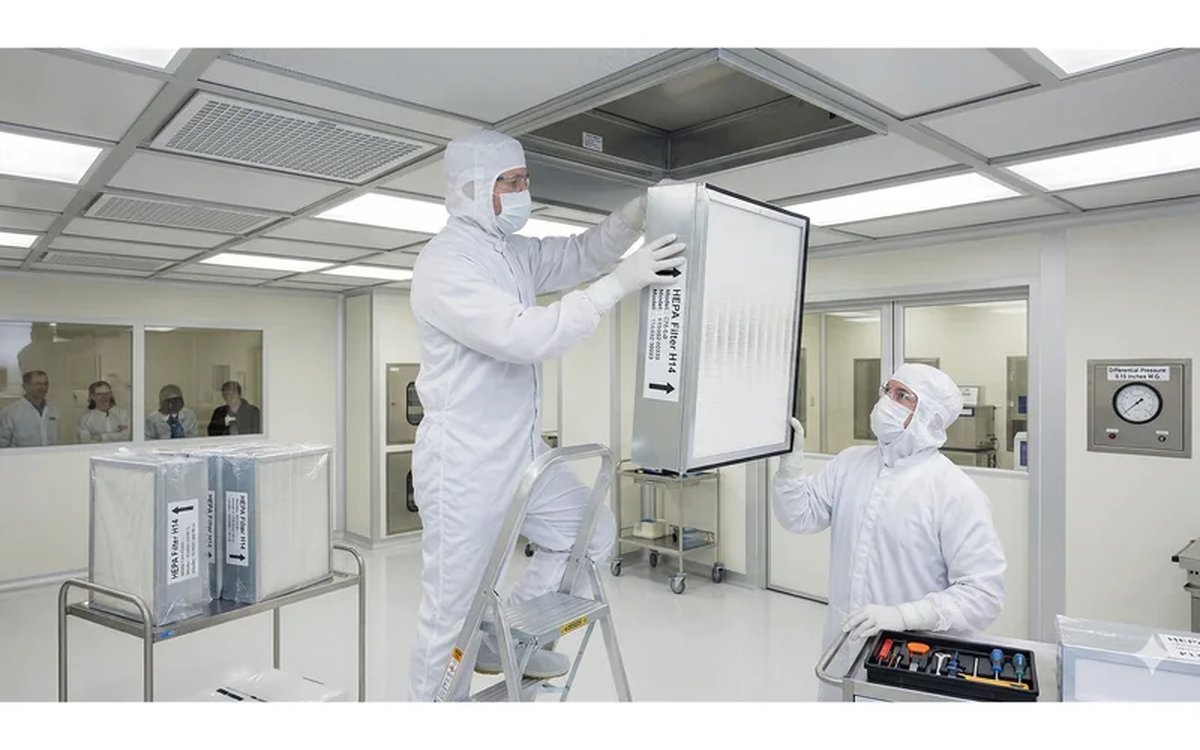
Bảo trì HEPA công nghiệp đúng cách là bộ ba "giám sát + kiểm rò + thay định kỳ", không phải "vệ sinh để kéo dài tuổi thọ".
1. Giám sát chênh áp (hằng ngày)
Mỗi tấm HEPA đều nên lắp đồng hồ chênh áp (loại Magnehelic hoặc loại số) ở đầu vào và đầu ra; khi chênh áp vượt quá 2 lần giá trị ban đầu (điển hình là tăng từ 250 Pa lên 500 Pa) thì nên lên lịch thay. Đồng hồ chênh áp chỉ tốn vài nghìn Đài tệ, nhưng cứu được tấm HEPA vài chục nghìn của bạn khỏi bị quạt hút mạnh tới rách.
2. Kiểm rò PAO / DOP (hằng năm)
Theo quy chuẩn ISO 14644-3, mỗi năm phải làm một lần thử nghiệm quét PAO: dùng máy phát khí dung tạo hạt 0,3μm, quét dọc bề mặt màng lọc và mép khung, bất kỳ điểm nào có tỷ lệ rò > 0,01% đều tính là fail. Đây là cách duy nhất để xác định màng lọc "còn dùng được hay không", chính xác hơn nhìn bề ngoài.
3. Thay định kỳ (tùy tình huống)
| Tình huống | Chu kỳ thay HEPA tham khảo |
|---|---|
| Khu EUV / cản quang công đoạn bán dẫn | 1,5 ~ 2 năm |
| GMP cấp A/B nhà máy dược | 1 ~ 2 năm (tùy kết quả PAO) |
| Phòng mổ bệnh viện | 2 ~ 3 năm |
| Phòng sạch văn phòng, phòng thí nghiệm | 3 ~ 5 năm |
| HEPA công nghiệp thông thường | 3 ~ 5 năm |
Chu kỳ thực tế chịu ảnh hưởng rất lớn từ "mức độ bảo vệ của màng lọc trung hiệu phía trước", "nguồn ô nhiễm của công đoạn", "số giờ vận hành". Nếu màng lọc trung hiệu phía trước (F7/F8/F9) làm tốt, tuổi thọ HEPA có thể kéo dài 2~3 lần.
Biểu đồ 1: Ba điều kiện kích hoạt thay lọc
Chỉ cần một cũng đủ — không chờ cả ba
Tổn thất áp
Độ sạch
Tuổi
Gắn cảm biến ΔP cho từng FFU/AHU.
Bốn, HEPA của máy lọc không khí gia dụng thì xử lý sao?
Nếu là tình huống gia dụng, cứ làm theo hướng dẫn sử dụng của nhà sản xuất:
- ▸Loại H10/H11 ghi "rửa nước được": vỗ nhẹ cho rụng bụi → xả nước lạnh → khô hoàn toàn rồi mới lắp lại, sau 2~3 vòng vẫn phải thay
- ▸Loại không ghi rửa nước được: tới hạn là thay thẳng, đừng cố gắng gượng
Nhưng xin nhớ: "rửa nước được" ≠ "sau khi rửa hiệu suất không đổi". Sau lần rửa đầu tiên, hiệu suất thu bụi thường rơi 10~20%, sau lần thứ ba thì gần như thành "đồ trang trí".
Năm, 3 câu hỏi dành cho kỹ sư mua hàng
Lần tới khi trao đổi với nhà cung cấp màng lọc, hỏi ba câu này là biết đối phương có chuyên nghiệp hay không:
- 1"Ứng dụng của tôi nên chọn H13 hay H14? Căn cứ vào đâu để phán đoán?" — Trả lời được cấp ISO 14644 tương ứng + khái niệm MPPS mới là chuyên nghiệp
- 2"Bên bạn có cung cấp báo cáo quét PAO không? Theo định dạng phù hợp ISO 14644-3?" — Ai trả lời "màng lọc của chúng tôi tốt lắm, không cần đo" thì loại thẳng
- 3"Chênh áp kết thúc đặt bao nhiêu Pa? Đây là khuyến nghị của nhà sản xuất hay giá trị kinh nghiệm hiện trường?" — Ai phân biệt được mới có kinh nghiệm thi công thực tế
Câu hỏi thường gặp
Q: Rửa nước HEPA một lần thì sẽ thế nào?
A: Nhìn bằng mắt có thể thấy không khác mấy, nhưng khi đo: hiệu suất lọc sẽ rơi 10~30% (tùy mức hư hại nếp gấp), và nếu gioăng kín khung viền thuộc loại gel thì sẽ biến dạng nhẹ, khiến luồng khí đi vòng. Nguy hiểm nhất là bạn không biết nó đã hỏng, tiếp tục dùng sẽ đưa chất ô nhiễm vào phòng sạch.
Q: HEPA nhìn còn rất sạch, có phải vẫn dùng tiếp được không?
A: Bề ngoài hoàn toàn không thể dùng để đánh giá tình trạng HEPA. Thứ HEPA giữ lại phần lớn là hạt dưới micron < 0,3μm, mắt thường không nhìn thấy. Chỉ có hai cách đánh giá: số đọc chênh áp + kiểm rò PAO.
Q: H13 và H14 khác nhau bao nhiêu? Nên chọn cái nào?
A: Hiệu suất lọc H13 là 99,95%, H14 là 99,995%, nhìn thì chỉ chênh 0,045%, nhưng tỷ lệ rò chênh 10 lần (500 ppm vs 50 ppm). Công đoạn bán dẫn, cấp A nhà máy dược, an toàn sinh học BSL-3 đồng loạt dùng H14; phòng sạch thông thường, khu không phải phòng mổ của bệnh viện thì H13 là đủ. Xem thêm bảng đối chiếu cấp HEPA / ULPA.
Q: HEPA có bảo hành thật không?
A: HEPA không có khái niệm "thời hạn bảo hành", chỉ có "kiểm chứng tính năng ban đầu" + "tuổi thọ dự kiến dưới điều kiện sử dụng". Nhà cung cấp sẽ kèm chứng nhận thử nghiệm PAO khi xuất xưởng (chứng minh lúc rời nhà máy là OK), tuổi thọ thực tế phụ thuộc điều kiện vận hành hiện trường.
Q: Có thể tự thay HEPA không?
A: Về kỹ thuật thì được, nhưng thay xong nhất định phải quét PAO, nếu không sẽ không thể kiểm chứng việc lắp đặt có kín hay không. Khuyến nghị làm cùng nhà cung cấp có năng lực kiểm chứng ISO 14644-3, tránh việc bỏ tiền mua màng lọc tốt nhưng lại phí công vì lắp đặt thất bại.