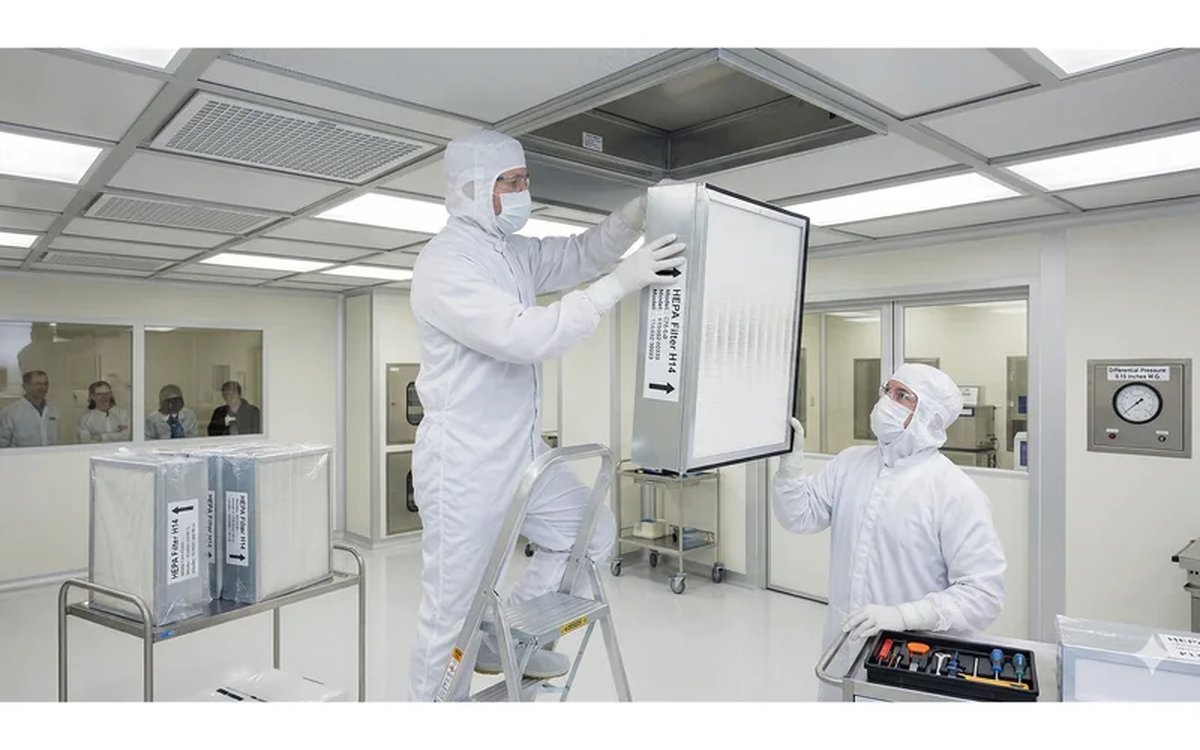
Thay quá sớm = lãng phí vật tư và nhân công; thay quá muộn = đánh cược năng suất của cả tấm wafer hoặc cả lô sản phẩm. Có một điểm ở giữa, và chiến lược thay màng lọc khoa học chính là tìm ra điểm đó.
Chỉ dựa vào thời gian hay chỉ dựa vào tổn thất áp đều chưa đủ
Cách làm truyền thống có hai kiểu:
A. "Quản theo thời gian" —— cứ 5 năm thay toàn bộ Ưu điểm: đơn giản, dễ lên lịch Nhược điểm: có màng lọc đã hỏng từ lâu, có bộ vẫn còn rất tốt, thay đồng loạt là lãng phí
B. "Quản theo tổn thất áp" —— đạt gấp 2 lần tổn thất áp ban đầu thì thay Ưu điểm: thấy con số rồi mới hành động Nhược điểm: một số dạng hỏng (rò rỉ cục bộ, vật liệu lọc bị xô lệch) không làm tổn thất áp tăng, nhưng hạt đã xuyên qua
Cách làm thực sự khoa học là giám sát đồng thời ba điều kiện kích hoạt —— chỉ cần một điều kiện đạt ngưỡng là thay.
Biểu đồ 1: Ba điều kiện kích hoạt thay lọc
Chỉ cần một cũng đủ — không chờ cả ba
Tổn thất áp
Độ sạch
Tuổi
Gắn cảm biến ΔP cho từng FFU/AHU.
Kích hoạt 1: tổn thất áp đã tới ngưỡng
Cách đánh giá: tổn thất áp của màng lọc HEPA / ULPA đạt gấp 2 lần tổn thất áp ban đầu, hoặc giá trị tuyệt đối đạt 450–600 Pa.
Cách đo: lắp đồng hồ chênh áp hoặc cảm biến chênh áp trên FFU hay AHU, tích hợp vào hệ thống giám sát trung tâm. Nên đặt thêm một "giá trị cảnh báo sớm" —— khi tổn thất áp đạt 80 % giá trị báo động thì khởi động quy trình mua vật tư dự phòng, tránh tình huống đến ngày báo động mà không có hàng để thay.
Lưu ý thực tế: tốc độ tăng tổn thất áp phụ thuộc vào tải bụi. Khu nhà máy có không khí bên ngoài ô nhiễm nặng (cạnh cao tốc, khu công nghiệp) có thể chỉ 6 tháng đã tới ngưỡng; bệnh viện hay tòa văn phòng sạch sẽ có thể 3 năm. Đừng áp dụng "giá trị trung bình", mỗi khu vực phải theo dõi riêng.
Kích hoạt 2: độ sạch có dấu hiệu bất thường
Cách đánh giá: số đếm hạt (OPC) bất thường liên tục hoặc lặp lại, dù tổn thất áp chưa tới ngưỡng.
Cách đo: ISO 14644-3 quy định phòng sạch phải định kỳ thực hiện giám sát đếm hạt:
- ▸Khu vực cấp cao (ISO Class 5 trở lên) → quét ít nhất mỗi tháng một lần
- ▸Khu vực thông thường → đếm hạt toàn diện mỗi quý một lần
Đọc hiểu tín hiệu bất thường:
- ▸Hiệu suất cả tấm màng lọc giảm đều → vật liệu lọc lão hóa, có thể đã gần hết tuổi thọ
- ▸Số hạt tăng vọt tại một điểm cục bộ → màng lọc bị rò rỉ (lỗ kim, keo làm kín xuống cấp)
- ▸Số hạt có xu hướng tăng theo thời gian → màng lọc đang dần mất tác dụng, cần lên kế hoạch thay sớm
Điểm quan trọng: tổn thất áp bình thường ≠ màng lọc còn tốt. Rò rỉ không làm tổn thất áp tăng, nhưng khiến hạt xuyên qua. Chỉ nhìn tổn thất áp sẽ bỏ sót vấn đề rò rỉ.
Kích hoạt 3: đã hết hạn thời gian
Cách đánh giá: dù tổn thất áp chưa tới ngưỡng, hạt cũng chưa bất thường, màng lọc HEPA vẫn có niên hạn sử dụng khuyến nghị 5–8 năm; màng lọc thô phía trước (sơ cấp, trung cấp) là 3–12 tháng tùy môi trường.
Vì sao lại có giới hạn thời gian? Vì vật liệu lọc sẽ lão hóa:
- ▸Sợi thủy tinh bị axit, kiềm, hơi ẩm ăn mòn → cấu trúc giòn đi
- ▸Chất kết dính lão hóa → sợi bị lỏng ra
- ▸Keo làm kín cứng lại và nứt → mất kín khí
Dù nhìn bên ngoài không thấy bất thường, vật liệu lọc đã lão hóa vẫn có thể đột ngột hỏng khi chịu ứng suất (chênh áp tăng, nhiệt độ thay đổi). HEPA trên 5 năm là lúc cần thay định kỳ.
Chiêu tiết kiệm bị đánh giá thấp nghiêm trọng: thay màng lọc thô cho nghiêm túc
Rất nhiều nhà máy để màng lọc thô (G4 sơ cấp, F7 trung cấp) "dùng tới rách mới thay", kết quả lại làm tuổi thọ HEPA rút ngắn đáng kể.
Biểu đồ 2: Thay lọc thô đúng lịch → HEPA thọ +40 %
Đòn bẩy chi phí tốt nhất trong chiến lược quản lọc
Dựa trên trung bình của đội khách hàng.
Vì sao màng lọc thô lại quan trọng với HEPA đến vậy?
Chi phí HEPA cao gấp 10–30 lần màng lọc thô. Nhưng HEPA rất sợ tải bụi hạt thô —— một khi bụi thô lọt vào, tổn thất áp tăng nhanh, vật liệu lọc lão hóa nhanh hơn.
Màng lọc thô chính là "thủ môn" của HEPA. Thủ môn làm việc nghiêm túc thì HEPA phía sau mới trụ được lâu.
Số liệu thực đo
Theo dữ liệu theo dõi từ khách hàng:
- ▸Không thay màng lọc thô định kỳ → tuổi thọ HEPA trung bình: mốc 100 %
- ▸Thay màng lọc thô định kỳ (theo tổn thất áp hoặc theo thời gian) → tuổi thọ HEPA ≥ 140 %
- ▸Tức là tăng trên 40 %
Thử tính: giả sử một tấm HEPA giá 10,000 TWD, một tấm lọc thô 1,000 TWD.
- ▸Không thay lọc thô: 5 năm thay HEPA một lần = 2,000 TWD/năm
- ▸Thay lọc thô nghiêm túc: lọc thô nửa năm 1,000 TWD = 2,000 TWD/năm, nhưng HEPA kéo dài tới 7 năm = 1,428 TWD/năm
Chi phí lọc thô +2,000 TWD/năm, đổi lại chi phí HEPA −572 TWD/năm? Nhìn thì có vẻ chẳng tiết kiệm gì.
Nhưng đó mới chỉ là tiền của bản thân màng lọc. Cộng thêm:
- ▸Giờ công dừng máy để thay HEPA (mỗi lần vài giờ tới vài ngày)
- ▸Chi phí xử lý vận chuyển và thải bỏ HEPA
- ▸Tổn thất sản xuất do thời gian khôi phục độ sạch trong lúc thay
Tổng TCO thường giảm 20–30 %.
Khuyến nghị quản lý: làm tốt ba việc
- 1Lắp đồng hồ chênh áp và tích hợp vào hệ thống giám sát —— cho toàn bộ FFU / AHU, đừng dựa vào đo tay khi đi tuần định kỳ
- 2Lập sổ theo dõi thay thế —— ngày lắp đặt, tổng giờ vận hành, diễn biến tổn thất áp, kết quả kiểm tra hạt của từng màng lọc
- 3Phân tích xu hướng —— rà soát mỗi quý một lần, tìm ra khu vực tăng bất thường nhanh, xem lại cấu hình màng lọc thô hoặc tần suất giám sát
Quản lý màng lọc không phải là nhìn lịch để thay, cũng không phải đợi hỏng mới thay. Theo dõi đồng thời ba chỉ tiêu tổn thất áp, độ sạch và thời gian, chỉ cần một chỉ tiêu tới ngưỡng là hành động —— đó mới là chiến lược kiểm soát được cả chi phí lẫn độ sạch về dài hạn.