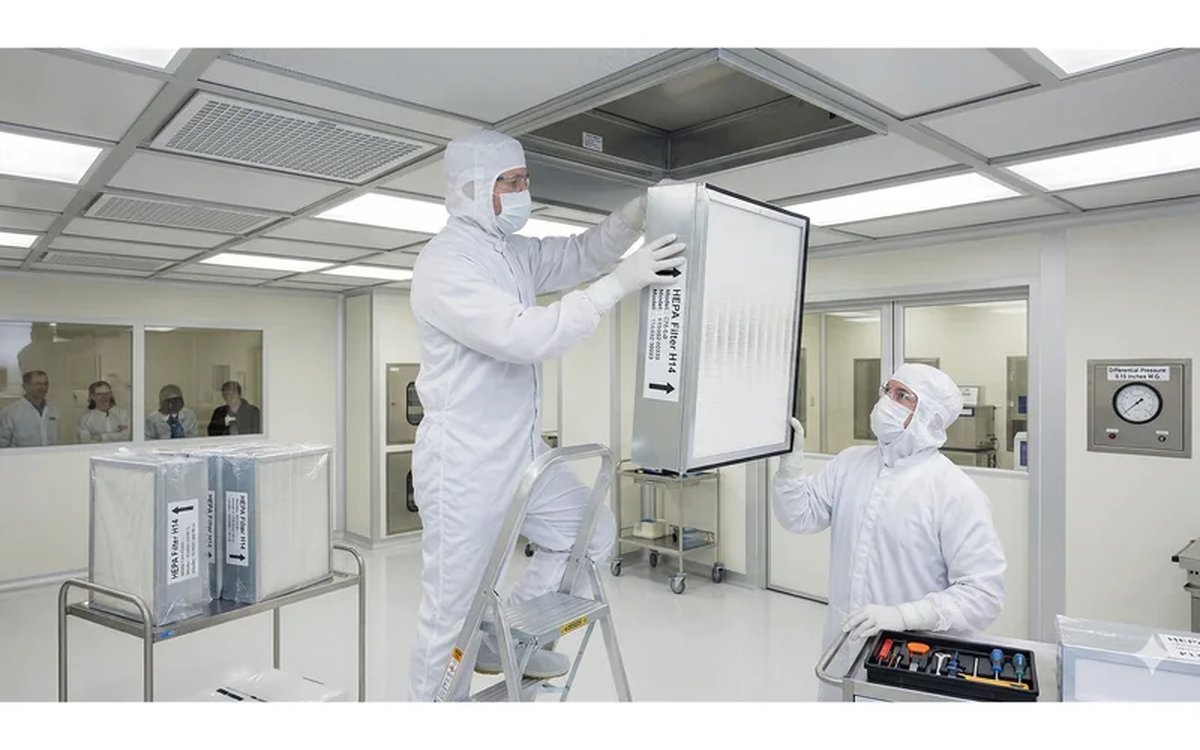
The world throws out billions of air filters every year. 90 %+ is synthetic fiber — non-biodegradable, headed to landfill where decomposition takes centuries.
This is not only a cost issue. It is an environmental one. The 2025 Separation and Purification Technology paper mapped the solution space systematically.
Why Do Filters Die?
Chart 2: The Hidden Waste Scale of Air Filters Worldwide
How many filters get thrown away every year?
Numbers and estimation basis from Separation and Purification Technology 2025. Actuals vary by region, industry, and use density.
Filters face multiple degradation factors in service:
- 1Dust loading — ΔP climbs until fans can't push air through
- 2High humidity — media structure degrades (glass fiber especially)
- 3Chemical contaminants — binder and fiber attacked (see earlier PTFE case)
- 4UV exposure — polymer aging
These shorten life and drive frequent replacement, producing massive waste streams.
Three Strategies: Extend Life × Cut Energy
Chart 1: Three Strategies to Make Filters More Sustainable
Extend life, cut energy, reduce waste — all three at once
Media modification
Structure optimization
Functional nano coating
Synthesis of Separation and Purification Technology 2025. The three directions align with international regulation (EU Ecodesign, Energy Label).
The paper's three paths:
Strategy 1: Media modification
Physical or chemical treatment to improve fiber properties:
- ▸Plasma treatment — modify surface energy, boost hydrophilicity / hydrophobicity
- ▸Chemical grafting — attach specific functional groups, improve acid / base / oxidation resistance
- ▸Nano-particle deposition — apply silver, copper, or TiO₂ nano-particles for mechanical strength or added function
Effect: in the same environment, modified media can last 30–60 % longer than unmodified.
Strategy 2: Structural optimization
CFD (Computational Fluid Dynamics) simulation optimizes pleat geometry and spacing.
Traditional pleats are "designed by experience" — too dense clogs early, too loose wastes area. CFD calculates optimum spacing precisely. At the same filter area:
- ▸Initial ΔP down 10–20 %
- ▸Slower ΔP growth curve
- ▸Effective life extended per unit
Practical upshot: same area, same media, but structural tuning alone extends life.
Strategy 3: Functional nano coatings
Apply super-hydrophobic or super-hydrophilic coatings on the media:
- ▸Super-hydrophobic — water is repelled, pores don't clog with moisture. Humid environments gain substantial efficiency
- ▸Super-hydrophilic — water spreads evenly, enabling self-cleaning (flow carries away accumulated dust)
Not theoretical. Similar coatings already run on premium solar panels and car-window water treatments. Technology is mature; cost continues to drop.
40 % Life Extension → 40 % Less Annual Waste
The most direct sustainability translation.
Assumption:
- ▸A plant replaces 10,000 filters per year (100 % landfill load)
- ▸Structural optimization + modification + coating extends life by 40 %
- ▸Actual annual replacement drops to ~7,100 units
Result:
- ▸Consumable procurement −29 %
- ▸Landfill waste −29 %
- ▸Transport / installation labor −29 %
- ▸Every filter-related environmental footprint drops proportionally
Research Priorities Going Forward
Development directions the paper flags:
1. Biodegradable media substitutes
Mainstream media (PP, PET, glass fiber) is all non-biodegradable. Research directions:
- ▸Cellulose-based — natural polymer, degradable
- ▸PLA (polylactic acid) — industrially compostable
- ▸Bio-composite — natural materials with minor synthetic reinforcement
Challenge: temperature, humidity, and strength must all meet industrial standards.
2. Standardized accelerated-life test methods
Each vendor runs "life tests" differently — clean environment, dust ovens, specific particle sizes. The industry needs consensus accelerated-test methodology to compare products objectively.
3. Filter recycling / circular economy
Currently "end of life = landfill." Next step:
- ▸Design for disassembly — frame, media, binder separable
- ▸Material recovery — re-melt and re-fabricate into media or other products
- ▸Labeled traceability — each filter carries recycling metadata
What Building / Facility Managers Can Do
If you're a filter user (cleanroom, hospital, office building manager), actions you can start now:
- 1Implement scheduled pre-filter rotation — as discussed earlier, extends HEPA life by 40 %
- 2Ask about structural optimization and media modification when purchasing — not all "HEPA H14" are equal; some use new tech, others don't
- 3Keep filter usage records — accumulated data reveals which products actually last longer
- 4Explore recycling channels — some cities already have industrial filter recyclers
The Competitive Meaning for the Industry
Sustainability is no longer a "nice to have" — it is becoming a requirement. EU Ecodesign, Energy Label, Carbon Border Adjustment Mechanism (CBAM) all drive this direction.
For filter manufacturers: missing new technology means losing international markets. For users: picking unsustainable products impacts ESG ratings and carbon accounting. For the whole industry: this is transformation pressure and innovation opportunity.
Air-filter sustainability isn't solvable by any single technology, nor by any single purchasing decision. Media R&D, equipment design, usage management, and recycling mechanisms must move forward together.
The value of the 2025 paper: it clearly maps what can be done now. Not waiting for mature technology — structural optimization, modification, coatings, rotation management are all available today. Each contributes. Together, that's billions of filters less in landfills.