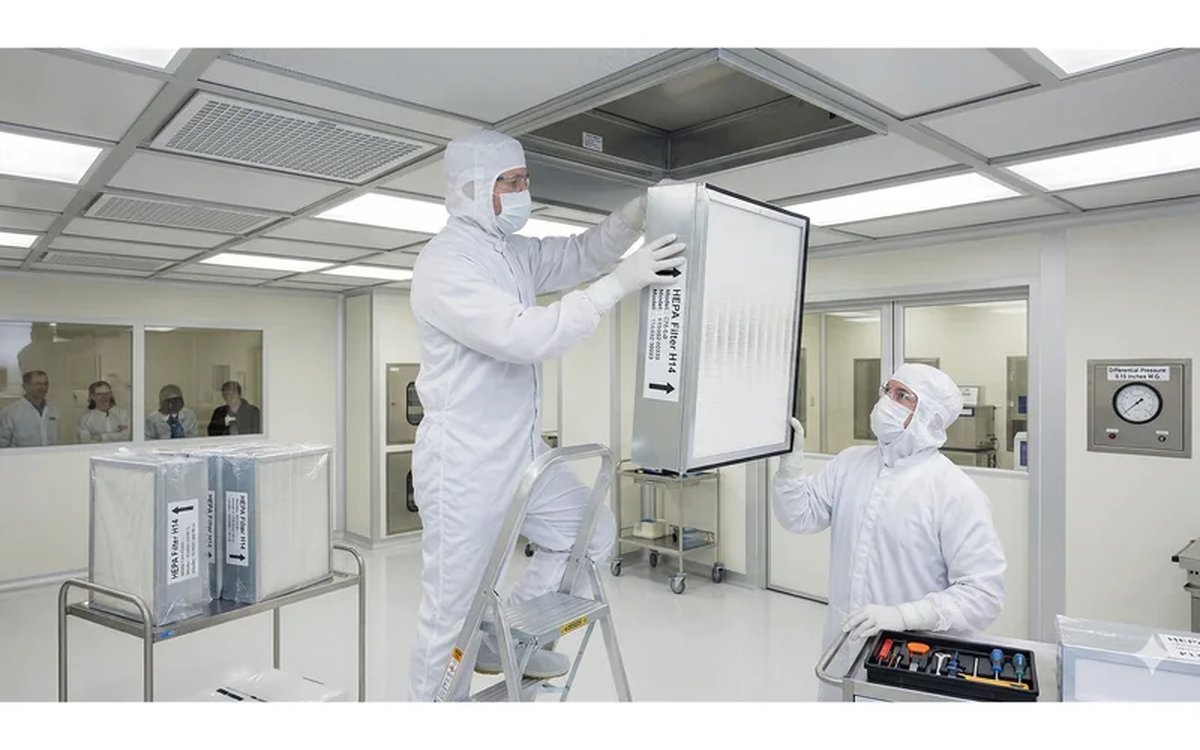
Mối hàn trên đường ống khí của nhà máy bán dẫn nhẵn bóng như gương, như một tác phẩm được nhà máy chạm khắc.
>
Vì sao phải làm vậy? Vì độ nhám của mối hàn quyết định độ sạch của cả đường ống.
Vì sao khung HEPA và đường ống phòng sạch bắt buộc dùng TIG
Khung HEPA / ULPA, khoang FFU, đường ống khí độ tinh khiết siêu cao của bán dẫn (Ultra High Purity Gas Line), đường ống GMP dược phẩm — tất cả đều hàn TIG. Vì sao không dùng MIG hay hàn que có chi phí thấp hơn 5–10 lần?
Câu trả lời nằm ở chính mối hàn:
Vấn đề của MIG / hàn que
- ▸Xỉ hàn (slag) — lớp thuốc bọc của que hàn hoặc dây hàn để lại xỉ, bám vào thành trong đường ống
- ▸Bắn tóe (spatter) — các hạt kim loại nhỏ văng ra xung quanh đường ống
- ▸Lớp oxit nhiệt (heat tint) — ở nhiệt độ cao, bề mặt thép không gỉ hình thành oxit Cr, khả năng chống ăn mòn giảm
- ▸Rỗ khí (porosity) — bên trong mối hàn có các lỗ khí li ti, sẽ tích bụi, nuôi vi khuẩn
Trong môi trường công nghiệp thông thường, các vấn đề này chấp nhận được. Nhưng trong phòng sạch, đường ống khí bán dẫn, đường ống dược phẩm:
- ▸Xỉ → nhiễm bẩn quy trình — thiết bị hạ nguồn nuốt phải dị vật
- ▸Lớp oxit → phá hỏng khả năng chống ăn mòn — tuổi thọ đường ống giảm mạnh
- ▸Rỗ khí → vi khuẩn sinh sôi — kẻ thù không đội trời chung của khu vô trùng dược phẩm
Ưu thế của hàn TIG
Biểu đồ 1: Ba phương pháp hàn chính — TIG / MIG / Hàn que
Khung HEPA, vỏ FFU, ống inox phòng sạch đều hàn TIG
| Phương pháp | Khí bảo vệ | Điện cực | Chất lượng mối | Tốc độ | Ứng dụng |
|---|---|---|---|---|---|
| TIG (GTAW) | Argon/Heli | Tungsten không tiêu hao | Cực tốt | Chậm | Ống phòng sạch, inox mỏng |
| MIG (GMAW) | Ar + CO₂ | Dây tiêu hao | Cao | Nhanh | Công nghiệp chung, thép dày |
| Hàn que (SMAW) | Không (que có vỏ bọc) | Que tiêu hao | Trung (văng xỉ) | Trung | Tại hiện trường |
TIG là tiêu chuẩn công nghiệp cho hàn inox chính xác.
TIG = Tungsten Inert Gas Welding (hàn hồ quang điện cực wolfram trong khí trơ), còn gọi là GTAW (Gas Tungsten Arc Welding).
- ▸Điện cực wolfram không tiêu hao — không rơi vụn kim loại vào mối hàn
- ▸Bảo vệ 100 % bằng khí argon — cách ly hoàn toàn oxy và hơi nước, không oxit, không rỗ khí
- ▸Có thể hàn không cần que bù — thép không gỉ tấm mỏng có thể nung chảy liền trực tiếp, mối hàn nhẵn đến mức khó nhận ra
- ▸Chất lượng mối hàn lặp lại được — cùng một thợ hàn, cùng một máy, mỗi đường hàn có thể sánh ngang quy cách xuất xưởng
Cái giá phải trả: tốc độ chậm, tiền công cao. Chiều dài thợ TIG hàn được trong một ngày chỉ khoảng 1/3 so với MIG, lương giờ lại gấp 1.5–2 lần.
Chọn hợp kim: không phải "thép không gỉ" nào cũng như nhau
Biểu đồ 2: Inox + hợp kim Ni phổ biến
Không phải "inox" nào cũng giống nhau
| Hợp kim | Thành phần | Độ bền | Kháng ăn mòn | Hàn | Ứng dụng |
|---|---|---|---|---|---|
| SUS 304 | Fe-18Cr-8Ni | Trung | TB | Dễ | Kết cấu chung |
| SUS 316L | Fe-17Cr-12Ni-2Mo | Trung | Xuất sắc | Dễ | Ống khí bán dẫn, GMP |
| SUS 321 | Fe-18Cr-9Ni-Ti | Trung | TB nhiệt cao | Dễ | Khí thải nhiệt cao |
| 904L | Fe-20Cr-25Ni-4.5Mo-Cu | Trung | Cực tốt | TB | Axit hóa chất |
| Hastelloy | Ni-16Cr-16Mo-4W | Cao | Cực tốt | Khó | Môi trường hóa chất tồi tệ |
| Inconel 625 | Ni-21Cr-9Mo-3.5Nb | Rất cao | Cực tốt | Khó | Nhiệt + ăn mòn |
| Titan | >99% Ti | Trung | Cực tốt | Khó | Clorua, y tế |
Chọn sai hợp kim: 304 trong môi trường clo sẽ thủng.
Kỹ sư hay lầm tưởng "thép không gỉ thì đều là thép không gỉ". Sai nghiêm trọng.
SUS 304 vs 316L — khác nhau ở một nguyên tố Mo
304 (Fe-18Cr-8Ni) — thép không gỉ tiêu chuẩn, chi phí thấp nhất. Kém chịu clorua — khu nhà máy ven biển, môi trường nhiễm mặn, cạnh hồ bơi 6 tháng là bị ăn mòn điểm (pitting).
316L (Fe-17Cr-12Ni-2Mo + carbon thấp) — thêm 2 % molypden (Mo) và giảm hàm lượng carbon. Khả năng chịu clorua tăng vọt — đường ống khí HCl trong nhà máy bán dẫn, thiết bị tẩy rửa axit của nhà máy dược, môi trường biển bắt buộc dùng 316L.
Điểm mấu chốt: chữ "L" nghĩa là carbon thấp (Low Carbon). Carbon thấp giảm rủi ro ăn mòn liên tinh giới (grain boundary corrosion) — vấn đề thường xuất hiện trong quá trình hàn. Đường ống phòng sạch nhất loạt dùng 316L, đừng vì tiết kiệm chút tiền mà dùng 316.
SUS 321 — chuyên dụng cho nhiệt độ cao
321 (Fe-18Cr-9Ni-Ti) — thêm titan (Ti) để ổn định carbide ở nhiệt độ cao. Chịu liên tục 800 °C không hỏng — ống xả động cơ hàng không, tuabin hơi, môi trường hóa chất nhiệt độ cao. Khả năng chịu clorua ở mức trung bình, không phù hợp môi trường nhiễm mặn hoặc axit.
Hastelloy C-276 — kịch bản địa ngục của ngành hóa chất
Hastelloy (Ni-16Cr-16Mo-4W) — hợp kim gốc niken. Chịu được hầu như mọi hóa chất — axit mạnh, kiềm mạnh, khí clo, brom.
Nhược điểm: chi phí gấp 5–8 lần 316L, hàn khó (phải kiểm soát nghiêm ngặt nhiệt lượng đầu vào). Chỉ dùng trong môi trường hóa chất khắc nghiệt nhất — quy trình axit mạnh, đường ống khí clo, xử lý khí thải chứa flo.
Inconel 625 — song kiếm hợp bích nhiệt độ cao + chống ăn mòn
Inconel (Ni-21Cr-9Mo-3.5Nb) — gốc niken, độ bền cực cao. Hiệu năng kép chịu nhiệt độ cao + chống ăn mòn — vùng nóng của động cơ hàng không, lò phản ứng hạt nhân, nồi hơi nhiệt điện.
Titan — clorua và y tế
Ti Gr. 2 (titan nguyên chất > 99 %) — trọng lượng nhẹ, chịu clorua ở mức đỉnh cao (tốt hơn 316L 100 lần), tương thích sinh học vượt trội. Lựa chọn hàng đầu cho thiết bị cấy ghép y tế, khử mặn nước biển, công trình clo hóa.
Nhược điểm: hàn khó, đòi hỏi bảo vệ argon hoàn toàn — vì titan trên 500 °C gặp oxy sẽ phản ứng mãnh liệt tạo TiO₂ giòn. "Buồng hàn titan" chuyên dụng (purge chamber) không hề rẻ.
Mối liên hệ giữa chọn vật liệu × hàn
Chọn sai hợp kim, hàn giỏi mấy cũng vô ích. Nhưng chọn đúng hợp kim mà hàn sai thì cũng hỏng như thường.
Ba tham số then chốt phải khớp với nhau:
1. Nhiệt độ gia nhiệt trước
| Hợp kim | Yêu cầu gia nhiệt trước |
|---|---|
| 304 / 316L | Không cần gia nhiệt trước |
| Inconel 625 | Gia nhiệt trước 150 °C |
| Hastelloy C-276 | Làm sạch trước khi hàn cực kỳ quan trọng, thường không gia nhiệt trước |
| Ti Gr. 2 | Không gia nhiệt trước, nhưng mặt sau phải được bảo vệ bằng argon |
2. Thành phần khí bảo vệ
| Hợp kim | Khí bảo vệ khuyến nghị |
|---|---|
| 304 / 316L | Argon nguyên chất hoặc Ar + 2% N₂ |
| Inconel | Argon nguyên chất |
| Hastelloy | Argon nguyên chất (độ tinh khiết cao) |
| Ti | Argon nguyên chất (tuyệt đối không được lẫn nitơ hoặc oxy) |
3. Xử lý nhiệt sau hàn (PWHT)
| Hợp kim | Yêu cầu |
|---|---|
| 304 / 316L | Thường không cần |
| 321 | Xử lý ổn định hóa 870 °C sau hàn |
| Hastelloy C-276 | Xử lý hòa tan 1121 °C sau hàn (tấm dày) |
| Ti | Chi tiết lớn có thể cần ủ khử ứng suất |
Chọn sai bất kỳ tham số nào — khả năng chống ăn mòn, độ bền, tuổi thọ mỏi của mối hàn đều có thể giảm chỉ còn một nửa.
Khuyến nghị thực tế
Trước khi mua, hãy hỏi ba điều
- 1Quy trình hàn (WPS) — nhà cung cấp có cung cấp được WPS cho từng hợp kim, từng loại mối nối không?
- 2Chứng chỉ thợ hàn (PQR) — thợ hàn có chứng nhận ASME hoặc ISO 9606 không? Chứng nhận cho các hợp kim khác nhau không dùng chung được
- 3Kiểm tra nghiệm thu — đường ống phòng sạch nên yêu cầu kiểm tra rò rỉ khí heli (He Leak Test) + soi nội quản (Borescope) + độ nhám bề mặt sau đánh bóng điện hóa (Electropolish) đạt Ra ≤ 0.4 μm
Cái giá của việc chọn sai hợp kim
- ▸304 dùng trong môi trường chứa clo — 6 tháng ăn mòn điểm thủng lỗ
- ▸316 dùng trong axit khử — 1 năm hỏng
- ▸Thép carbon thường dùng ở nhiệt độ cao — vài tháng là bong tróc vảy oxit
- ▸Thép carbon dùng trong y tế — nhiễm bẩn ion sắt
Chênh lệch chi phí mỗi chi tiết có thể chỉ vài nghìn Đài tệ, nhưng cái giá của việc thay lắp, ngừng máy, xử lý nhiễm bẩn là hơn 100 lần.
Khung HEPA, khoang FFU, đường ống phòng sạch — những "chi tiết kim loại trông có vẻ đơn giản" này, phía sau là sự kết hợp tinh vi giữa chọn hợp kim + công nghệ hàn. Chọn đúng hợp kim, dùng đúng phương pháp hàn là nền tảng cốt lõi của một hệ thống lọc chất lượng cao.