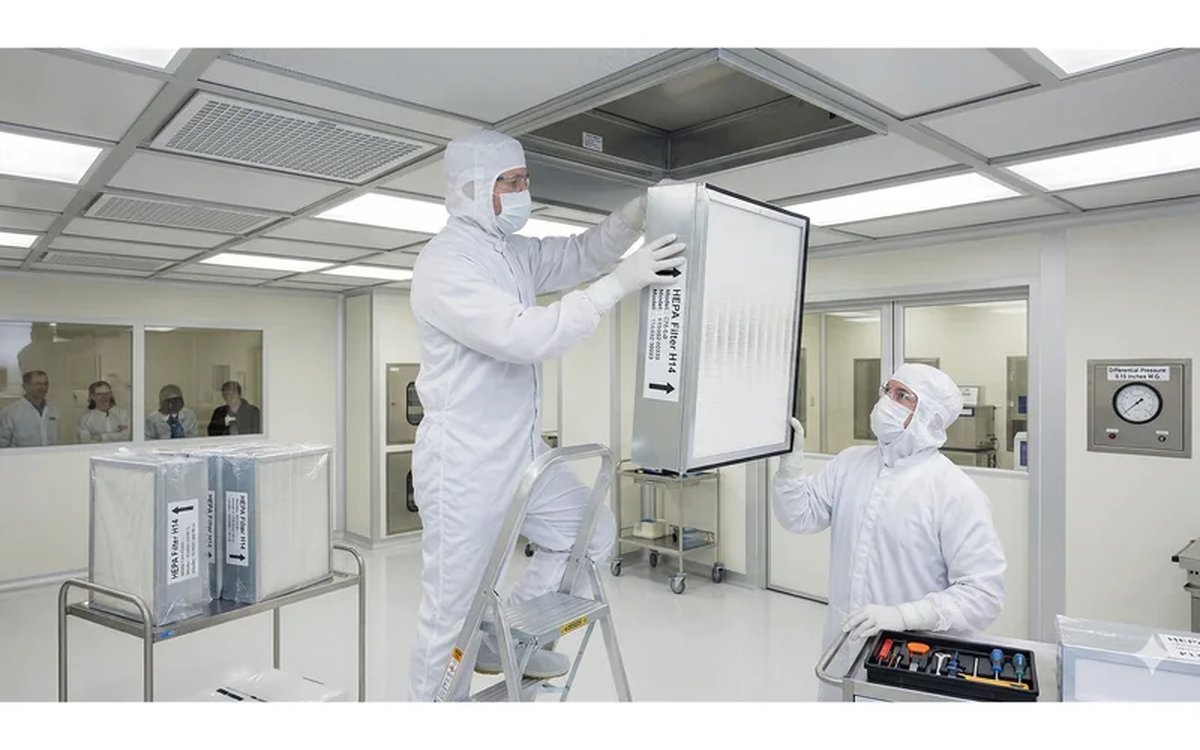
Hãy hình dung hệ thống điều hòa của tòa nhà văn phòng nơi bạn làm việc, ngoài việc lọc PM2.5 còn tiện thể hút CO₂ ra khỏi không khí.
Đây không phải khoa học viễn tưởng. Nghiên cứu đột phá công bố trên Science Advances tháng 10/2025 đã trình diễn đúng điều này.
Màng lọc này được làm ra thế nào?
Sợi nano carbon (Carbon Nanofiber, CNF) làm vật liệu nền, bề mặt phủ polymer polyethyleneimine (PEI) đóng vai trò chất hấp phụ CO₂.
Hấp phụ → phản ứng → tái sinh
Biểu đồ 1: Hóa học bắt CO₂ trong lọc DAC phân tán
Sợi nano carbon + PEI amine → bắt CO₂ → tái sinh bằng nhiệt nhẹ
Hấp thụ
Khí thông gió đi qua màng
Phản ứng
Amine (-NH₂) phản ứng với CO₂
Tái sinh
80–100 °C nhả CO₂ tinh khiết
Nguồn: Science Advances 10/2025. LCA: 92.1 % hiệu suất, 209–668 USD/tấn.
Bước một: hấp phụ Khi hệ thống thông gió tòa nhà vận hành, không khí tự nhiên đi qua màng lọc. CO₂ trong không khí (nồng độ khoảng 420 ppm) tiếp xúc với lớp phủ PEI.
Bước hai: phản ứng hóa học Nhóm amin (-NH₂) trên bề mặt PEI phản ứng hóa học với CO₂, tạo thành carbamate:
R-NH₂ + CO₂ → R-NH-COO⁻
Đây là hấp phụ hóa học (không phải hấp phụ vật lý), năng lượng liên kết mạnh hơn lực van der Waals hơn 10 lần, CO₂ bị khóa chặt trên màng lọc.
Bước ba: tái sinh Khi màng lọc bão hòa, gia nhiệt tới 80–100 °C, carbamate phân hủy và giải phóng CO₂ tinh khiết. Lượng CO₂ giải phóng có thể tiếp tục được:
- ▸Lưu trữ vào tầng đá ngầm (carbon sequestration)
- ▸Dùng để tổng hợp nhiên liệu lỏng, nguyên liệu nhựa
- ▸Cung cấp cho ngành CO₂ cấp thực phẩm
Màng lọc sau khi tái sinh có thể tiếp tục thu giữ CO₂, sử dụng tuần hoàn.
Con số then chốt: rốt cuộc giảm được bao nhiêu carbon?
Biểu đồ 2: Số liệu LCA chính của công nghệ lọc DAC
Công nghệ này thực sự giảm bao nhiêu CO₂? Giá bao nhiêu?
Nguồn: Science Advances 10/2025.
Nhóm nghiên cứu đã thực hiện đánh giá vòng đời (Life Cycle Assessment, LCA) đầy đủ, kết quả:
Hiệu suất loại bỏ carbon ròng 92,1 %
Nghĩa là cứ thu giữ 1 tấn CO₂ thì toàn hệ thống (bao gồm sản xuất, vận chuyển, năng lượng tái sinh) chỉ phát sinh 0,079 tấn phát thải carbon.
Điều đó có nghĩa gì? Để so sánh, một cây xanh hấp thụ khoảng 21 kg CO₂ mỗi năm — phải mất 50 cây trong một năm mới bù được lượng phát thải một năm của một chiếc xe chở khách. Màng lọc DAC trong hệ thống thông gió tòa nhà, với thiết bị chiếm diện tích cỡ một tầng, có thể vận hành liên tục 24 giờ.
209–668 USD mỗi tấn
Con số này đắt hơn các cơ sở DAC tập trung cấp công nghiệp (như chi phí của Climeworks Thụy Sĩ khoảng 100–300 USD/tấn).
Vậy lợi thế nằm ở đâu? DAC phân tán không cần đất riêng, cơ sở riêng, nguồn điện riêng. Nó tích hợp vào tòa nhà sẵn có, tận dụng luồng gió thông gió sẵn có, dư địa giảm chi phí nằm ở việc "dùng chung hạ tầng".
Tiềm năng toàn cầu 596 triệu tấn mỗi năm
Đây là giới hạn lý thuyết trong kịch bản "triển khai quy mô lớn trên các tòa nhà toàn cầu". Để đối chiếu: tổng phát thải CO₂ toàn cầu mỗi năm khoảng 37 tỷ tấn. 596 triệu tấn tương đương 1,6 % lượng phát thải hằng năm.
Nghe có vẻ không nhiều? Nhưng đó là đóng góp của một công nghệ đơn lẻ. Mục tiêu khí hậu cần rất nhiều mảnh 1,6 % như vậy cộng dồn lại.
Khác biệt bản chất so với màng lọc không khí truyền thống là gì?
Vai trò của màng lọc chuyển từ "bị động" sang "chủ động"
Màng lọc truyền thống: hạt chạm vào vật liệu lọc → bị giữ lại. Quá trình vật lý thuần túy, bản thân màng lọc không thay đổi.
Màng lọc DAC: phân tử CO₂ → phản ứng hóa học với PEI → sinh ra hợp chất mới → giải phóng khi tái sinh. Màng lọc chủ động tham gia vào chu trình hóa học, không chỉ là bộ phận lọc mà còn là lò phản ứng hóa học.
Màng lọc từ "vật tư tiêu hao" thành "thiết bị"
Màng lọc truyền thống: dùng tới bão hòa → thay mới → màng lọc cũ đi vào bãi chôn lấp.
Màng lọc DAC: bão hòa → gia nhiệt tái sinh → dùng tiếp. Bản thân màng lọc có thể vận hành 5–10 năm thay vì 5–10 tháng.
Điều này nghĩa là mô hình mua sắm sẽ thay đổi: không còn là mua vật tư kiểu "mỗi năm bao nhiêu tấm", mà là đầu tư thiết bị kiểu "mỗi vài năm một bộ".
Đánh giá thẳng thắn: còn cách thương mại hóa bao xa?
Bài báo nghiên cứu đã chứng minh nguyên lý khả thi, con số LCA hợp lý, nhưng vẫn còn khoảng cách tới việc thực sự triển khai lên từng tòa nhà:
Về mặt kỹ thuật
- ▸Độ ổn định dài hạn còn cần kiểm chứng (chu kỳ 5–10 năm)
- ▸Biến động hiệu suất khi độ ẩm cao, khi có đồng thời chất ô nhiễm
- ▸Khác biệt biểu hiện giữa các đới khí hậu
Về mặt kinh tế
- ▸Chi phí 209–668 USD/tấn còn dư địa giảm không?
- ▸Vì sao chủ tòa nhà lại muốn lắp? (định giá carbon, khuyến khích pháp lý)
- ▸Năng lượng cho quá trình tái sinh lấy từ đâu? (nếu dựa vào nhiên liệu hóa thạch thì lợi ích carbon bị chiết khấu)
Về mặt chính sách
- ▸CO₂ thu giữ được xử lý thế nào? Lưu trữ phải có hạ tầng mới có ý nghĩa
- ▸Cơ chế thị trường tín chỉ carbon có công nhận đóng góp giảm phát thải của DAC phân tán hay không
Ý nghĩa với ngành màng lọc
Thứ nhất, định nghĩa về màng lọc đang mở rộng. Trước đây màng lọc = bộ phận lọc, tương lai màng lọc có thể = lò phản ứng hóa học đa chức năng.
Thứ hai, quy cách mua sắm "công trình xanh" có thể đưa vào năng lực DAC. Hãy hình dung tương lai hạng mục cộng điểm của chứng nhận LEED hay WELL là "hệ thống thông gió đã tích hợp màng lọc DAC".
Thứ ba, chuỗi cung ứng sẽ thay đổi. Sợi nano carbon, PEI, chất xúc tác quang, kim loại kháng khuẩn — những vật liệu trước đây không liên quan gì tới màng lọc không khí sẽ dần bước vào chuỗi cung ứng.
Ý nghĩa thực sự của công nghệ này không chỉ là "một tấm màng lọc biết bắt CO₂", mà là màng lọc với tư cách một loại vật liệu có thể tiến hóa từ môi chất lọc bị động thành vật liệu chức năng chủ động. Vài năm tới có thể sẽ thấy những công nghệ theo mạch tư duy tương tự: màng lọc hấp phụ formaldehyde, màng lọc phân hủy virus, màng lọc tạo ozone (cùng một môi chất làm nhiều việc).
Bài báo này trên Science Advances, có lẽ chỉ mới là khởi đầu.