Màng lọc mới khi xuất xưởng thì sạch, vậy màng lọc cũ tích lũy những gì bên trong?
>
Ở phòng sạch thông thường — bụi, sợi, vảy da. Xử lý như rác thường.
Ở phòng thí nghiệm sinh học BSL-4 — virus Ebola, bệnh than. Một khi phát tán = sự kiện đại dịch.
Ở cơ sở hạt nhân — cesium-137, cobalt-60 phóng xạ. Một khi phát tán = sự cố bức xạ.
Các địa điểm khác nhau có nhu cầu kỹ thuật thay màng lọc hoàn toàn khác nhau.
Lý do BIBO tồn tại
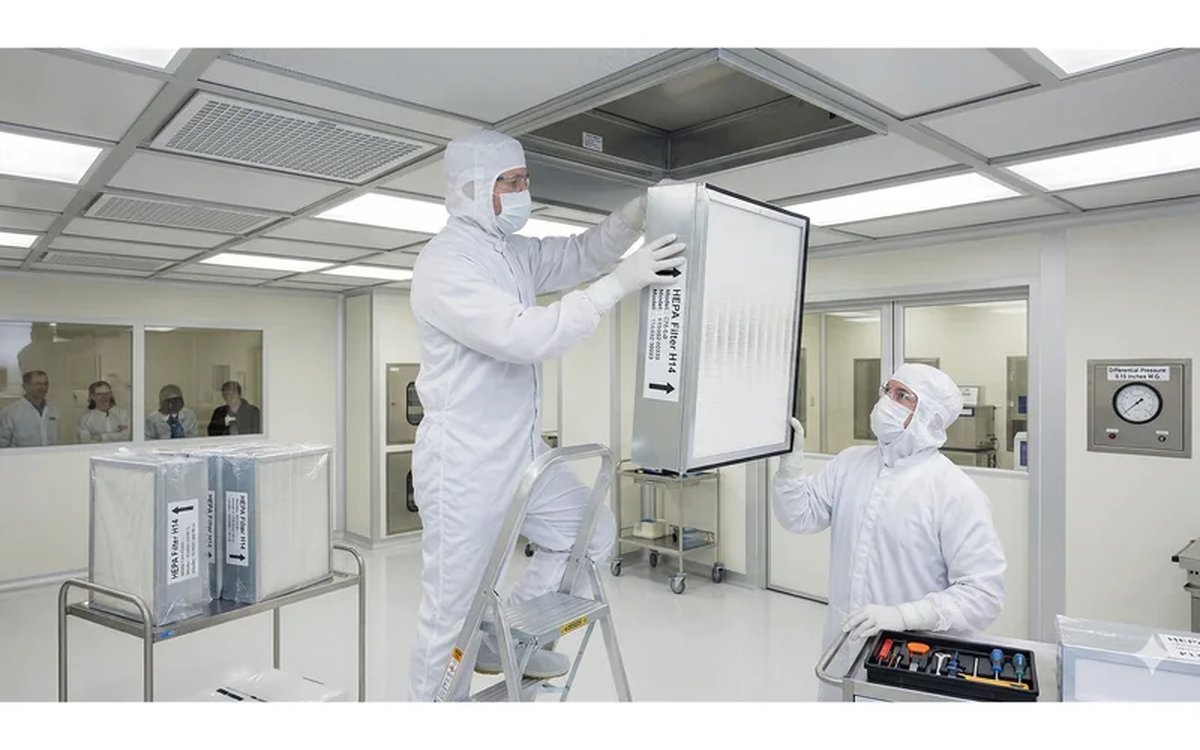
Cách thay HEPA thông thường là: ngắt luồng khí → tháo màng lọc cũ → lắp cái mới. Trong quá trình đó, màng lọc cũ sẽ tiếp xúc với người thao tác và không khí môi trường.
Ở những nơi nguy hại thì không thể làm vậy:
- ▸Rủi ro phơi nhiễm cho người thao tác — hít phải chất nguy hại
- ▸Rủi ro ô nhiễm môi trường — chất nguy hại phát tán sang các khu vực khác
- ▸Yêu cầu pháp lý — BSL-3/4, cơ sở hạt nhân, HPAPI dược phẩm đều có quy định nghiêm ngặt
Ý tưởng cốt lõi của BIBO (Bag-In / Bag-Out): màng lọc cũ từ lúc tháo ra tới lúc thải bỏ, toàn bộ đều nằm trong túi kín, chưa từng phơi ra môi trường bên ngoài.
Cơ cấu được thiết kế thế nào?
Chi tiết then chốt: gờ bích + vòng túi
Bên ngoài khoang chứa màng lọc (Housing) có một vòng gờ bích, trông giống một vòng nhô hình chữ U ngược. Túi được lồng vào vòng này, tạo thành mối kín khí.
- ▸Túi cũ — lồng trên gờ bích, khi tháo màng lọc thì kéo màng lọc cũ vào trong túi
- ▸Túi mới — cùng với màng lọc mới, được lồng sẵn lên cùng gờ bích đó
Tại thời điểm thay thế, túi cũ và túi mới cách ly nhau qua gờ bích, màng lọc nhiễm bẩn chưa bao giờ tiếp xúc trực tiếp với không khí bên ngoài.
Cơ chế niêm phong khử khuẩn
Để đảm bảo túi cũ "đóng kín vĩnh viễn", dùng dây buộc + hàn nhiệt làm hai lớp bảo hiểm:
- 1Dùng dây buộc nylon thắt hai đường trên túi (cách nhau 5 cm)
- 2Ở giữa dùng máy hàn nhiệt hàn kín (tương tự hàn miệng bao thực phẩm)
- 3Rồi cắt đứt ở chính giữa
Túi cũ được đóng kín ba lớp bởi "hàn nhiệt + hai đường dây buộc", trên đường vận chuyển tới lò đốt / hấp tiệt trùng áp lực cao tuyệt đối không rò rỉ.
Sáu bước thao tác chuẩn
Biểu đồ 1: Sáu bước thay BIBO
Lọc nhiễm bẩn không bao giờ lộ ra ngoài — toàn bộ thao tác trong túi
Vỏ có "vành bích + vòng túi"—túi cũ treo ngoài bích để rút lọc cũ; túi mới trùm trước khi lắp.
Toàn bộ 2–3 người × 45–90 phút.
Những lỗi thao tác thường gặp
- 1Không kiểm tra túi thủng — trước khi lồng túi mới phải kiểm tra bằng mắt, lỗ thủng chính là đường phát tán chất nguy hại
- 2Dây buộc thắt quá lỏng — dây buộc phải đủ chặt để ép dẹt túi, giữa hai đường thắt chừa khoảng trống để hàn nhiệt
- 3Hàn nhiệt không trọn vẹn — máy hàn phải ép đủ toàn bộ chiều rộng túi, không được chỉ một đoạn nhỏ ở giữa
- 4Khi kéo túi cũ ra chạm vào mặt ngoài vỏ khoang — có thể mang chất ô nhiễm còn sót ở mặt trong vỏ khoang ra bên ngoài
- 5Không bôi mỡ làm kín lên gờ bích trước khi lồng túi mới — giữa vòng túi và gờ bích cần có chất hỗ trợ làm kín
Thử nghiệm nghiệm thu PAO: thay xong BIBO, làm sao xác nhận thực sự không rò?
Bước cuối trong sáu bước là "thử nghiệm nghiệm thu", và ở những nơi nguy hại bước này không được bỏ, cũng không được chỉ nhìn chênh áp. Lý do là việc thay BIBO về bản chất là một thao tác mù qua lớp túi — người thao tác không nhìn thấy mặt làm kín của màng lọc, khung kín của màng lọc mới hoàn toàn dựa vào cảm giác tay để đẩy vào, dựa vào cơ cấu để ép chặt. Đây chính là khâu dễ phát sinh rò rỉ do lắp đặt nhất.
HEPA của phòng sạch thông thường bị rò thì hậu quả là độ sạch không đạt, sản phẩm phải hủy; màng lọc của cơ sở BIBO bị rò thì thứ lọt ra hạ lưu là virus, hạt phóng xạ, bụi thuốc chống ung thư — hậu quả hoàn toàn khác. Vì vậy thay xong nhất định phải kiểm chứng "từng tấm, tại vị trí".
Vì sao chênh áp bình thường vẫn phải làm PAO?
Chênh áp (ΔP) chỉ cho bạn biết "luồng khí có đi qua màng lọc hay không", không đo ra được lỗ kim. Không khí sẽ đi theo đường ít trở lực nhất: một lỗ kim 5 mm² có thể khiến tỷ lệ xuyên thấu cục bộ vọt lên hàng chục lần giá trị tổng thể, nhưng khi trải đều lên chênh áp của cả tấm màng lọc thì gần như không thấy thay đổi. Muốn bắt rò rỉ cục bộ, chỉ có thể dựa vào thử nghiệm quét PAO.
PAO (Poly-Alpha Olefin) là khí dung dầu nhân tạo, cỡ hạt trung vị được kiểm soát ở 0,3 μm — gần với cỡ hạt MPPS mà HEPA khó chặn nhất ("gót chân Achilles" của màng lọc). Dùng cỡ hạt khó chặn nhất để thử thách màng lọc, qua được là thực sự qua được.
Biểu đồ 1: Ba bước thử PAO Scan
Phát aerosol thượng lưu → đo nền → quét mặt hạ lưu
Phát aerosol PAO
Laskin hoặc máy nhiệt, MMD ~0.3 μm
Đo nền C₁
OPC hoặc photometer
Quét C₂
Đầu dò quét mặt hạ lưu kiểu S
EN 1822-4 / IEST-RP-CC034 yêu cầu scan test cho H14+.
Cách làm là bơm PAO ở thượng lưu làm "khí dung thử thách", ở hạ lưu dùng đầu dò quét theo đường chữ S với tốc độ ≤ 50 mm/s, quét từng điểm trên toàn bộ mặt hạ lưu của màng lọc và bốn phía khung kín, đo tỷ lệ xuyên thấu cục bộ tại từng điểm. Quy trình ba bước đầy đủ, ngưỡng phán định và các dạng Fail thường gặp, xem phân tích đầy đủ về thử nghiệm PAO.
Khác biệt then chốt của BIBO: thử nghiệm tại vị trí (In-situ), không phải thử nghiệm xuất xưởng
Scan Test của nhà máy màng lọc chỉ đo "bản thân tấm màng lọc". Sau khi thay BIBO, thứ cần kiểm chứng là cả bộ "màng lọc + khung kín + giao diện khoang" lắp vào có rò hay không — điều này chỉ có thể làm tại hiện trường cơ sở, khi màng lọc đã lắp trên khoang, gọi là thử nghiệm quét tại vị trí (In-situ Scan Test). Khác biệt giữa hai loại:
| Hạng mục so sánh | Quét xuất xưởng HEPA thông thường | Quét tại vị trí BIBO (In-situ) |
|---|---|---|
| Địa điểm thử nghiệm | Bàn thử nghiệm nhà máy màng lọc | Hiện trường cơ sở, lắp trên khoang |
| Đối tượng thử nghiệm | Bản thân tấm màng lọc | Màng lọc + khung kín + giao diện khoang |
| Bơm thượng lưu | Ống gió thượng lưu của bàn thử | Cổng bơm PAO chừa sẵn trên khoang |
| Lấy mẫu hạ lưu | Quét mặt hạ lưu để hở | Qua cổng quét / đầu dò lấy mẫu của khoang |
| Bảo vệ chống ô nhiễm | Không cần | Duy trì áp âm khoang suốt quá trình, tránh chính phép thử gây phát tán |
Phán định và xử lý
Phán định áp dụng theo hai ngưỡng của EN 1822-4 / ISO 29463: hiệu suất tổng thể đạt chuẩn, và tỷ lệ xuyên thấu cục bộ tại bất kỳ điểm đơn lẻ nào ≤ 5 lần giá trị tổng thể (từ H14 trở lên). Chỉ cần một điểm vượt ngưỡng là Fail.
Ưu điểm của BIBO chính ở đây — nếu phát hiện rò rỉ, do màng lọc vẫn được niêm kín trong khoang nên có thể đặt lại vị trí (reseat), bổ sung mỡ làm kín, hoặc thay cả tấm mà không làm ô nhiễm lan ra, rồi đo lại tới khi Pass. Sau khi xác nhận Pass và lưu giữ báo cáo quét từng tấm, mới giải trừ áp âm và khôi phục vận hành.
Tình huống bắt buộc dùng: bản thân màng lọc đã trở thành chất nguy hại
Biểu đồ 2: Các lĩnh vực cần BIBO
Phòng sạch thông thường không cần BIBO
Nguyên tắc: nếu lọc cũ không thể bỏ rác thường mà phải đi quy trình chất thải nguy hại, cần BIBO.
Nguyên tắc phán đoán
Nếu màng lọc sau khi tháo ra không thể xử lý như rác thường — bạn cần BIBO.
Những nơi thông thường có thể thay HEPA theo cách phổ thông. BIBO chỉ dùng trong các trường hợp sau:
- ▸Phòng thí nghiệm sinh học BSL-3 / BSL-4
- ▸Cơ sở hạt nhân / phòng thí nghiệm bức xạ
- ▸Nhà máy hoạt chất dược có hoạt tính cao (HPAPI) — thuốc chống ung thư, hormone v.v.
- ▸Tác nhân chiến tranh hóa học / cơ sở quân sự
- ▸Nhà máy liệu pháp gen / vắc-xin virus sống
- ▸Công đoạn hóa chất cực độc
Chi phí và thời gian
Chi phí của hệ thống BIBO:
- ▸Chi phí vỏ khoang (Housing) — cao hơn FFU thông thường 3–5 lần (cần gờ bích, vòng túi, cơ cấu kín khí)
- ▸Chi phí vật tư tiêu hao — túi chuyên dụng đắt hơn túi nhựa thông thường
- ▸Thời gian thao tác — thay HEPA thông thường mất 15 phút, BIBO cần 45–90 phút
- ▸Chi phí nhân sự — cần 2–3 người phối hợp + đồ bảo hộ toàn thân
Vì sao đắt vẫn phải dùng? Vì cái giá của một sự cố ô nhiễm — khủng hoảng y tế công cộng, cơ sở ngừng hoạt động, trách nhiệm pháp lý — cao hơn rất nhiều toàn bộ chi phí tích lũy của BIBO.
Bảo hộ người thao tác: BIBO là lớp thứ hai, không phải lớp duy nhất
Thiết kế BIBO nhằm giảm chứ không loại bỏ rủi ro. Người thao tác vẫn cần:
- ▸Đồ bảo hộ toàn thân Tyvek (dùng một lần)
- ▸PAPR (Powered Air-Purifying Respirator) mặt nạ thở áp dương
- ▸Găng tay hai lớp (lớp trong latex + lớp ngoài nitrile)
- ▸Kính bảo hộ + tấm che mặt
- ▸Tắm khử nhiễm ngay sau khi thao tác
Xác suất túi BIBO bị rách không phải bằng không. Lớp bảo vệ thứ hai chính là PPE của bản thân người thao tác.
BIBO không phải là "cách thay HEPA tốt hơn", mà là "kỹ thuật chuyên biệt cho trường hợp bản thân màng lọc là chất nguy hại". Phòng sạch thông thường dùng BIBO là lãng phí; nơi nguy hại không dùng BIBO là thảm họa. Chọn đúng tình huống thì khoản đầu tư mới có ý nghĩa.