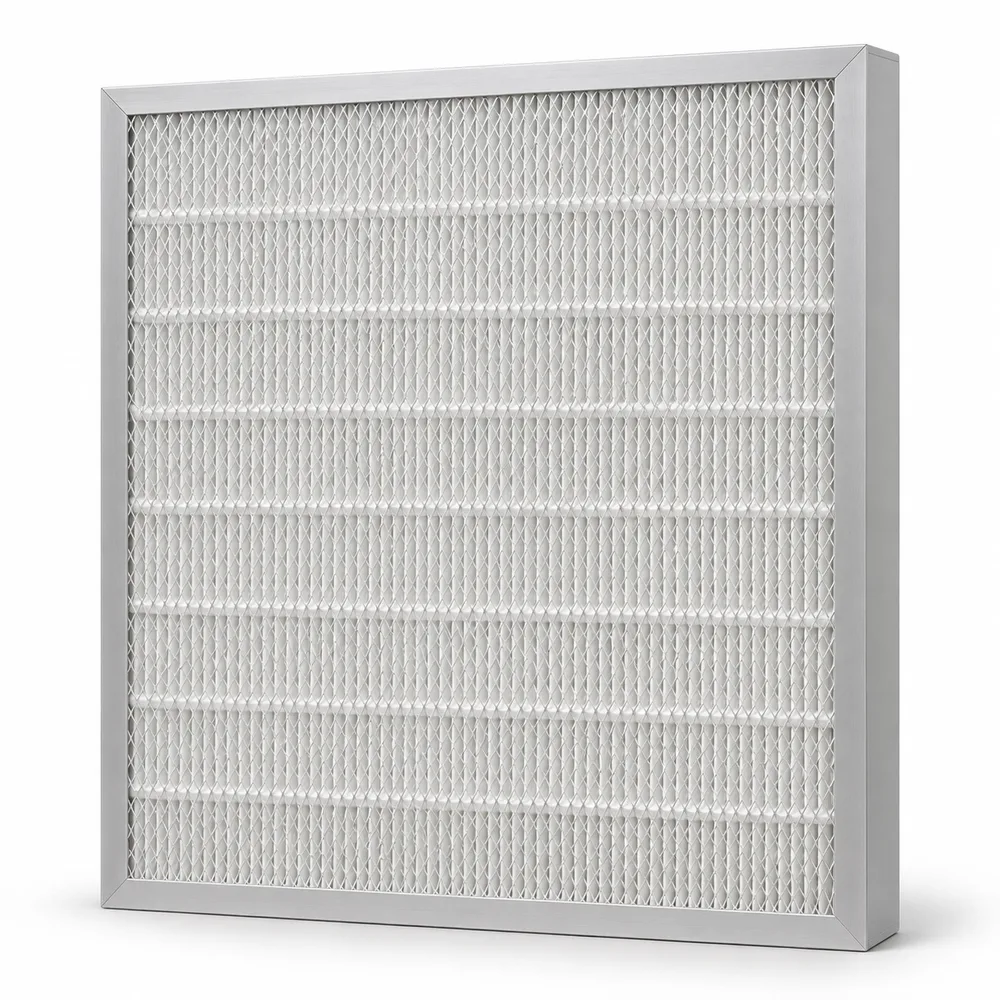
Separatorless High-Temperature Filter
Product Overview
Features & Specifications



Detailed Description
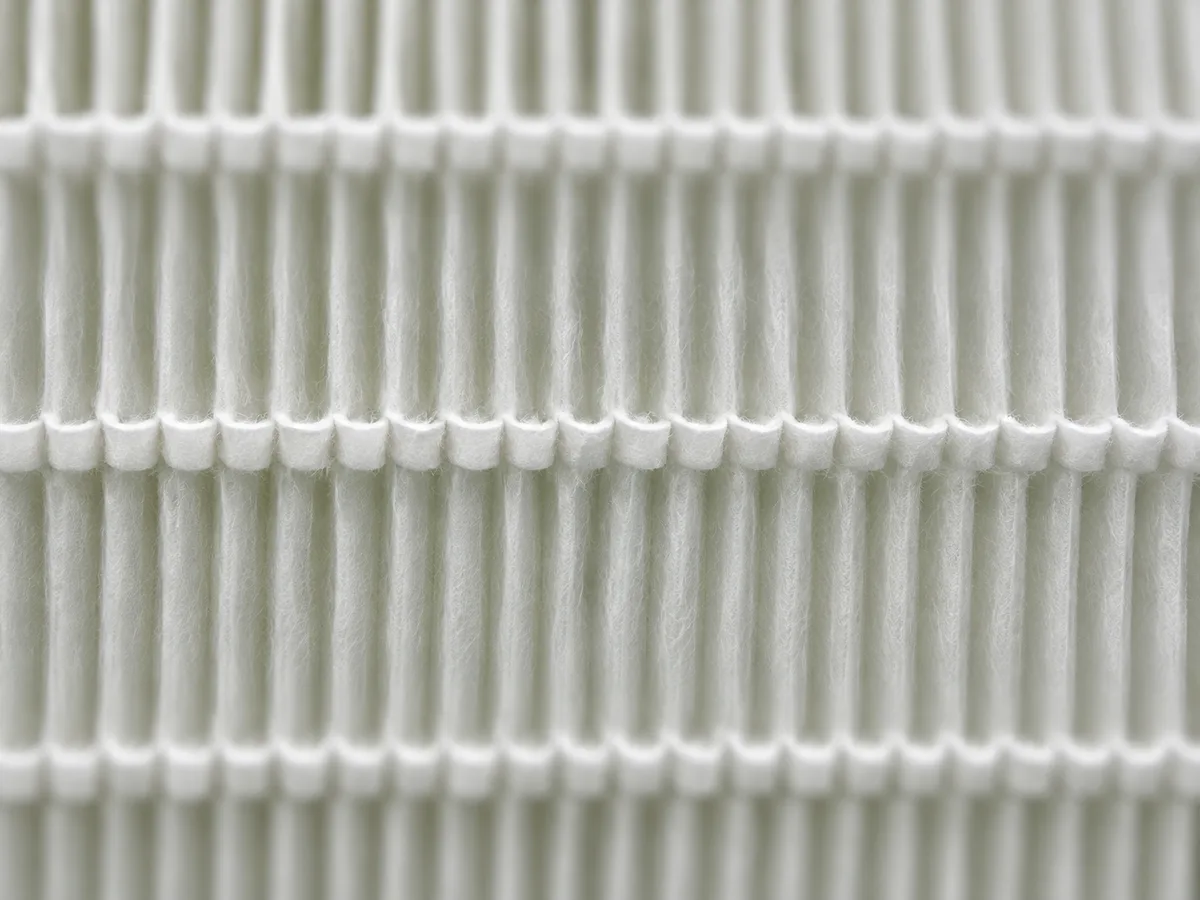
Why does a separatorless high-temperature filter avoid hot-melt glue?
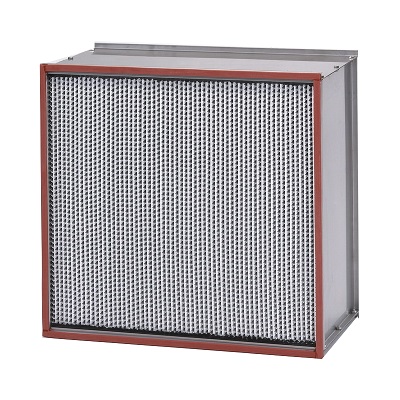
Hot-melt glue is a plastic that softens when heated, which is why an ordinary mini-pleat HEPA filter is limited to 70°C continuous use. Above that, the glue lines holding the pleats soften, the pleats stick together, the effective filter area shrinks and pressure drop rises. We use Japanese-made high-temperature glass fiber as the spacer — the same material as the filter paper — which does not melt or flow in the heat.How pleats are held: hot-melt vs Japanese glass fiber
Pleats seen from the face of the filter (schematic)
Hot-melt glue is a thermoplastic that softens again when heated; the glass-fiber spacers are the same material as the filter paper. Schematic, not to scale.
| Comparison | Ordinary mini-pleat HEPA | Separatorless high-temperature filter |
|---|---|---|
| Pleat spacing held by | Hot-melt glue lines | Japanese-made high-temperature glass fiber |
| When heated | Glue softens; pleats may stick together | Glass fiber does not melt; spacing holds |
| Continuous use limit | 70°C | 250°C |
| Suited to | Cleanroom outlets, FFUs | Clean ovens, hot-air circulation ovens, high-temperature drying |
Separatorless vs separator-type high-temperature filters: which to choose?
Both can run at 250°C; the difference is depth and airflow. The separator type uses aluminum separators to hold deep pleats open, 150 or 290 mm deep, and moves more air through the same opening; the separatorless type is only 70 mm deep, for oven interiors, shallow ducts or where weight matters.| Comparison | Separatorless high-temperature filter | Separator-type high-temperature HEPA |
|---|---|---|
| Depth | 70 mm | 150 or 290 mm |
| Pleat spacing held by | Japanese-made high-temperature glass fiber | Aluminum separators |
| 610×610 rated airflow | 603 m³/h (0.45 m/s, about 123 Pa) | 610×610×290: 1956 m³/h (32.6 CMM, initial 250 Pa) |
| Suited to | Limited depth, oven interiors, light weight | Enough depth, high airflow |
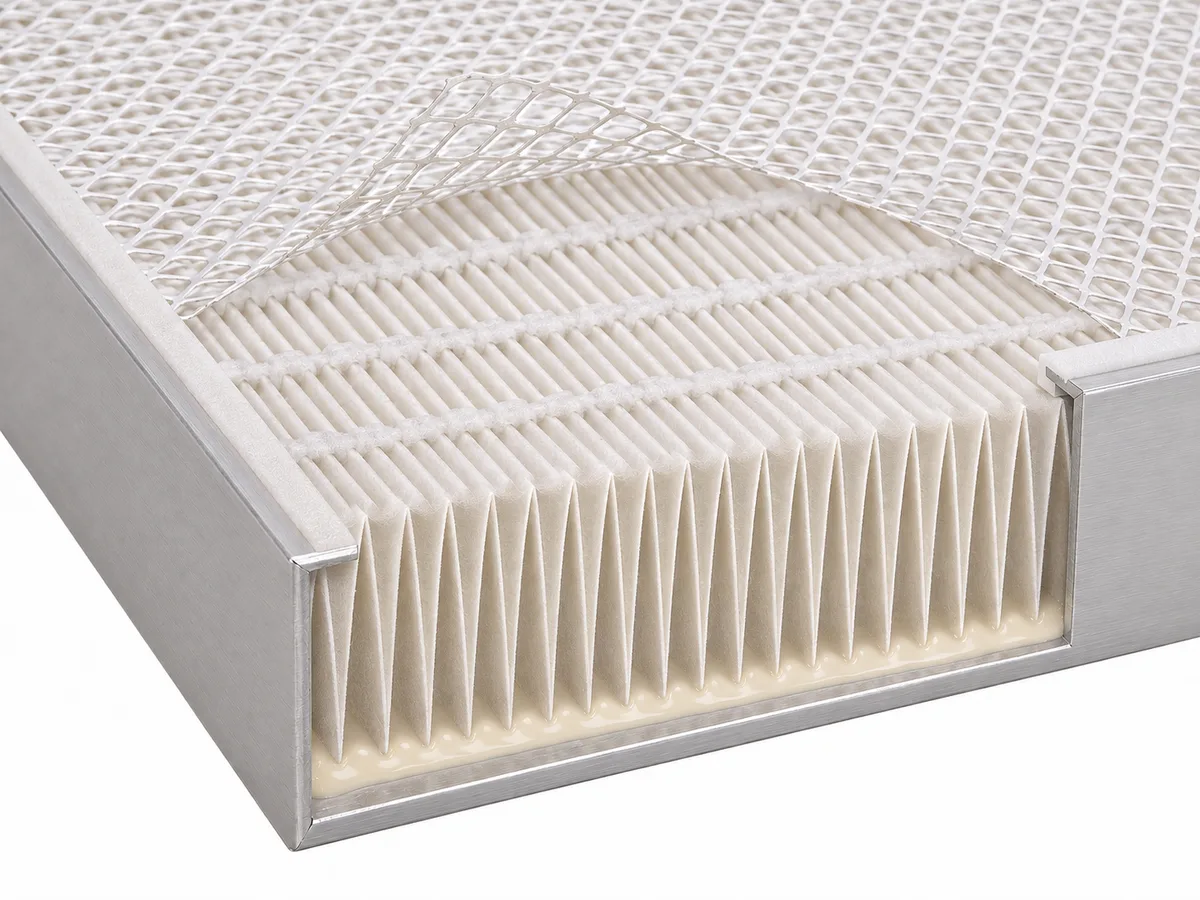
Separatorless high-temperature filter specifications and rated airflow
Standard depth is 70 mm, with the frame size made to fit the equipment; rated airflow is frame area × 0.45 m/s face velocity. The airflow below is "actual volume at operating temperature" — hot air of the same mass takes up more volume, so see the next section when selecting.| Item | Specification |
|---|---|
| Models | BS-HTM250-97 (99.97%), BS-HTM250-99 (99.99%) |
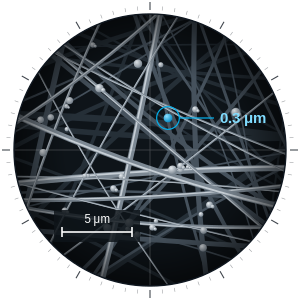
| Efficiency | 99.97% or 99.99% @0.3 μm |
| Maximum operating temperature | 250°C |
| Depth | 70 mm |
| Frame and guard | Aluminum frame, diamond expanded-metal guard on both faces |
| Sealant and gasket | High-temperature materials, specified on selection |
| Initial pressure drop | 99.99% about 123 Pa (room temperature, 0.45 m/s) |
| Frame size (mm) | Rated airflow (0.45 m/s) |
|---|---|
| 570×570 | 526 m³/h |
| 570×1170 | 1080 m³/h |
| 610×610 | 603 m³/h |
| 610×1220 | 1206 m³/h |
How much does pressure drop rise at 250°C?
It rises, for two reasons: hot air is more viscous, so the same velocity meets more resistance in the filter paper; and hot air expands, so the same amount of air takes more volume and moves faster. At 250°C, viscosity alone makes pressure drop about 1.5 times the room-temperature value; if airflow was specified at room temperature, expansion adds to that and pressure drop becomes about 2.7 times.The hotter the air, the higher the pressure drop
99.99% 70 mm initial pressure drop estimate (123 Pa at room temp, 0.45 m/s)
Estimated from air viscosity (Sutherland) and thermal expansion; the shipping specification governs.
| Temperature | Actual face velocity kept at 0.45 m/s | Airflow specified at room temperature (air expands) |
|---|---|---|
| 20°C | 123 Pa | 123 Pa |
| 100°C | 147 Pa | 188 Pa |
| 150°C | 161 Pa | 233 Pa |
| 200°C | 174 Pa | 282 Pa |
| 250°C | 187 Pa | 333 Pa |
How to choose a high-temperature filter by temperature
Start with the equipment's continuous and peak temperatures, then pick the grade. Up to 250°C with shallow space, use the separatorless type; up to 250°C with high airflow, use the separator type; above that, use NIPPON MUKI 350°C or 500°C high-temperature filters.High-temperature filter grades
Continuous use limit
Temperatures from each product page; this product and the separator type are both 250°C and differ in depth and airflow.
Where separatorless high-temperature filters are used
- Supply or return air filtration in clean ovens and hot-air circulation ovens - Baking and curing processes for displays (LCD/OLED) and semiconductors - Lithium battery electrode drying - Equipment that used an ordinary mini-pleat HEPA filter but now runs above 70°C
Frequently Asked Questions
Can I put an ordinary mini-pleat HEPA filter in an oven?
Not recommended. An ordinary mini-pleat HEPA filter fixes its pleat spacing with hot-melt glue and is limited to 70°C continuous use; hotter than that, the glue lines soften, the pleats stick together, pressure drop rises and filter area shrinks. For ovens use the separatorless high-temperature filter: the same thin 70 mm format, but the pleats are held by Japanese-made high-temperature glass fiber and it can run up to 250°C.
Separatorless and separator-type high-temperature filters are both 250°C — which should I choose?
It depends on depth and airflow. The separatorless type is only 70 mm deep; a 610×610 filter handles about 603 m³/h at 0.45 m/s. The separator type 610×610×290 is rated 1956 m³/h (32.6 CMM) but needs 290 mm of depth. Choose separatorless for oven interiors or shallow ducts, separator type where there is room and you need high airflow.
How much higher is pressure drop at 250°C than on the spec sheet?
Higher. Hot air is more viscous, so at the same 0.45 m/s the 99.99% filter goes from about 123 Pa at room temperature to 187 Pa; if airflow was specified at room temperature, the heated air expands and moves faster, reaching about 333 Pa. Size the fan with the hot pressure drop, and tell us whether your airflow figure is at room temperature or operating temperature.
What information do you need to quote a separatorless high-temperature filter?
Frame width × height × depth (mm), efficiency (99.97% or 99.99%), continuous and peak temperature, airflow (stating room or operating temperature), which face the gasket is on, and quantity. If you have the original filter, send photos of its label and both faces; above 250°C we will recommend the NIPPON MUKI 350°C or 500°C grades instead.
Selection References
Before ordering, verify the efficiency grade, media type, and whether the operating environment fits your requirements.