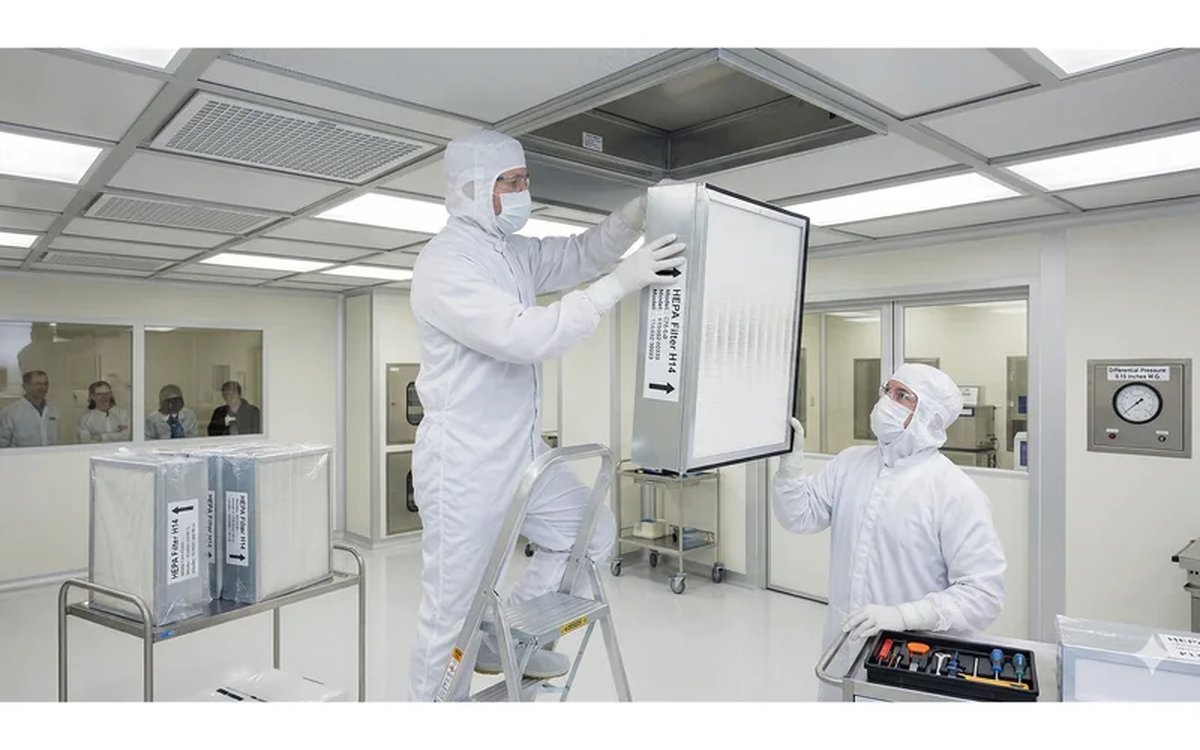
A customer asks "Does your filter have fire certification?" — but "fire certification" covers at least three major systems with completely different test methods and rating scales. Before answering, you need to know which one they mean.
Why Air Filters Need Fire Certification
Air filters sit inside ductwork with air flowing 24/7. If the filter itself is combustible, a fire effectively places a wind-fed fuel block inside the duct — flames will travel rapidly along the ductwork with devastating consequences.
Fire certification verifies:
- 1Combustibility — Does the filter burn when exposed to flame? How fast?
- 2Smoke generation — How much smoke is produced? (Smoke is the #1 killer in fires)
- 3Flame spread — Does flame travel along the filter surface?
The Three Systems at a Glance
| Item | FM 4910 | UL 900 | EN 13501-1 |
|---|---|---|---|
| Full name | FM Approvals Standard 4910 | Underwriters Laboratories 900 | European Standard 13501-1 |
| Authority | FM Global (USA) | UL (USA) | CEN (European Committee) |
| Primary market | Semiconductor, pharma (global) | North America | EU + UK |
| Test scope | Cleanroom materials | Air filters in HVAC systems | Construction products (incl. HVAC) |
| Core tests | Flame spread + smoke density + heat of combustion | Flame contact + sustained burning + smoke | Single Burning Item (SBI) |
| Rating | Pass / Fail | Class 1 (best) / Class 2 | A1–F (7 grades) |
FM 4910: The Gold Standard for Semiconductor Fabs
FM 4910, formally "Clean Room Materials Flammability Test Protocol," was created by FM Global. It targets cleanroom materials specifically — not all air filters.
Why Semiconductor Fabs Care About FM 4910
Semiconductor cleanrooms are packed with high-value equipment and chemicals, with ventilation running non-stop. A fire can cause:
- ▸Equipment losses in the hundreds of millions
- ▸Chemical acceleration from photoresists and solvents
- ▸Rapid spread driven by high-volume airflow
FM Global is one of the world's largest industrial insurers. Materials that pass FM 4910 can lower insurance premiums — making this a financial decision as much as a technical one.
What FM 4910 Tests
- 1Fire Propagation Index (FPI): Flame spread speed across the material surface
- 2Smoke Damage Index (SDI): Smoke density during combustion
- 3Heat of combustion: Total heat energy released
All three must fall below threshold values. No grading — just pass or fail.
Which Filters Pass FM 4910
- ▸Glass fiber media (inherently non-combustible) usually passes
- ▸Synthetic media (PP, PET) almost never passes without special flame-retardant treatment
- ▸Frame and sealant are also tested — the entire filter assembly must pass
UL 900: North America's HVAC Standard
UL 900, "Standard for Air Filter Units," is the fire standard for air filters in North American HVAC systems.
UL 900 Ratings
Class 1: Does not continue to burn or emit significant smoke when exposed to flame. The baseline for commercial buildings and industrial ventilation.
Class 2: Burns when exposed to flame, but burn rate and smoke are within limits. Typically allowed only where supplemental fire protection (sprinklers, smoke detectors) is present.
What UL 900 Tests
In a duct section at fixed airflow:
- 1A butane flame is applied to the filter surface
- 2Observation: does the filter sustain combustion?
- 3Duration of burning after flame removal
- 4Smoke density measurement
UL 900 vs FM 4910
| Difference | FM 4910 | UL 900 |
|---|---|---|
| Scope | Cleanroom materials | HVAC filter units |
| Stringency | Stricter (includes heat of combustion) | Less strict |
| Market | Semiconductor / pharma | Commercial / industrial HVAC |
| Cost | Higher | Lower |
In short: FM 4910 is the advanced version of UL 900. A filter that passes FM 4910 will always meet UL 900 Class 1; the reverse is not guaranteed.
EN 13501-1: EU Building Material Fire Classification
EN 13501-1 is the European standard for "fire classification of construction products and building elements." Air filters fall under "ventilation components."
EN 13501-1 Rating System
| Grade | Description | Performance |
|---|---|---|
| A1 | Non-combustible | No contribution to fire |
| A2 | Nearly non-combustible | Very limited combustible contribution |
| B | Very limited combustibility | Limited flame spread |
| C | Limited combustibility | Limited flame spread (slightly more than B) |
| D | Combustible (moderate) | Moderate flame spread |
| E | Combustible (high) | Significant flame spread |
| F | Not tested or failed | No declared fire performance |
Each grade adds two supplementary classifications:
- ▸s1/s2/s3: Smoke production (s1 = least)
- ▸d0/d1/d2: Flaming droplets (d0 = none)
Example: "B-s1, d0" = very limited combustibility, low smoke, no flaming droplets — an excellent rating.
EN 13501-1 Test Method
The primary test is the SBI (Single Burning Item): two test specimens placed in a standardized corner, heated by a 30 kW propane burner for 20 minutes, measuring:
- ▸Flame height
- ▸Total Heat Release (THR)
- ▸Smoke Growth Rate (SMOGRA)
- ▸Flaming droplets
Different Markets, Different Requirements
| Application | Recommended Certification | Minimum Level |
|---|---|---|
| Semiconductor fab cleanrooms | FM 4910 | Pass |
| US commercial buildings | UL 900 | Class 1 |
| EU commercial / industrial | EN 13501-1 | B-s1, d0 or higher |
| General industrial (Asia) | UL 900 or local equivalent | Class 1 |
| SE Asia semiconductor fabs | FM 4910 | Pass (insurer requirement) |
FAQ
Q: Will a glass-fiber HEPA always pass FM 4910?
Not necessarily. Glass fiber media is non-combustible, but a complete HEPA includes frame (aluminum, galvanized steel, stainless steel) and sealant (silicone, PU). If the sealant is combustible PU foam, the assembly may fail FM 4910.
Q: Can a UL 900 Class 2 filter be used in an office building?
Depends on building codes and insurance requirements. Most US codes require Class 1 for HVAC filters. Class 2 is typically accepted only in industrial facilities with supplemental fire protection.
Q: Is EN 13501-1 Grade D acceptable?
Grade D means "combustible (moderate)" — it burns and spreads flame at a moderate rate. For residential and commercial buildings, D is generally not accepted. Aim for at least Grade B.
Q: Can a single filter carry all three certifications?
Yes, but uncommon — the combined testing costs are significant. Manufacturers typically pick one or two based on target markets. Semiconductor suppliers go for FM 4910; European exporters go for EN 13501-1.
Q: Can synthetic-media filters (PP/PET) pass fire certification?
Possible with flame retardants. However, retardants may affect filtration efficiency or off-gas harmful substances — typically not accepted in cleanroom environments. This is why cleanroom high-efficiency filters almost exclusively use glass fiber.