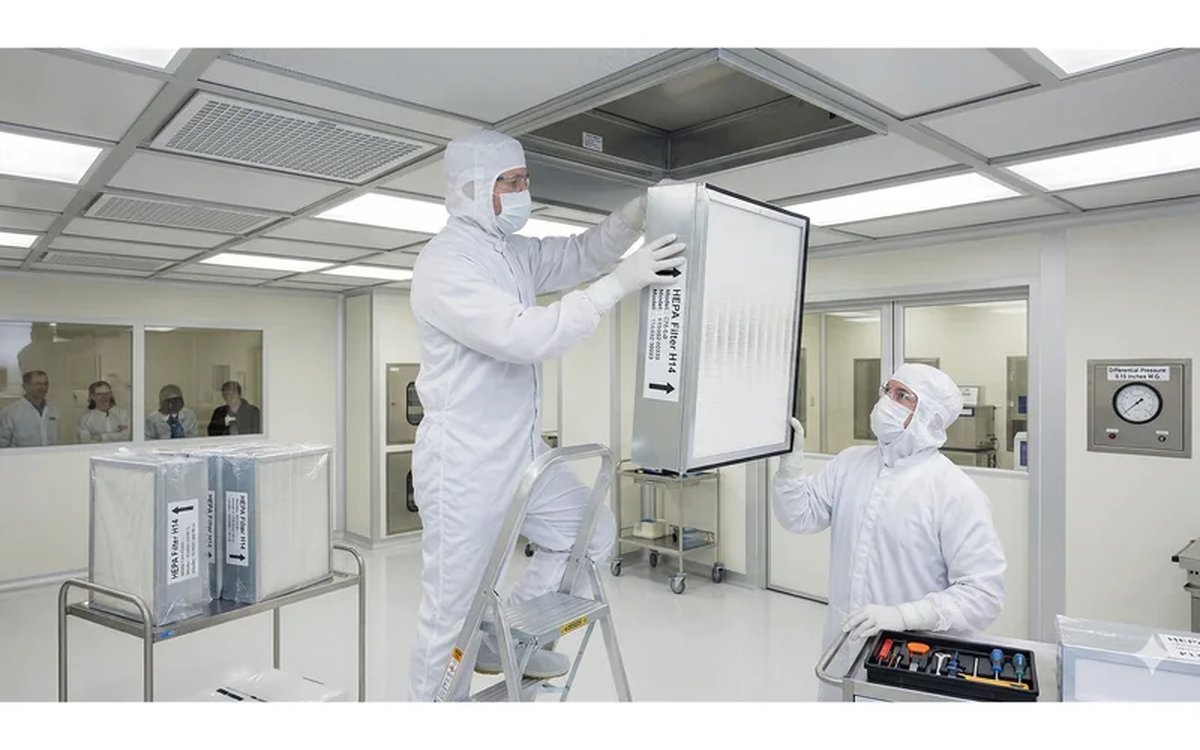
Đặt một tấm màng lọc không khí tiêu chuẩn vào lò sấy 150 °C, điều gì sẽ xảy ra? —— Chỉ trong vài giờ, vật liệu lọc chùng xuống, chất kết dính phân hủy, khung biến dạng. Màng lọc thông thường đã chạm giới hạn ngay ở 70–80 °C.
Nhưng lò khuếch tán bán dẫn cần 350 °C, lò sấy sơn 180–220 °C, khí thải lò đốt rác 500 °C+. Phải làm sao?
Ba nhóm vật liệu lọc chịu nhiệt độ cao —— mỗi nhóm một phạm vi ứng dụng
Biểu đồ 1: Dải nhiệt độ của các loại sợi lọc
Từ tiêu chuẩn đến gốm và kim loại
Giá trị là giới hạn vận hành liên tục. Khung và gioăng phải khớp.
Sợi thủy tinh chịu nhiệt (liên tục 350 °C, tức thời 400 °C)
Lựa chọn phổ biến và thực dụng nhất. Chi phí hợp lý, hiệu suất đạt tới cấp HEPA (H13 / H14).
Ứng dụng điển hình: quy trình khuếch tán bán dẫn, lò sấy sơn, hầm tiệt trùng nhiệt khô ngành dược, dây chuyền sơn ô tô.
Phụ kiện đi kèm: keo làm kín silicone + khung thép không gỉ 304 hoặc thép mạ kẽm.
Sợi gốm (chịu trên 600 °C)
Chỉ cân nhắc gốm khi sợi thủy tinh không trụ nổi. Chi phí cao hơn, hiệu suất thường nằm trong khoảng E10–H12 (thấp hơn một chút so với sợi thủy tinh chịu nhiệt).
Ứng dụng điển hình: lọc khí thải nhiệt độ cao ở lò đốt rác, xưởng đúc.
Sợi kim loại (chịu 800 °C, có thể rửa và tái sử dụng)
Được thiêu kết từ sợi thép không gỉ hoặc hợp kim gốc niken. Là vật liệu lọc chịu nhiệt độ cao duy nhất có thể rửa và tái sinh nhiều lần.
Ứng dụng điển hình: hóa chất khắc nghiệt, luyện kim, những nơi cần tháo rửa nhiều lần.
Khái niệm then chốt: khả năng chịu nhiệt thực tế = linh kiện yếu nhất
Đây là điểm bị bỏ qua nhiều nhất. Một tấm màng lọc chịu nhiệt độ cao không chỉ có vật liệu lọc, nó gồm bốn nhóm thành phần:
Biểu đồ 2: Bốn bộ phận quyết định giới hạn thật của lọc chịu nhiệt
Khả năng nhiệt = min(sợi lọc, gioăng, khung, chất kết dính)
| Bộ phận | Vật liệu | Liên tục tối đa | Ghi chú |
|---|---|---|---|
| Sợi lọc | TT chịu nhiệt / gốm | 350 / 600 °C | Xem biểu đồ 1 |
| Gioăng | Silicone | 250 °C | Quá thì cứng/nứt |
| Đệm | Đệm sợi gốm | 800 °C | Kiểm soát lực ép |
| Khung | 304 SS / thép mạ kẽm | 800 / 400 °C | Kẽm bay hơi >400 °C |
| Kết dính | Hữu cơ/vô cơ chịu nhiệt | 200 / 800 °C | Vô cơ ít phát khí |
Điểm yếu thường không phải sợi lọc.
- ▸Vật liệu lọc —— sợi thủy tinh chịu nhiệt 350 °C hoặc sợi gốm 600 °C
- ▸Gioăng keo làm kín —— silicone chỉ chịu được 250 °C
- ▸Đệm làm kín —— đệm sợi gốm chịu 800 °C (nhưng phải căn chuẩn lực ép)
- ▸Khung —— thép không gỉ 304 chịu 800 °C, thép mạ kẽm vượt quá 400 °C sẽ bay hơi kẽm
- ▸Chất kết dính —— loại hữu cơ chịu nhiệt 200 °C, loại vô cơ có thể lên tới 800 °C
Khả năng chịu nhiệt thực tế = min(tất cả các thành phần trên). Vật liệu lọc trụ được tới 500 °C cũng vô nghĩa —— keo silicone hỏng trước ở 250 °C là cả tấm màng lọc mất tác dụng.
Kiểu hỏng thường gặp nhất
Keo silicone lão hóa, hỏng sớm hơn vật liệu lọc. Ở nơi vận hành liên tục tại 220 °C, gioăng silicone tuy "không vượt nhiệt" nhưng về lâu dài sẽ dần cứng lại, nứt vỡ —— mất kín khí, không khí đi vòng qua quanh gioăng, hiệu suất màng lọc về không.
Cách xử lý: ứng dụng trên 250 °C phải đổi sang đệm sợi gốm thay cho gioăng silicone.
Năm việc phải xem cùng lúc khi chọn loại
1. Xác nhận nhiệt độ sử dụng thực tế (bao gồm tăng nhiệt bất thường)
Thông số ghi nhiệt độ vận hành liên tục, nhưng nhà máy đôi khi có hiện tượng tăng nhiệt bất thường —— quy trình mất kiểm soát, thiết bị đo hỏng, khởi động sấy nóng. Chọn loại phải tính tới các đỉnh này, đừng chỉ nhìn "bình thường bao nhiêu độ".
2. Hiệu ứng mỏi do chu kỳ nhiệt
Chu kỳ nóng lạnh lặp lại còn hại màng lọc hơn nhiệt độ cao liên tục. Vật liệu lọc, khung và keo làm kín có hệ số giãn nở nhiệt khác nhau, chu kỳ sẽ tích lũy ứng suất. Có màng lọc chạy liên tục ở 350 °C được nửa năm, nhưng ở nơi tăng giảm nhiệt mỗi ngày thì chỉ trụ được 3 tháng.
3. Chọn vật liệu làm kín tương thích với nhiệt độ
| Vật liệu làm kín | Nhiệt độ chịu liên tục | Ghi chú |
|---|---|---|
| Keo silicone | 250 °C | Thông dụng nhất, rẻ nhất |
| Cao su fluor (FKM) | 200 °C | Kháng hóa chất |
| Đệm sợi gốm | 800 °C | Cần lực ép, ưu tiên cho nhiệt độ cao |
| Đệm kim loại | 1000 °C+ | Nhiệt độ cực cao |
4. Vật liệu khung tương thích
- ▸Thép mạ kẽm → dưới 400 °C
- ▸Thép không gỉ 304 → cấp 800 °C
- ▸Thép không gỉ 316 → khi có khí ăn mòn
- ▸Nhôm → dưới 150 °C, nơi nhiệt độ cao tuyệt đối không dùng
5. Ngân sách tổn thất áp và tương thích với quạt
Màng lọc chịu nhiệt độ cao có tổn thất áp ban đầu thường cao hơn màng lọc thường 30–50 % (do mật độ vật liệu lọc cao hơn). Khi chọn quạt phải chừa sẵn khoảng này.
Ba hiểu lầm thường gặp trong thực tế
Hiểu lầm 1: "Thông số ghi chịu 350 °C, vậy tôi dùng ở 300 °C là không vấn đề"
Chưa chắc. Phải xem nhà sản xuất ghi chịu nhiệt liên tục hay tức thời. Loại thứ nhất là giới hạn có thể vận hành dài hạn, loại thứ hai có khi chỉ trụ được vài phút. Chọn loại phải nhìn giá trị liên tục, không phải giá trị đỉnh.
Hiểu lầm 2: "Màng lọc càng chịu nhiệt cao càng tốt"
Không đúng. Vật liệu lọc chịu nhiệt độ cao thường có hiệu suất lọc thấp hơn (hiệu suất sợi gốm nhiều khi chỉ tới E12, kém xa H14 của sợi thủy tinh). Nâng cấp quá mức ở nơi không cần thiết sẽ phải hy sinh độ sạch.
Hiểu lầm 3: "Đằng nào cũng phải thay màng lọc, không cần kén chọn đến thế"
Màng lọc chịu nhiệt độ cao có đơn giá gấp 3–5 lần loại thường. Nếu chọn sai (ví dụ không lường được chu kỳ nhiệt sẽ đẩy nhanh lão hóa), khoảng cách giữa thay bốn lần một năm và một lần một năm là rất lớn —— không chỉ là tiền, dừng máy để tháo lắp mới là chi phí thật.
Mấu chốt của màng lọc chịu nhiệt độ cao không phải là "tìm vật liệu chịu nhiệt nhất", mà là cấp chịu nhiệt của mọi thành phần phải tương thích với nhau, đồng thời khớp với điều kiện vận hành thực tế (kể cả tình huống bất thường). Trước khi chọn loại, hãy liệt kê rõ đường cong nhiệt độ của quy trình, số chu kỳ, thành phần khí và lưu lượng gió —— cầm bộ thông số đầy đủ đi trao đổi sẽ chính xác hơn nhiều so với chỉ hỏi "cần chịu bao nhiêu độ".